

| Scientific name | Zingiber officinale |
| Plant family | Zingiberaceae |
| Part used | Rhizome (underground stem) |
| Traditional origin | Southeast Asia; used in Ayurvedic, Chinese, and Middle Eastern medicine |
| Strongest evidence | Nausea relief (pregnancy, post-op, chemotherapy-related) (Multiple systematic reviews) |
| Common forms | Fresh root, dried powder, capsule, tea, tincture |
What Ginger Is and Where It Comes From
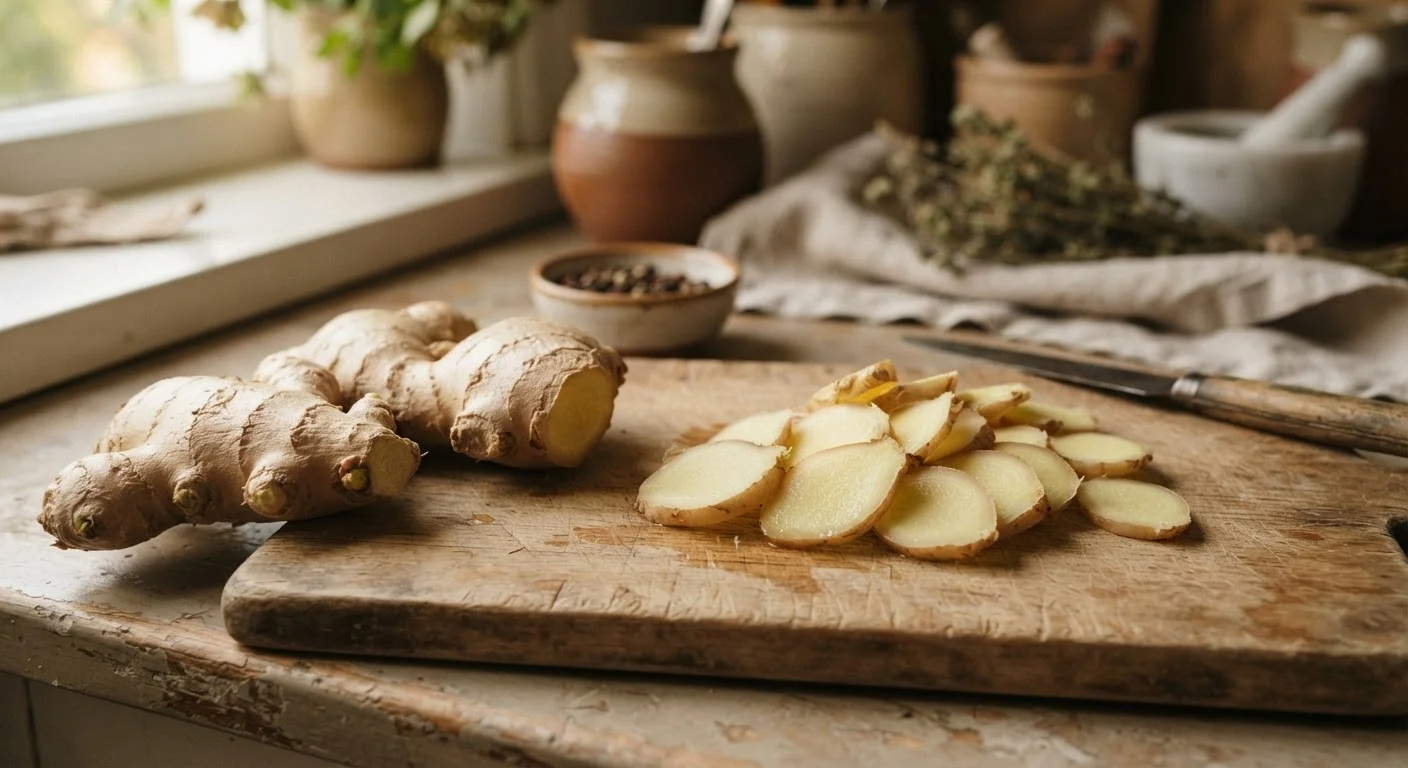
Ginger (Zingiber officinale) is a flowering plant native to Southeast Asia. The part most commonly used in both cooking and wellness is the rhizome — the underground stem often called ginger root. It has been a fixture in Chinese, Indian, and Middle Eastern traditional medicine for well over 2,000 years, valued for its warming properties and digestive applications.
Today, ginger appears in dozens of forms: fresh root, dried powder, capsules, tinctures, teas, and essential oil. If you're new to exploring medicinal plants generally, our grounded introduction to herbal wellness provides useful context for approaching these traditions critically and safely.
| Scientific name | Zingiber officinale |
| Plant family | Zingiberaceae |
| Part used | Rhizome (underground stem) |
| Traditional origin | Southeast Asia; used in Ayurvedic, Chinese, and Middle Eastern medicine |
| Strongest evidence | Nausea relief (pregnancy, post-op, chemotherapy-related) (Multiple systematic reviews) |
| Common forms | Fresh root, dried powder, capsule, tea, tincture |
Active Compounds and What They're Thought to Do
Ginger's bioactive profile is dominated by gingerols (in fresh root) and shogaols (more concentrated in dried or heat-processed ginger). These compounds have been studied in laboratory settings for their potential anti-inflammatory and antioxidant activity. Researchers have also looked at paradols and zingerone, which form during processing.
It's worth noting that lab findings don't automatically translate into meaningful effects in the human body. Absorption, dosage, and individual variation all matter — which is why controlled clinical trials carry more weight than in vitro studies alone.
Rhizome
An underground stem that grows horizontally and stores nutrients. Ginger's edible 'root' is technically a rhizome, not a true root.
Gingerols
The primary bioactive compounds in fresh ginger root. They are responsible for much of ginger's sharp flavor and have been studied for anti-inflammatory and antioxidant properties.
Shogaols
Compounds that form from gingerols when ginger is dried or cooked. Shogaols are found in higher concentrations in dried ginger and may have stronger bioactivity than gingerols in some lab settings.
Antiplatelet effect
A reduction in the tendency of blood platelets to clump together. Substances with antiplatelet properties may increase bleeding risk when combined with blood-thinning medications.
Systematic review
A rigorous research method that pools and critically analyzes all available studies on a specific question. It is generally considered a high standard of evidence in medical research.
In vitro study
Research conducted in a controlled lab environment outside of a living organism, such as in a test tube or petri dish. Results do not always apply directly to how a substance behaves in the human body.
What the Evidence Actually Shows
The strongest research support for ginger relates to nausea and vomiting. Multiple controlled trials and systematic reviews suggest ginger may modestly reduce nausea associated with pregnancy, chemotherapy, and postoperative recovery. The effect sizes are generally described as moderate, and results across studies are not entirely uniform. For a deeper look at this specific area, see our article on what science actually shows about ginger for nausea.
Evidence for other claimed uses is thinner or more preliminary:
- Inflammation and pain: Some small trials suggest ginger extracts may reduce markers of inflammation or mild joint discomfort, but findings are inconsistent and study quality varies.
- Blood sugar: Early research hints at possible effects on fasting glucose, but this remains an active and inconclusive area of investigation.
- Digestion: Traditional use for bloating and indigestion is longstanding, though large-scale human trials are limited. Ginger in tea form is explored further in our piece on herbal teas for common ailments.
Ginger is often compared to other widely studied roots. Turmeric's evidence profile shares similar strengths and limitations — promising lab data, mixed human trial results.
Safety, Interactions, and Who Should Be Cautious
For most healthy adults, ginger in culinary amounts is considered safe. Higher supplemental amounts warrant more caution. Known considerations include:
- Blood-thinning medications: Ginger may have mild antiplatelet effects. People taking anticoagulants such as warfarin should consult their healthcare provider before using ginger supplements regularly.
- Blood sugar medications: Given early findings on glucose, those managing diabetes with medication should discuss ginger supplementation with their doctor.
- Pregnancy: While ginger tea is frequently suggested for morning sickness, pregnant individuals should discuss any supplemental use with their prenatal care provider before proceeding.
- Gastrointestinal sensitivity: High doses can cause heartburn, mouth irritation, or stomach upset in some people.
Supplements Are Not Standardized
Unlike prescription medications, ginger supplements in the United States are not regulated for potency or purity by the FDA before they reach store shelves. The amount of active compounds can vary significantly between products. If you choose to use a ginger supplement, speak with your healthcare provider first, particularly if you take any medications or have a chronic health condition.
Like most herbal topics, ginger is best understood alongside other evidence-based comparisons. Our overview of ashwagandha's tradition and science illustrates how the same questions — what's proven, what's emerging, who should avoid it — apply across popular wellness herbs.
This article is for general informational purposes only and does not constitute medical advice. Always consult a qualified healthcare professional before starting any herbal supplement, especially if you take medications or have an existing health condition.