
Aloe Vera vs. Coconut Oil for Minor Skin Irritation: What Each One Actually Does

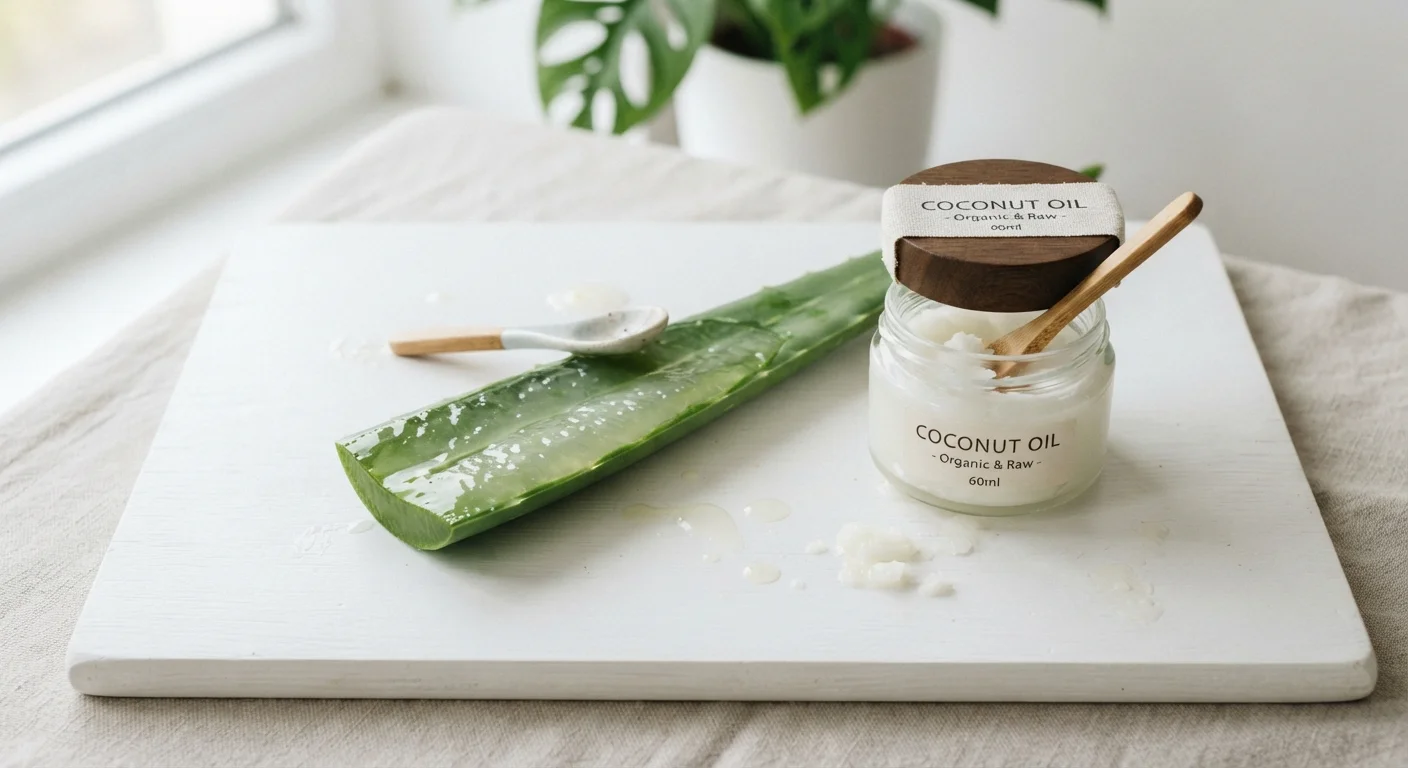
Key Takeaways
- Aloe vera gel is primarily water-based and delivers cooling, anti-inflammatory relief suited to sunburn and minor redness.
- Coconut oil is a fat-rich occlusive that locks in moisture and supports the skin's protective barrier.
- Neither ingredient is appropriate as the sole treatment for infected, severely broken, or deeply burned skin.
- Coconut oil may clog pores for some people, making it less suitable for acne-prone areas.
- Always patch-test new topical ingredients and consult a healthcare provider if irritation worsens or doesn't resolve.
Option A
Aloe Vera Gel
The cooling, water-based soother with anti-inflammatory properties.
Best for: Best for acute, hot, or inflamed irritation like sunburn, minor burns, and redness where cooling relief is the priority.
Option B
Coconut Oil
The occlusive, fatty moisturizer that supports the skin barrier.
Best for: Best for dry, flaky, or chapped skin that needs deep moisturizing and barrier protection rather than cooling.
If your skin is red, hot, and inflamed from sunburn or minor heat exposure
Aloe Vera Gel
Aloe's high water content and compounds like acemannan help cool the skin and may ease inflammatory responses, making it the more targeted option for acute heat-related irritation.
If your skin is dry, rough, or chapped from wind or cold weather
Coconut Oil
Coconut oil's fatty acid profile creates an occlusive layer that slows moisture loss, which is particularly helpful for restoring suppleness to very dry or flaking skin.
If you have acne-prone or oily facial skin
Aloe Vera Gel
Aloe is non-comedogenic and lightweight, reducing the risk of clogged pores that heavier oils like coconut oil can cause for some people.
If you want to support healing of minor, already-closed skin abrasions
Coconut Oil
Some research suggests coconut oil's lauric acid content may have mild antimicrobial properties, and its occlusive effect can keep healing skin from drying out.
What Each Ingredient Actually Contains
Aloe vera gel is roughly 98–99% water, which is why it feels immediately cool when applied. The remaining fraction contains polysaccharides (including acemannan), glycoproteins, vitamins C and E, and various enzymes. These compounds are associated with anti-inflammatory and wound-supportive activity in preliminary research, though the quality of evidence varies considerably across studies.
Coconut oil, by contrast, is almost entirely fat — primarily saturated fatty acids. Lauric acid makes up a significant portion and has demonstrated antimicrobial properties in lab settings. Virgin (unrefined) coconut oil also retains small amounts of antioxidant polyphenols. As an occlusive agent, it sits on the skin's surface and physically slows transepidermal water loss (TEWL) — the process by which moisture evaporates from the skin.
Understanding this chemical difference is the most practical starting point: one is water-based and penetrates quickly; the other is fat-based and forms a surface barrier.
| Criterion | Aloe Vera Gel | Coconut Oil |
|---|---|---|
| Primary composition | Water-based (98–99% water) | Fat-based (saturated fatty acids) |
| Main mechanism | Anti-inflammatory, cooling | Occlusive barrier, moisturizing |
| Best skin concern | Sunburn, redness, minor burns | Dry, chapped, barrier-compromised skin |
| Comedogenic potential | Low — generally non-clogging | Moderate — may clog pores for some |
| Absorption feel | Absorbs quickly, non-greasy | Sits on surface, leaves oily residue |
| Evidence base | Small trials for burns/sunburn | Small trials for eczema/dry skin |
| Allergy considerations | Possible sensitivity (lily family) | Tree-nut sensitivity (rare) |
What the Evidence Says About Each One
Aloe vera has been studied most extensively for sunburn and minor first-degree burns. A number of small clinical trials have found it may reduce healing time and relieve discomfort compared with control treatments, though reviewers note the studies are often limited in size and methodology. Its use for minor skin irritation has enough traditional backing and safety data that many dermatologists consider it a reasonable home measure.
Coconut oil has shown promise in studies focused on skin barrier function. A small randomized controlled trial published in the International Journal of Dermatology found virgin coconut oil performed comparably to mineral oil in children with mild-to-moderate atopic dermatitis (eczema), improving skin hydration and reducing TEWL. Researchers caution that larger trials are needed before drawing firm conclusions.
Neither ingredient should be viewed as a clinically proven treatment. Both are better understood as supportive measures with a reasonable safety profile for most adults when used on intact, minor irritation. For broader context on how these and similar approaches fit into at-home skin care, see our guide to calming irritated skin at home.
~98%
Water content of aloe vera gel
This high water fraction accounts for aloe's immediate cooling sensation and rapid absorption on skin.
~50%
Lauric acid proportion in coconut oil
Lauric acid is the dominant fatty acid in coconut oil and has shown antimicrobial activity in laboratory studies, though clinical translation is still being studied.
Practical Considerations Before You Apply Either One
A few factors should shape which ingredient you reach for — or whether you use either at all.
- Skin type: Oily or acne-prone skin generally tolerates aloe much better than coconut oil, which has a relatively high comedogenic potential for some individuals.
- Type of irritation: Sunburn, heat rash, and fresh redness respond more logically to a cooling, water-based gel. Chronic dryness, cracked hands, or wind-chapped lips benefit more from an occlusive oil.
- Allergies: Aloe belongs to the lily family; people sensitive to related plants should patch-test before applying. Coconut is a tree nut, and although coconut oil allergy is uncommon, those with tree-nut sensitivities should check with a provider first.
- Skin integrity: Neither ingredient is appropriate for open wounds, infected skin, severe burns (second or third degree), or rashes of unknown origin. These require professional assessment.
Special populations — including young children, pregnant individuals, and those with chronic skin conditions — should consult a healthcare provider before using either remedy routinely.
This article is for general informational purposes only and does not constitute medical advice. If you experience severe, worsening, or persistent skin symptoms, please consult a qualified healthcare professional.