

Key Takeaways
- Asthma involves reversible airway inflammation; COPD causes permanent, progressive lung damage.
- Asthma often develops in childhood, while COPD typically emerges in adults over 40 with significant smoking history.
- Both conditions can coexist — a phenomenon called asthma-COPD overlap (ACO) — complicating diagnosis.
- Spirometry (a lung function test) is the standard tool for distinguishing the two conditions.
- Neither condition has a cure, but both are manageable with appropriate, condition-specific treatment plans.
- Accurate diagnosis is essential — treatments that help one condition can be less effective or even inappropriate for the other.
Option A
Asthma
The episodic, often reversible airway condition.
Best for: Understanding a condition characterized by intermittent flare-ups triggered by allergens, exercise, or irritants, often beginning in childhood.
Option B
Chronic Obstructive Pulmonary Disease (COPD)
The progressive, largely irreversible lung disease.
Best for: Understanding a condition marked by permanent airflow limitation that worsens over time, most commonly linked to long-term tobacco exposure.
If you experience breathing episodes triggered by allergens, cold air, or exercise
Asthma
Episodic, trigger-driven breathlessness that improves with bronchodilators is a hallmark pattern of asthma. Allergy testing and spirometry can help confirm the diagnosis.
If you are a long-term smoker over 40 with persistent breathlessness and chronic cough
Chronic Obstructive Pulmonary Disease (COPD)
Gradually worsening shortness of breath with daily mucus production in someone with substantial tobacco exposure strongly suggests COPD evaluation is warranted.
If you have a childhood asthma diagnosis but symptoms are worsening despite treatment
Chronic Obstructive Pulmonary Disease (COPD)
Adults with longstanding asthma and smoking history may develop COPD or asthma-COPD overlap. Re-evaluation with updated lung function tests is advised.
If a child or teenager is experiencing recurrent wheezing and chest tightness
Asthma
COPD is extremely rare in pediatric populations. Recurrent airway symptoms in young people are far more likely to represent asthma and should be assessed by a pediatric clinician.
What Sets These Two Conditions Apart
Asthma and COPD both narrow the airways and make breathing harder — but they do so through fundamentally different processes. Understanding this distinction matters because the management strategies for each condition, while sometimes overlapping, are not interchangeable.
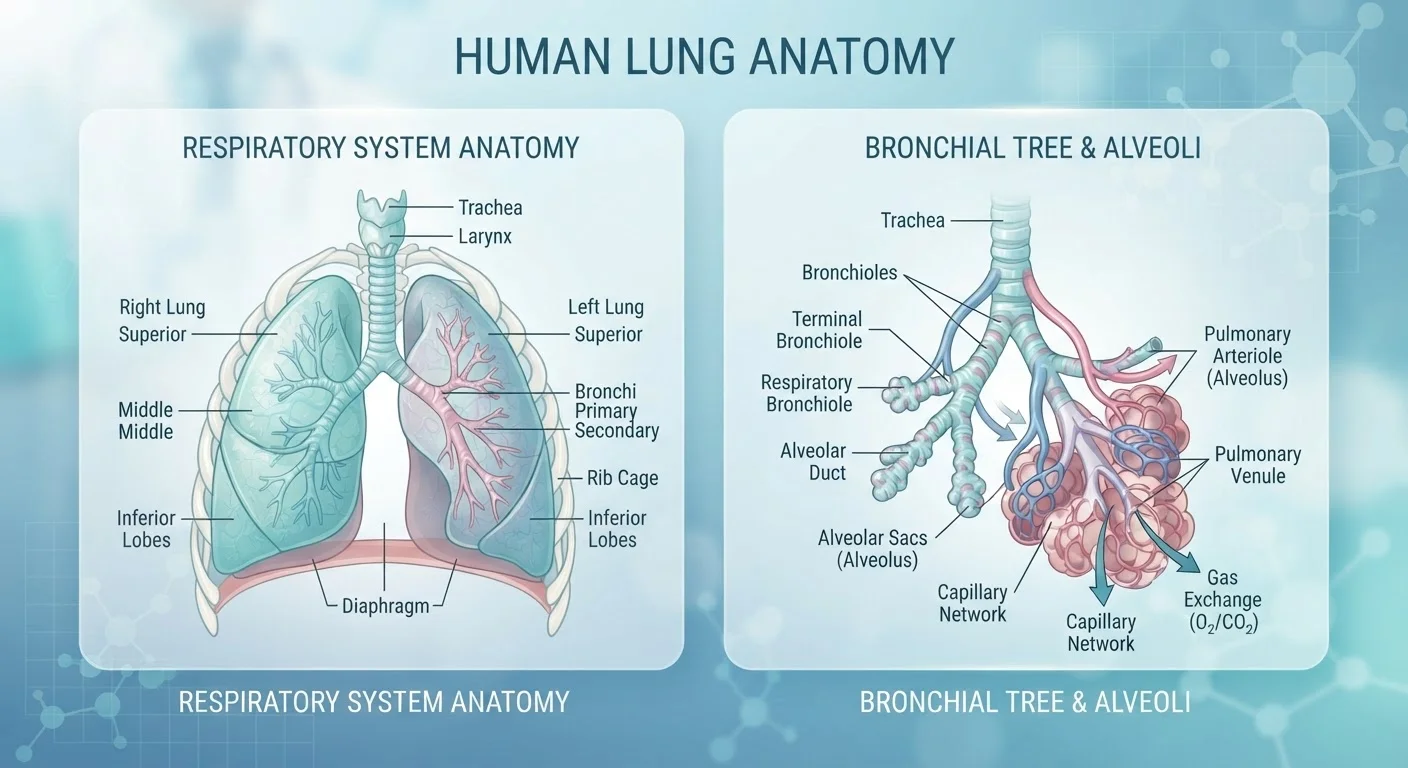
Asthma is characterized by chronic inflammation of the airways that causes them to narrow in response to specific triggers. Crucially, this narrowing is typically reversible — the airways can return to near-normal function between episodes, especially with treatment. Common triggers include airborne allergens (such as dust mites or pollen), respiratory infections, exercise, cold air, and irritants like smoke or strong odors. Asthma can develop at any age, though it frequently begins in childhood.
COPD is an umbrella term covering two main conditions: chronic bronchitis (long-term airway inflammation with excess mucus production) and emphysema (damage to the air sacs in the lungs). Unlike asthma, the airflow limitation in COPD is largely irreversible and worsens progressively over time. Long-term exposure to cigarette smoke is the leading cause, though occupational dust and chemical exposure also contribute. COPD is rarely diagnosed before age 40.
This distinction — reversible versus irreversible — is clinically significant and shapes how doctors approach diagnosis and ongoing care. Just as mixing up IBS and IBD can lead to inappropriate treatment, conflating asthma and COPD can result in therapies that miss the mark.
| Criterion | Asthma | COPD |
|---|---|---|
| Airflow limitation | Reversible between episodes | Largely irreversible, progressive |
| Typical age of onset | Any age, often childhood | Usually over 40 |
| Primary cause | Allergic/inflammatory triggers | Long-term smoke or irritant exposure |
| Symptom pattern | Episodic flare-ups with clear triggers | Persistent, gradually worsening |
| Allergy association | Common (atopy frequently present) | Not typically associated |
| Response to bronchodilator (spirometry) | Significant improvement | Partial or minimal improvement |
| Lung structure damage | Generally preserved | Structural damage (emphysema possible) |
| First-line maintenance therapy | Inhaled corticosteroids (ICS) | Long-acting bronchodilators (LABA/LAMA) |
| Smoking cessation impact | Beneficial but not disease-defining | Most important modifier of progression |
How Each Condition Is Diagnosed
Because the symptoms — wheezing, coughing, chest tightness, and shortness of breath — overlap significantly, accurate diagnosis depends on clinical context and objective testing rather than symptoms alone.
The cornerstone diagnostic tool for both conditions is spirometry, a non-invasive lung function test that measures how much air you can exhale and how quickly. In asthma, spirometry typically shows airflow obstruction that improves substantially (or fully reverses) after administering a bronchodilator medication. In COPD, the obstruction does not fully reverse after bronchodilator use — this persistent limitation is a defining diagnostic criterion.
Additional diagnostic considerations include:
- Age of onset and symptom pattern: Childhood or adolescent onset with episodic symptoms favors asthma; gradual worsening breathlessness in a middle-aged or older adult with smoking history points toward COPD.
- Allergy and atopy assessment: Asthma is frequently associated with allergic sensitization (atopy); COPD generally is not.
- Imaging: Chest X-ray or CT scan may reveal emphysema-related lung changes in COPD. Imaging is usually normal in uncomplicated asthma.
- Asthma-COPD Overlap (ACO): Some patients — particularly older adults with long-standing asthma who have also smoked — show features of both conditions. ACO is recognized as a distinct clinical entity requiring individualized management.
Misreading respiratory symptoms is a known risk. The broader patterns of misreading infection and illness symptoms apply here too — what feels like a straightforward breathing problem can have multiple overlapping causes that only clinical evaluation can untangle.
25M+
Americans living with asthma
According to the CDC, more than 25 million people in the United States have asthma, including roughly 5 million children.
16M
Adults diagnosed with COPD in the U.S.
The CDC estimates that approximately 16 million U.S. adults have been diagnosed with COPD, with millions more potentially undiagnosed.
~15–25%
Asthma patients who may develop ACO
Research suggests a meaningful proportion of adults with asthma — particularly those who smoke — may develop asthma-COPD overlap over time, though estimates vary by study.
Management: Where Approaches Overlap — and Where They Diverge
Both asthma and COPD are chronic, lifelong conditions with no definitive cure. Both are managed rather than eliminated, with the goals of controlling symptoms, reducing exacerbation risk, and preserving quality of life. That said, their treatment frameworks differ in important ways.
Shared management strategies:
- Short-acting bronchodilators (such as short-acting beta-agonists) are used in both conditions to relieve acute symptoms.
- Avoiding known environmental triggers or irritants is beneficial in both.
- Pulmonary rehabilitation — a supervised program of exercise, education, and breathing techniques — is evidence-supported in COPD and increasingly used in severe asthma.
- Annual influenza vaccination and, in eligible patients, pneumonia vaccination are recommended for both.
Where management diverges:
- Inhaled corticosteroids (ICS) are a first-line maintenance therapy in asthma. In COPD, ICS are reserved for specific patient profiles (often those with frequent exacerbations or eosinophilic inflammation) and are not universally recommended.
- Long-acting bronchodilators — both long-acting beta-agonists (LABAs) and long-acting muscarinic antagonists (LAMAs) — are central to COPD maintenance therapy. In asthma, LABAs are used in combination with ICS, never as standalone therapy.
- Smoking cessation is the single most important intervention in COPD to slow disease progression. In asthma, it is important but not the defining disease-modifier.
- Biologics targeting specific immune pathways (such as anti-IgE or anti-IL-5 therapies) are approved for severe, refractory asthma but have no established role in standard COPD management.
Getting the diagnosis right is not just academic — using the wrong treatment framework can leave real symptoms unaddressed. This is one of the patterns explored in chronic condition management pitfalls, where diagnostic ambiguity is a recurring source of poor outcomes.
This article is for general informational purposes only and does not constitute medical advice. If you are experiencing respiratory symptoms or managing a lung condition, please consult a qualified healthcare professional for diagnosis and a personalized treatment plan.