

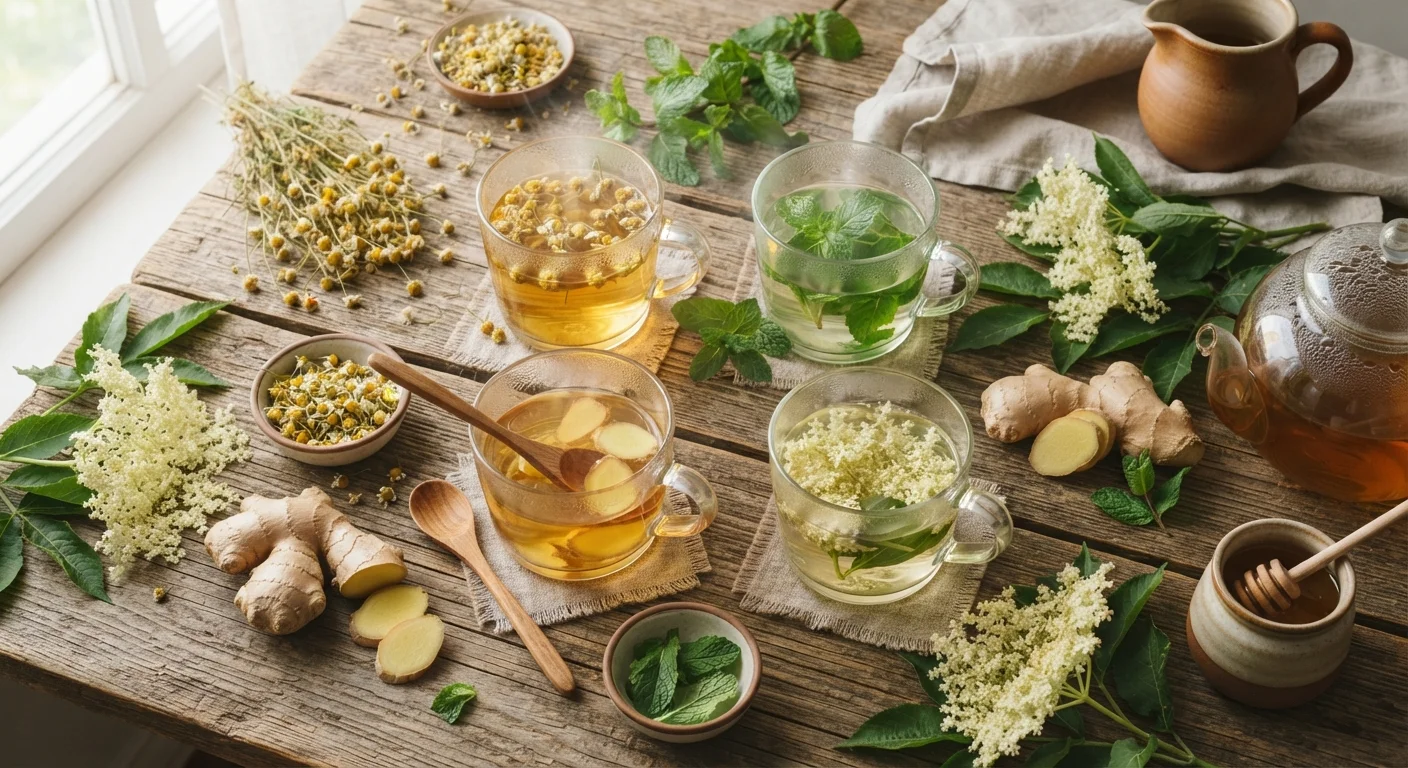
Key Takeaways
- Herbal teas have genuine traditional roots, but scientific evidence varies widely by herb and condition.
- Ginger tea has some of the strongest research support for easing nausea among common herbal options.
- Herbal teas are not regulated like medications and should not replace prescribed treatments.
- Some herbs interact with medications or are unsuitable for certain populations, including pregnant individuals.
- Drinking herbal tea can offer comfort and hydration, even when specific effects are not proven.
Why Herbal Tea Beliefs Deserve a Closer Look
Herbal teas have been brewed for centuries across virtually every culture. Today they line pharmacy shelves alongside cold remedies and sleep aids, blurring the line between tradition and treatment. That positioning can mislead consumers into expecting pharmaceutical-grade results from a cup of steeped leaves — or, conversely, dismissing real benefits because something feels too simple to work.
The reality sits somewhere in between. Some herbs have accumulated a meaningful body of clinical research. Others rely almost entirely on folk tradition and anecdote. Understanding the difference matters, especially if you're managing a health condition or taking prescription medications. For a grounded starting point on navigating herbal wellness more broadly, see this introduction to herbal wellness.
Below, we work through the most common myths and facts surrounding popular herbal teas — so you can make informed, realistic choices.
Myth
Chamomile tea is a proven cure for insomnia and anxiety.
Fact
Chamomile shows mild calming properties in some studies, but evidence for treating clinical insomnia or anxiety disorders is limited and inconsistent.
Chamomile contains apigenin, a compound that binds weakly to receptors associated with relaxation. Small studies have suggested modest short-term improvements in sleep quality and self-reported anxiety in certain populations. However, most trials are small, short-duration, and not designed to evaluate clinical insomnia or diagnosed anxiety. Chamomile tea may support a calming pre-sleep routine, but it should not be used as a substitute for evaluated treatment of a sleep or mental health condition.
Myth
Peppermint tea relieves all types of stomach pain.
Fact
Peppermint may help with specific digestive issues like irritable bowel syndrome (IBS)-related discomfort, but it can worsen symptoms for people with acid reflux or GERD.
The menthol in peppermint relaxes smooth muscle in the gastrointestinal tract, which can ease cramping and bloating in some people with IBS. However, this same relaxing effect on the lower esophageal sphincter can allow stomach acid to rise more easily, making heartburn worse. If you experience frequent acid reflux, peppermint tea may aggravate rather than soothe your symptoms. The digestive health context matters significantly here — the same herb can help or harm depending on the underlying issue.
Myth
Ginger tea is just a folk remedy with no scientific backing for nausea.
Fact
Ginger has meaningful research support for reducing nausea, particularly pregnancy-related nausea and nausea following surgery or chemotherapy.
Among commonly used herbal teas, ginger stands out for the volume and quality of research supporting its anti-nausea properties. Multiple controlled trials suggest ginger can reduce nausea severity in pregnant individuals, post-operative patients, and those undergoing chemotherapy. The active compounds — gingerols and shogaols — appear to influence serotonin receptors involved in nausea signaling. That said, ginger is not approved as a medical treatment, dosing in tea form is imprecise, and pregnant individuals should consult their provider before regular use. For a fuller picture, see the article on ginger root in wellness traditions.
Myth
Herbal teas are completely safe because they're natural.
Fact
Natural origin does not equal safety. Some herbal teas can interact with medications, cause allergic reactions, or be harmful in specific populations.
Several widely consumed herbs pose real risks under certain conditions. Chamomile is related to ragweed and can trigger reactions in people with relevant plant allergies. Licorice root tea can raise blood pressure with regular use. St. John's Wort — sometimes consumed as a tea — is well-documented to reduce the effectiveness of several prescription medications, including certain anticoagulants and antidepressants. Some herbs are not appropriate during pregnancy. If you're unsure whether a particular herbal tea is safe for your situation, speak with a healthcare provider before making it a regular habit. The Herbal & Plant Basics hub covers safety considerations for many common herbs.
Myth
Elderflower tea boosts your immune system and prevents colds.
Fact
Elderflower has traditional use in cold and fever management, but clinical evidence for immune-boosting effects is very limited.
Elderflower (the blossom of the elder plant) has a long tradition in European folk medicine as a remedy for fever, congestion, and colds. It contains flavonoids and other plant compounds with antioxidant properties in laboratory settings. However, human clinical trials specifically on elderflower tea are sparse. Much of the attention in elderberry research focuses on elderberry fruit extracts rather than the flower, and results even there are mixed. Treating elderflower tea as a general immune tonic or cold preventive goes beyond what available evidence supports.
What the Evidence Does and Doesn't Support
Even herbs with meaningful research behind them are typically studied in concentrated extract or supplement form, not as a brewed beverage. Brewing time, water temperature, and herb quality all affect how much of an active compound ends up in your cup — and those variables are rarely controlled in everyday use.
That doesn't make herbal tea useless. Warm fluids support hydration, can ease throat irritation, and the ritual of making tea may itself have a calming effect. But it does mean you should be skeptical of packaging that promises specific outcomes.
Herbal Teas and Medication Interactions
If you take any prescription or over-the-counter medications, check with your pharmacist or doctor before regularly consuming herbal teas. Certain herbs — including St. John's Wort, licorice root, and even green tea in large amounts — can affect how your body processes specific drugs. This is especially important for blood thinners, hormonal medications, and immunosuppressants.
If you're interested in herbs specifically for digestive concerns, the Digestive Health hub offers a broader look at gut-related conditions. For kitchen herbs with overlapping digestive traditions, fenugreek, fennel, and cumin are worth exploring as a complement to herbal tea options.
Herbs like chamomile and valerian are often compared for their calming properties. For a side-by-side look at how they differ, the article on valerian, passionflower, and chamomile offers useful context. Similarly, lavender's role in wellness practices is another area where tradition and evidence are often conflated.
If you use echinacea tea at the first sign of a cold, the article on echinacea and the immune system gives an honest read on the clinical picture. And for ginger, one of the better-studied herbs, see ginger root in wellness traditions for a detailed overview.
This article is for general informational purposes only and does not constitute medical advice. Always consult a qualified healthcare professional before using herbal remedies, especially if you are pregnant, nursing, managing a chronic condition, or taking any medications.