

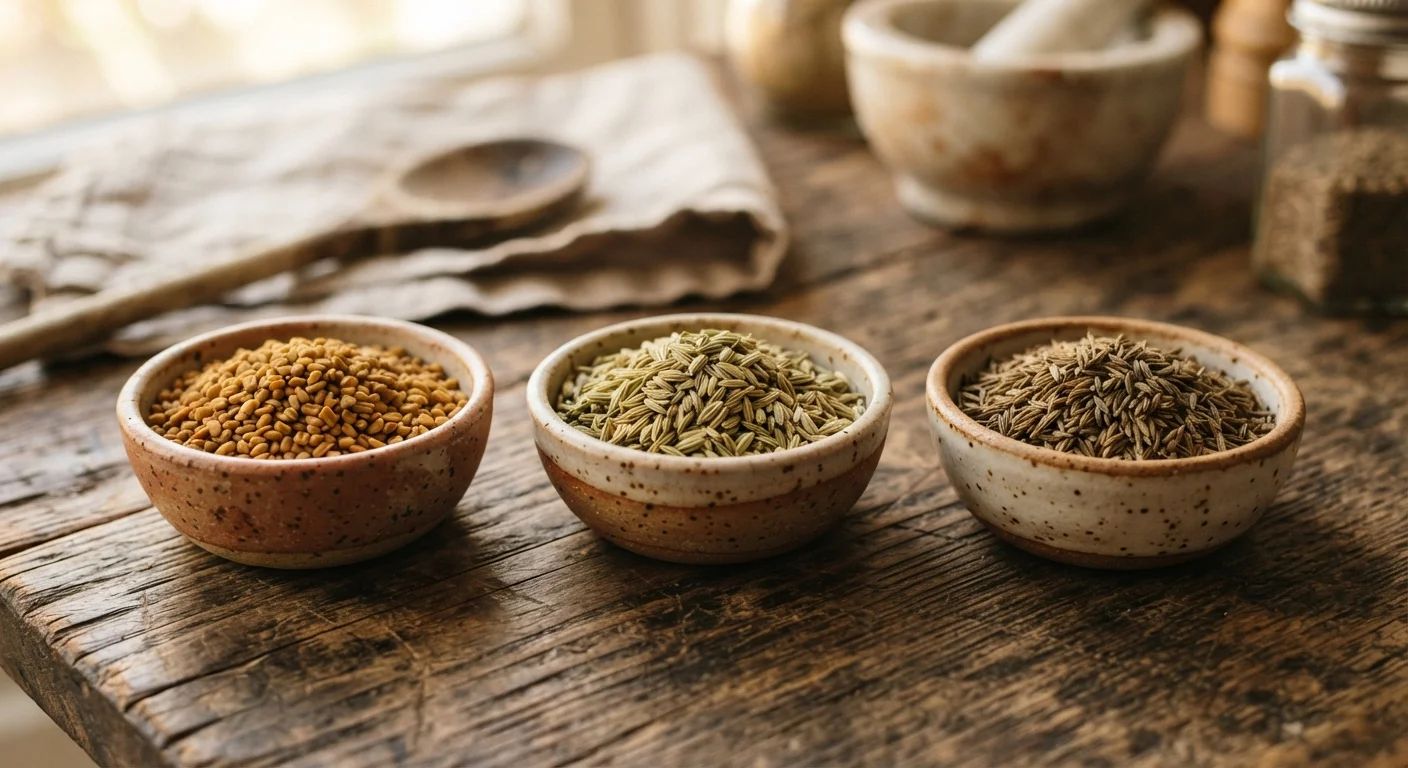
Key Takeaways
- Fenugreek, fennel, and cumin have each been used as digestive aids in multiple traditional medicine systems worldwide.
- Preliminary research offers some support for these uses, but strong clinical evidence in humans remains limited.
- These seeds are generally considered safe as culinary spices, though supplement-level doses carry different considerations.
- People who are pregnant, nursing, or managing chronic conditions should consult a healthcare provider before using these remedies therapeutically.
- Traditional context and emerging science together provide a more complete picture than either alone.
Seeds That Traveled with Trade Routes
Long before modern gastroenterology, cooks and healers across South Asia, the Middle East, North Africa, and the Mediterranean were reaching for the same pantry staples to settle an upset stomach. Fenugreek, fennel, and cumin appear in ancient Egyptian papyri, Ayurvedic texts, and traditional Chinese medicine records alike — a remarkable cross-cultural consensus built on generations of observation rather than controlled trials.
That shared history is worth taking seriously, even as we apply modern scrutiny to it. This article walks through what each seed has traditionally been used for, what limited research currently suggests, and where the boundaries of the evidence actually lie. For a broader look at how kitchen ingredients double as remedies across healing traditions, see our comparative overview of global kitchen remedies.
What We Mean by 'Traditional Use'
Throughout this article, 'traditional use' refers to practices documented within specific cultural healing systems — Ayurveda, traditional Chinese medicine, Unani, and others — over long periods of time. These systems have their own internal logic and considerable historical depth. However, traditional use does not automatically equal clinical proof of efficacy. We present both because each adds something the other lacks: historical context and emerging biological plausibility.
Three Seeds, Three Traditions
Fenugreek: The Bitter Seed with a Long Resume
Fenugreek (Trigonella foenum-graecum) is one of the oldest cultivated plants on record, found in Egyptian tombs dating back thousands of years. In Ayurvedic medicine, it has been used to stimulate digestion and reduce intestinal gas. Traditional practitioners in South Asia have long steeped the seeds in warm water or incorporated them into foods specifically to ease bloating and sluggish digestion.
From a research standpoint, fenugreek contains soluble fiber and compounds called saponins, which may influence gut motility and reduce inflammation in the digestive tract. Some small studies have explored its effect on gastric emptying and acid reflux, with mixed but occasionally promising results. However, most of this research is preliminary, and large-scale human clinical trials are lacking. Fenugreek can also interact with blood-thinning medications and may affect blood sugar levels, so therapeutic use — beyond ordinary cooking — warrants professional guidance.
Fenugreek's soluble fiber content is one plausible reason traditional healers valued it for sluggish digestion.
Fennel: The Mediterranean Remedy for Gas and Bloating
Fennel (Foeniculum vulgare) seeds have been chewed after meals across Italian, Indian, and Middle Eastern cultures for centuries — a practice so embedded in custom that fennel seeds are still offered at the exit of many South Asian restaurants today. The tradition centers on fennel's reputation for reducing post-meal bloating, cramping, and gas.
The primary active compounds are anethole and other volatile oils, which animal and in vitro research suggests may have antispasmodic and carminative (gas-relieving) properties. A small number of human studies on fennel preparations — including some focused on infants with colic — have reported reductions in symptom severity, though these studies are often limited in size and methodology. Fennel tea, made by steeping crushed seeds in hot water, is a commonly used preparation. It is generally well tolerated, though fennel belongs to the same plant family as celery and carrots, so people with known allergies to these plants should take note. For another perspective on plant-based digestive aids, see our piece on peppermint for digestion.
Fennel's volatile oils may help relax intestinal muscles, which could explain its traditional use after heavy meals.
Cumin: A Spice Rack Staple with Digestive Roots
Cumin (Cuminum cyminum) is fundamental to cuisines ranging from Mexican and Moroccan to Indian and Persian. Its role in digestive health appears across many of these same traditions — used to stimulate the production of digestive enzymes, reduce flatulence, and ease indigestion. In traditional Unani and Ayurvedic medicine, cumin-based preparations were standard recommendations for upset stomachs and loose stools alike.
Modern phytochemical research has identified compounds in cumin — including cuminaldehyde and thymol — that may stimulate salivary gland and pancreatic enzyme activity. A few small human trials have examined cumin's effect on irritable bowel syndrome (IBS) symptoms, with some participants reporting improvements in bloating and stool consistency. These findings are suggestive rather than conclusive, and the research base remains thin. As a culinary spice, cumin is safe for nearly everyone, but concentrated cumin oil or supplements deserve the same careful consideration as any botanical product. Cumin's history as a medicinal spice sits comfortably alongside that of other aromatics — our article on the medicinal history of cloves, cinnamon, and cardamom explores similar ground.
Cumin may stimulate digestive enzyme activity — a possible mechanism behind its widespread traditional use for indigestion.
Simple Ways to Incorporate These Seeds
If you are curious about any of these seeds, culinary use is the most straightforward starting point. Try steeping a teaspoon of lightly crushed fennel seeds in hot water for a simple after-dinner tea, or adding cumin and fenugreek to soups, lentil dishes, or roasted vegetables. Beginning at food-level quantities allows you to observe your own response without the variables introduced by concentrated supplements.
Putting These Remedies in Context
Using fenugreek, fennel, or cumin as culinary spices carries a very different risk profile than consuming them in concentrated supplement or extract form. At the quantities used in everyday cooking, all three are widely regarded as safe for most adults. Higher doses — especially in supplement form — introduce considerations that warrant more caution, particularly for people who are pregnant, managing blood sugar levels, or taking prescription medications.
It is also worth noting that digestive discomfort is a broad category. Occasional bloating after a heavy meal is different from recurring irritable bowel symptoms or signs of something more serious. These seeds may offer mild, gentle support for everyday digestive complaints rooted in food choices, stress, or irregular habits — but they are not substitutes for evaluation when symptoms are persistent, severe, or unexplained. Similarly, spices like ginger have a comparable evidence footprint in the digestion space; our article on ginger's dual role in the kitchen and medicine cabinet explores what research supports there. For anyone curious about how herbal preparations more broadly measure up, herbal teas for common ailments is a useful companion read.
This article is for general informational purposes only and does not constitute medical advice. Always consult a qualified healthcare professional before making changes to your diet or health routine, especially if you are pregnant, nursing, managing a chronic condition, or taking medications.