

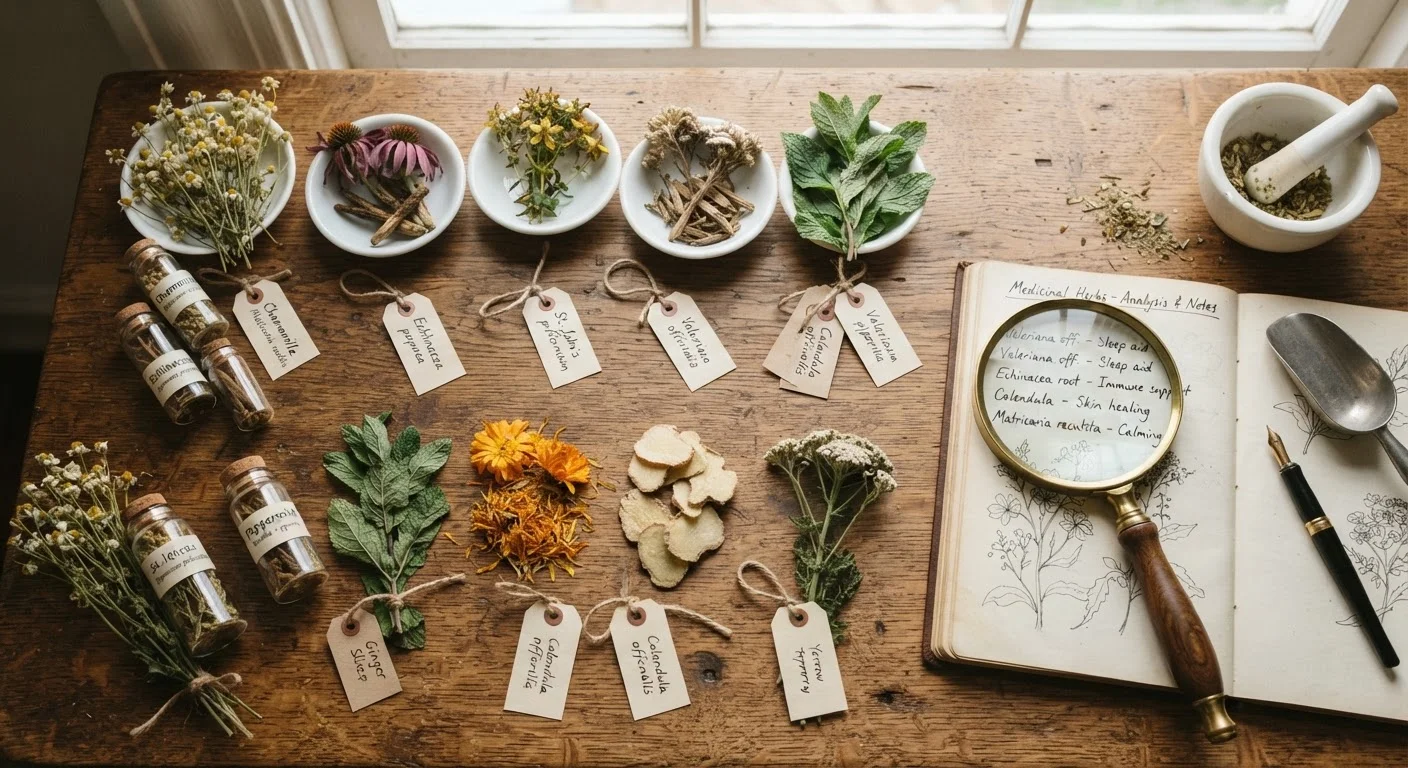
Key Takeaways
- Active compounds are the specific chemicals in a plant responsible for its biological effects on the body.
- A single herb can contain dozens or hundreds of different compounds, not just one magic ingredient.
- Identifying an active compound in a lab does not automatically prove it works the same way in the human body.
- Concentration of active compounds varies with growing conditions, plant part used, and preparation method.
- Some active compounds can interact with medications — natural origin does not mean automatically safe.
- Understanding active compounds helps you evaluate herbal health claims more critically and realistically.
Active Compounds in Herbs
Active compounds are the specific chemical substances found naturally in a plant that are thought to produce a biological effect in the body. When researchers study a medicinal herb, they are largely trying to identify these chemicals, understand what they do, and determine whether those effects are helpful or harmful. The term distinguishes these potent chemicals from the many other components in a plant that appear to have little direct effect.
In pharmacognosy — the study of medicines derived from natural sources — active compounds are also called phytochemicals or secondary metabolites, meaning the plant makes them for its own survival needs rather than basic growth.
Plants Are Pharmacies — But Complicated Ones
When people talk about chamomile calming the stomach or ginger easing nausea, they're really talking about something more specific: the chemical compounds inside those plants that interact with the human body. That's what the phrase active compounds means — the individual chemicals in a plant that appear to drive a particular biological effect.
A single herb is never just one thing. Ginger root, for example, contains compounds called gingerols and shogaols, along with hundreds of other substances. Researchers have focused study on gingerols and shogaols because lab and clinical work suggests they influence inflammation and digestive function. But the plant also contains volatile oils, starches, and other chemicals whose roles are far less understood.
This complexity is why herbal medicine can be genuinely difficult to evaluate. When you take a pharmaceutical drug, you typically receive one well-characterized molecule at a known dose. When you brew a cup of ginger tea, you're consuming an intricate mixture where concentrations shift depending on how long you steep it, how fresh the root was, and where it was grown. That variability is fundamental to understanding both the promise and the limitations of plant-based remedies. For a broader introduction to these ideas, see this grounded overview of herbal wellness.
From Plant to Lab: How Active Compounds Are Identified
Identifying which compound in a plant actually does something is painstaking work. Scientists typically start by separating a plant extract into chemical fractions, then testing each fraction on cell cultures or animal models to find where biological activity concentrates. This approach — called bioassay-guided fractionation — helps researchers narrow down candidates from hundreds of chemicals to a handful worth studying further.
Even after a compound is identified, the scientific work is far from finished. Activity in a lab dish doesn't automatically translate to the same effect in a living human body. A compound might break down in digestion, fail to reach the target tissue in meaningful quantities, or behave differently when combined with food and other substances. This gap between in-vitro (lab) evidence and in-vivo (human body) evidence is one of the most important concepts for anyone evaluating herbal health claims.
~25%
Modern drugs derived from plant sources
The World Health Organization has estimated that roughly a quarter of pharmaceutical drugs in use have been derived from or modeled on plant-based compounds.
Hundreds
Compounds found in a single herb
Analytical chemistry studies of common culinary and medicinal herbs routinely identify dozens to hundreds of distinct chemical compounds, most of which remain unstudied in human clinical trials.
Highly variable
Active compound levels between preparations
Research comparing different commercial preparations of the same herb has repeatedly found substantial variation in active compound concentrations, even within the same product category.
To understand how those human studies are actually designed and what their results really mean, this companion piece on how herbal remedies are studied covers the range of evidence quality in detail.
Why Preparation and Sourcing Change Everything
Active compound content in a plant isn't fixed — it's a moving target shaped by growing conditions, the specific plant part used, the time of harvest, and critically, how the herb is prepared. St. John's Wort provides a clear illustration: its most studied compounds, hypericin and hyperforin, are present in different concentrations in the flowers versus the leaves, and their levels shift with sun exposure during growing. An extract standardized to a specific percentage of hyperforin is genuinely a different product from a non-standardized dried herb capsule.
Preparation method matters just as much. Water-based teas pull out water-soluble compounds effectively, while alcohol-based tinctures extract a broader range including some fat-soluble molecules. Drying and storage degrade certain volatile compounds quickly. None of this makes herbal preparations unreliable by definition — it does mean that comparing the results of one study using a standardized extract to your experience with a homemade tea is an apples-and-oranges comparison.
Match Your Preparation to the Research
When you read about a study on an herbal remedy, note what form was tested — standardized extract, whole dried herb, tincture, or tea. If the research used a standardized extract and you're using a homemade preparation, the findings may not apply directly to your situation. This isn't a reason to dismiss either the research or the remedy, but it's important context for setting realistic expectations.
These sourcing and preparation variables also help explain why understanding what supplement labels actually mean is a genuinely useful skill, not just fine-print reading.
Active Compounds and Safety: The Other Side of the Equation
The same chemical activity that gives a plant potential benefits can also create risks — particularly when combined with pharmaceutical medications. Compounds active enough to influence the body are active enough to interfere with how drugs are metabolized. St. John's Wort's hyperforin, for instance, is well-documented to accelerate the breakdown of certain medications by activating liver enzymes, potentially reducing those drugs' effectiveness.
This is worth internalizing: the phrase "active compound" applies equally to beneficial and potentially harmful effects. Pyrrolizidine alkaloids found in some comfrey preparations are active compounds — and they are associated with serious liver toxicity. Recognizing that chemical activity is a neutral descriptor, not a guarantee of safety, is foundational to approaching herbal remedies honestly.
For a more detailed look at how and why these interactions occur, this article on herb–drug interactions explains the mechanisms clearly. If you take any prescription medications, discussing herbal use with a pharmacist or physician is an important step, not an optional one.
This article is for general informational purposes only and does not constitute medical advice. Always consult a qualified healthcare professional before making decisions about herbal supplements or any aspect of your health care.