

Key Takeaways
- Natural herbs contain active chemical compounds that can alter how medications are absorbed or metabolized.
- St. John's Wort, ginkgo, garlic, and ginger are among the herbs with the most documented drug interactions.
- People taking blood thinners, antidepressants, or immunosuppressants face the highest risk from herb–drug combinations.
- Always tell your doctor and pharmacist about any herbal supplements you take, even if they seem harmless.
- Risk varies by dose, duration, and individual health status — context always matters.
Herb–Drug Interaction
An herb–drug interaction occurs when a plant-based substance changes the way a medication works in your body. The herb may make a drug more potent, reduce its effectiveness, or produce an unexpected new effect. These interactions can happen with prescription drugs, over-the-counter medications, and even vitamins. Being 'natural' does not make a substance automatically safe to combine with other treatments.
Many herb–drug interactions work through the cytochrome P450 enzyme system in the liver, which controls how quickly drugs are metabolized. Herbs that induce or inhibit these enzymes can raise or lower drug blood levels significantly.
Why 'Natural' Is Not a Safety Guarantee
It's a reasonable assumption: if something comes from a plant, it must be gentler than a manufactured drug. But plants produce potent chemical compounds — that's precisely why many modern pharmaceuticals were originally derived from them. Aspirin traces back to willow bark. Morphine comes from the opium poppy. The chemistry that makes an herb effective is the same chemistry that can interfere with medication.
Herbal supplements are also far less regulated than prescription drugs in the United States. Under the Dietary Supplement Health and Education Act, manufacturers don't need to prove safety or effectiveness before a product reaches store shelves. That means consumers often have less reliable information about potency, purity, and potential interactions than they would with a prescribed drug.
Common assumptions about herbal safety — such as "I can take more because it's natural" — can compound the risk. Understanding the basics of how herbs affect the body is the first step toward using them more wisely.
How Herb–Drug Interactions Actually Happen
Most significant herb–drug interactions fall into two categories: pharmacokinetic (affecting how a drug moves through the body) and pharmacodynamic (affecting what a drug does once it's there).
Pharmacokinetic interactions most often involve the liver's cytochrome P450 enzyme system. This enzyme network breaks down the majority of pharmaceutical drugs. When an herb speeds up these enzymes — a process called induction — drugs are cleared from the body faster, potentially making them less effective. When an herb slows the enzymes down — inhibition — drug levels can build up to harmful concentrations.
Pharmacodynamic interactions are more straightforward: two substances that have similar or opposing effects on the body interact directly. An herb with blood-thinning properties taken alongside a prescribed anticoagulant, for example, may compound that effect beyond what's therapeutically intended.
Special Populations Face Elevated Risk
Pregnant and breastfeeding individuals, children, older adults, and people with liver or kidney conditions face greater vulnerability to herb–drug interactions. Many herbs have not been studied in these populations at all. If you fall into any of these groups, please consult a qualified healthcare provider before using any herbal supplement.
Supplement Labels Don't Tell the Full Story
Because herbal supplements are regulated as food products rather than drugs in the US, labels are not required to list known drug interactions. The absence of an interaction warning on a label does not mean interactions don't exist — it means the regulatory system doesn't require that disclosure.
For people managing multiple prescriptions, managing multiple medications safely is already complex — adding undisclosed herbal supplements increases that complexity significantly.
Common Herbs and Their Interaction Risks
Research has identified several widely used herbs with notable interaction profiles. Below are among the most documented:
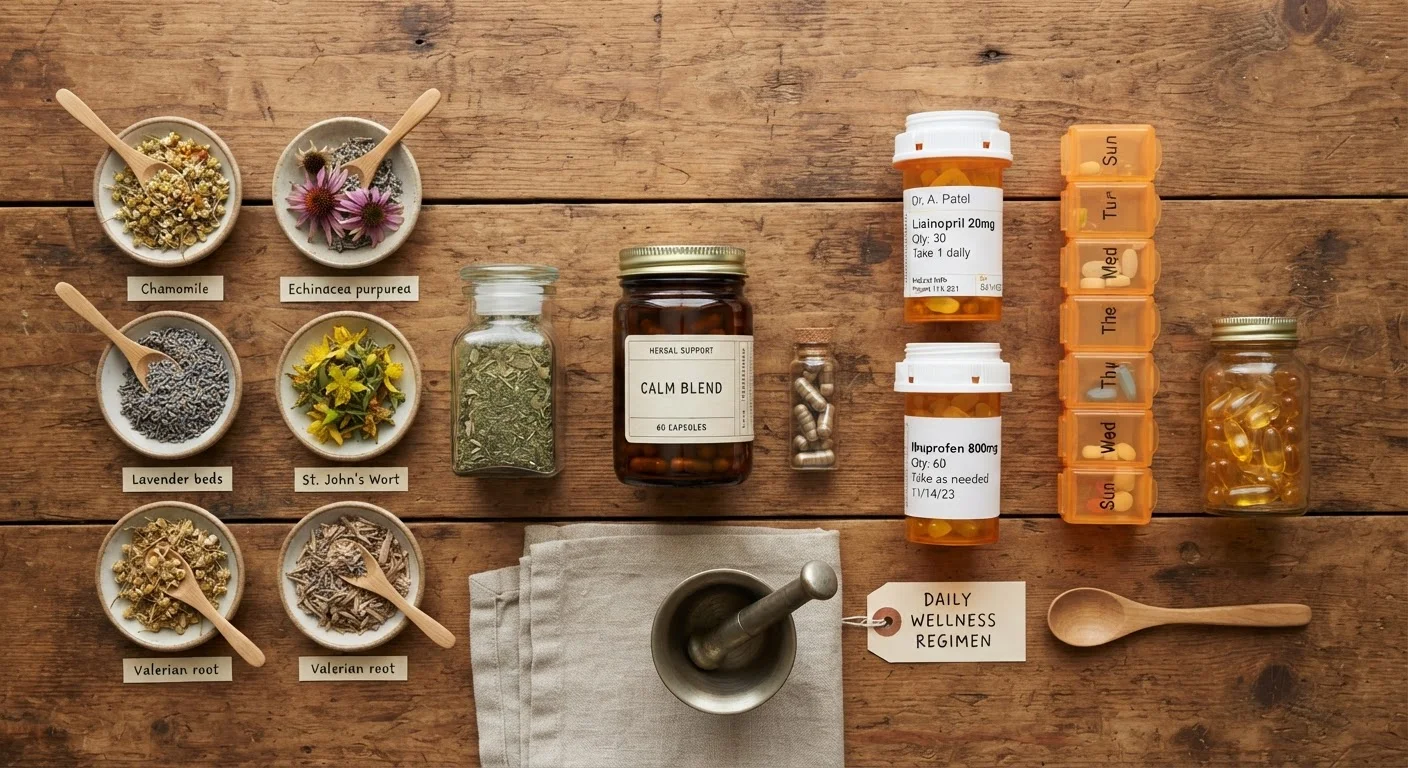
- St. John's Wort (Hypericum perforatum): One of the best-studied herb–drug interactions. It strongly induces cytochrome P450 enzymes and P-glycoprotein, reducing blood levels of drugs including oral contraceptives, antiretrovirals, cyclosporine, and some antidepressants. The FDA has issued public advisories about this interaction.
- Ginkgo (Ginkgo biloba): Has antiplatelet properties and may increase bleeding risk when combined with warfarin, aspirin, or other blood thinners.
- Garlic (Allium sativum): Concentrated garlic supplements — not standard culinary amounts — may affect anticoagulants and certain HIV medications by influencing drug metabolism.
- Ginger (Zingiber officinale): At high supplemental doses, ginger may have mild antiplatelet effects. Everyday culinary use is generally considered low risk, but high-dose ginger supplements warrant caution alongside blood thinners.
- Valerian (Valeriana officinalis): May enhance the sedative effects of CNS depressants, including benzodiazepines, certain antihistamines, and sleep medications.
This list is not exhaustive. The practical herb identification reference is a useful companion for distinguishing herbs that share similar names but have different safety profiles.
~1 in 5
Adults using prescription drugs who also take herbal supplements
Research published in JAMA Internal Medicine estimated that roughly one in five adults on prescription medications also use herbal or dietary supplements, often without disclosing this to their doctor.
70%+
Supplement users who don't tell their doctor
Multiple surveys have found that a majority of people taking dietary supplements do not disclose this to their healthcare provider, often because they assume natural products are irrelevant to their medical care.
Over 400
Documented herb–drug interactions in clinical literature
A review in the British Journal of Clinical Pharmacology identified hundreds of documented herb–drug interactions, with the most clinically significant involving St. John's Wort, ginkgo, and garlic.
Who Is Most at Risk?
Not every person who takes an herb alongside a medication will experience a harmful interaction. Risk is influenced by several factors:
- The drug's therapeutic window: Medications like warfarin, digoxin, and lithium require precise blood levels to be both effective and safe. Even modest changes caused by an herb can have clinical consequences.
- Dosage and duration: A one-time use of an herbal tea carries far less risk than taking a concentrated extract daily for months.
- Individual variation: Genetic differences in enzyme activity mean some people metabolize drugs faster or slower than average, altering how much an herb amplifies or reduces drug levels.
- Underlying health conditions: Liver or kidney disease can compound herb–drug interaction risks by further altering how substances are processed.
People in these higher-risk categories — including older adults, those managing chronic illness, and anyone on multiple medications — have the most to gain from proactive disclosure with their healthcare team. See also: what can go wrong when supplementing without guidance.
Practical Steps to Reduce Your Risk
Awareness is the most effective tool. Here's how to approach herbal supplements more safely:
- Disclose everything. Tell your doctor and pharmacist about every supplement, herb, and herbal tea you use regularly — including products you consider food-grade, like garlic capsules or chamomile. This applies at every appointment and whenever a new medication is prescribed.
- Use a reliable interaction checker. Pharmacists have access to clinical-grade databases. Many hospital and clinic pharmacies offer free medication review consultations.
- Be cautious with high-risk drug categories. If you take anticoagulants, antidepressants, immunosuppressants, or antiretrovirals, apply extra scrutiny before starting any new herbal product.
- Distinguish culinary from therapeutic use. A pinch of ginger in cooking differs substantially from a standardized ginger extract capsule. Supplement-grade products are concentrated and should be treated with equivalent seriousness.
- Watch for unexplained changes. If you notice your medication seems less effective, or you experience new side effects after starting an herb, contact your healthcare provider promptly.
For broader context on using kitchen remedies safely, our dedicated guide covers the most common safety considerations for everyday ingredients used therapeutically.
This article is for general informational and educational purposes only and is not a substitute for professional medical advice, diagnosis, or treatment. Always consult a qualified healthcare professional before starting, stopping, or changing any medication or supplement regimen.