

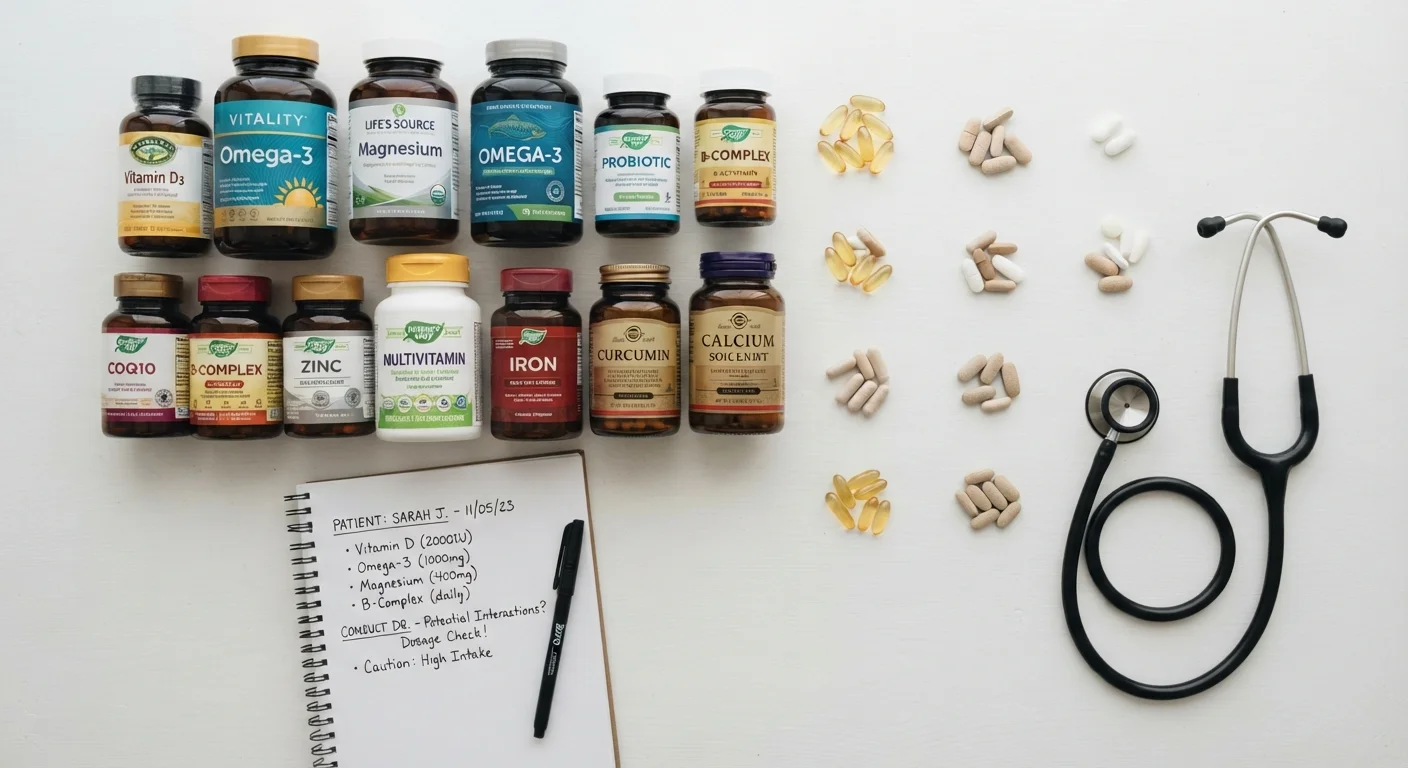
Key Takeaways
- Fat-soluble vitamins like A, D, E, and K can accumulate to toxic levels when taken in excess.
- Many supplements interact with common prescription medications in clinically significant ways.
- A deficiency confirmed by testing is not the same as a general recommendation to supplement.
- Supplement labels are not pre-approved by the FDA for safety or efficacy before reaching store shelves.
- Disclosing all supplements to your doctor is essential before any procedure or new medication.
Why Self-Prescribing Supplements Carries More Risk Than Most People Realize
Dietary supplements occupy an unusual space in American health culture — widely trusted, heavily marketed, and largely unregulated before reaching store shelves. Under the Dietary Supplement Health and Education Act (DSHEA) of 1994, manufacturers are not required to demonstrate safety or effectiveness to the FDA before selling a product. That regulatory gap places meaningful responsibility on consumers to evaluate what they're taking and why.
This doesn't mean supplements are universally dangerous. Many people benefit from targeted supplementation when a genuine deficiency exists or when dietary intake is consistently insufficient. The risks emerge primarily when supplements are taken in excess, combined carelessly, or used as substitutes for professional evaluation. Understanding where well-intentioned choices go wrong is the first step toward using supplements more safely. For context on when food should take priority over pills, see our article on whole foods vs. supplements.
Supplements Are Not Risk-Free by Default
The term 'dietary supplement' can imply a level of safety that isn't always warranted. Unlike prescription drugs, supplements in the United States are not required to prove safety or effectiveness before being sold. This means the burden falls on consumers — and their healthcare providers — to evaluate what's appropriate. Always inform your doctor and pharmacist about every supplement you take.
Common Mistakes When Taking Supplements Without Guidance
The mistakes below reflect patterns seen across the general population — not rare edge cases. Each one is avoidable with the right information and the right professional support.
Assuming 'natural' means safe and treating supplements like food rather than active compounds.
Why it happens: Marketing language frequently frames supplements as gentle, food-derived, or inherently benign, which leads people to underestimate their pharmacological potential.
Self-diagnosing a nutrient deficiency based on symptoms or online articles and supplementing without testing.
Why it happens: Symptoms like fatigue, hair loss, or brain fog are associated with multiple conditions, making it tempting to attribute them to a specific nutrient gap and self-treat.
Taking multiple supplements simultaneously without considering how they interact with each other or with medications.
Why it happens: People often add supplements one by one over time without stepping back to review the full picture, not realizing that certain nutrients compete for absorption or amplify drug effects.
Exceeding the recommended dose, believing more will produce faster or stronger results.
Why it happens: The logic of 'if some is good, more must be better' is intuitive but doesn't apply to nutrients, which operate within physiological ranges.
Not disclosing supplement use to healthcare providers before surgery, procedures, or starting a new prescription.
Why it happens: Many people compartmentalize supplements as separate from 'real' medicine and don't think to mention them unless asked directly.
57,000+
Annual supplement-related adverse events in U.S. EDs
A study published in the New England Journal of Medicine estimated over 23,000 emergency department visits per year from supplements; subsequent surveillance data suggest the figure has grown since.
~80,000
Dietary supplement products on the U.S. market
The NIH Office of Dietary Supplements notes the U.S. market contains tens of thousands of products — none of which require pre-market approval for safety by the FDA.
Nearly 1 in 3
Adults who don't tell their doctor about supplement use
Research published in JAMA Internal Medicine found that a substantial proportion of supplement users do not proactively disclose use to their physician.
If you rely on herbal supplements specifically, the risks of undisclosed use are compounded further. Many herb-drug interactions are clinically significant; our related piece on herb–drug interactions explains why 'natural' doesn't automatically mean safe. Similarly, reading supplement labels accurately is a practical skill worth developing before purchasing any herbal product.
High-Dose Fat-Soluble Vitamins Carry Genuine Risk
Vitamins A, D, E, and K are stored in body fat rather than excreted in urine, meaning excess accumulates over time. Chronic high-dose vitamin A intake, for example, has been associated with liver damage and bone loss. Vitamin D toxicity, while less common, can cause hypercalcemia — elevated blood calcium — leading to nausea, weakness, and kidney complications. Dosing these nutrients beyond established tolerable upper intake levels should only occur under medical supervision.
Making More Informed Decisions Going Forward
Using supplements thoughtfully means treating them with the same critical scrutiny you'd apply to any other health decision. Start by identifying whether you have a documented need — confirmed through a clinical conversation and, where appropriate, laboratory testing. Evaluate sources of information carefully; peer-reviewed research and guidance from institutions like the NIH or USDA differs substantially from influencer recommendations or product marketing. For help evaluating health information you find online, the guidance on online health advice hub is a useful starting point.
Keep your entire care team informed. A pharmacist is an underutilized resource for supplement-drug interaction screening and is often accessible without an appointment. When in doubt about whether a supplement is appropriate for your circumstances — particularly if you are pregnant, breastfeeding, managing a chronic condition, or caring for a child or older adult — consult a qualified healthcare professional before starting.
This article is for general informational and educational purposes only and does not constitute medical advice. Always consult a qualified healthcare provider before starting, stopping, or changing any supplement or treatment.