

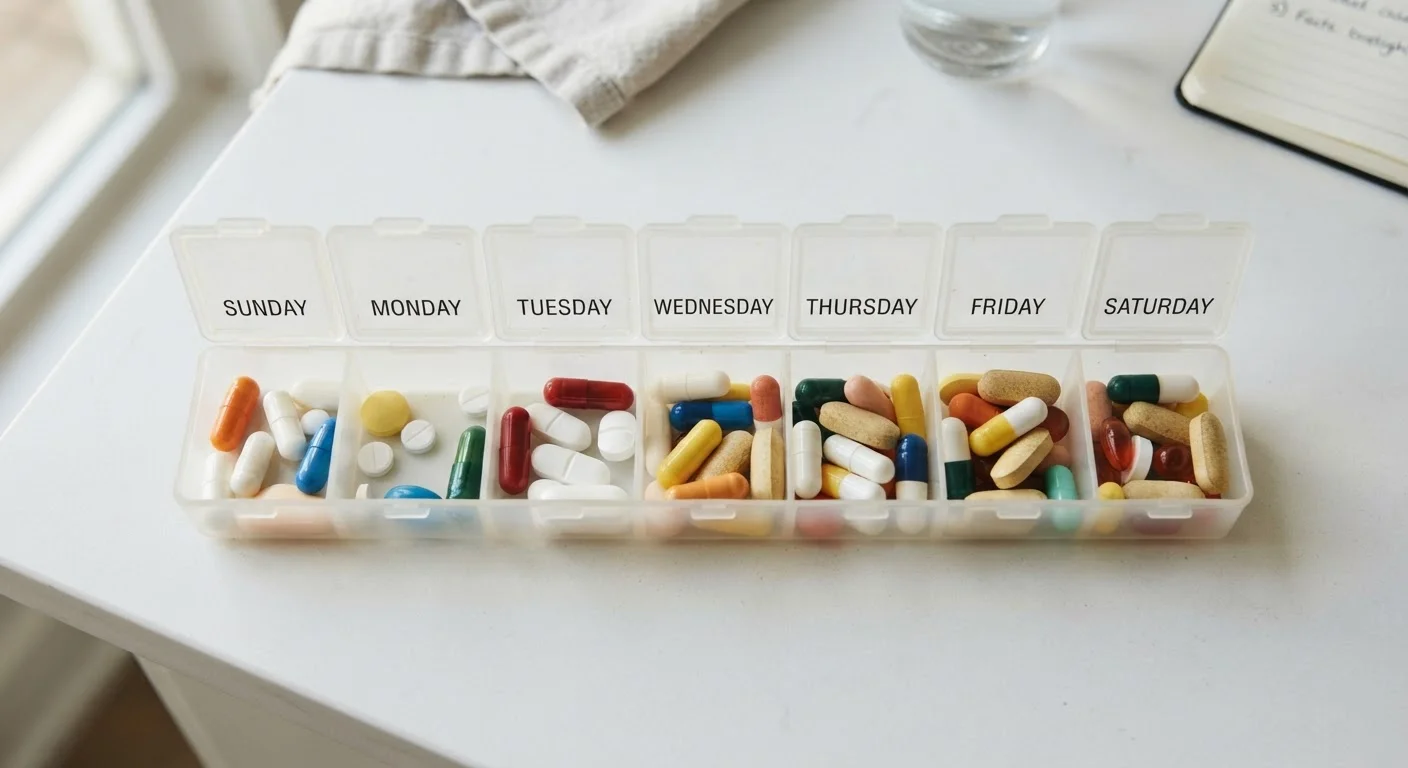
Key Takeaways
- Polypharmacy is defined as taking five or more medications simultaneously and is common in people with chronic conditions.
- Multiple diagnoses—called multimorbidity—are the primary driver of polypharmacy.
- Drug interactions and side effects become harder to predict as the number of medications increases.
- Medication reviews with a healthcare provider or pharmacist can help identify and eliminate unnecessary drugs.
- Keeping a complete, up-to-date medication list—including supplements—is a practical safety step every patient can take.
Polypharmacy
Polypharmacy refers to the use of multiple medications by a single patient, typically defined as taking five or more drugs concurrently. It most commonly occurs in people managing chronic conditions such as heart disease, diabetes, or arthritis, where each condition may require its own treatment regimen. While polypharmacy is sometimes necessary and appropriate, it also increases the risk of drug interactions, side effects, and medication errors.
Clinicians distinguish between 'appropriate polypharmacy,' where every drug serves a clear evidence-based purpose, and 'problematic polypharmacy,' where medications are redundant, contraindicated, or no longer necessary given the patient's current status.
Why Polypharmacy Happens
Polypharmacy does not usually happen by accident — it reflects the medical reality of managing multiple overlapping conditions. When someone is living with heart disease, type 2 diabetes, and chronic kidney disease simultaneously, each condition may generate its own set of prescriptions. As the relationship between comorbid conditions becomes better understood, treatment guidelines have also expanded to include more drug classes, which means appropriate care increasingly involves several medications at once.
Several other factors accelerate polypharmacy beyond multimorbidity alone:
- Cascade prescribing: A side effect of one drug is misread as a new symptom, prompting an additional prescription rather than a dose adjustment.
- Multiple prescribers: Patients who see several specialists may receive prescriptions from each without a single clinician overseeing the full list.
- Guideline adherence: Clinical guidelines for individual conditions often recommend combination therapy, which is appropriate in isolation but adds complexity when multiple guidelines apply to the same patient.
- Patient-initiated additions: Over-the-counter drugs, herbal supplements, and vitamins are frequently added to a regimen without informing the prescriber.
Understanding what managing a long-term condition involves is a helpful foundation for anyone navigating these complexities.
The Real Risks: Interactions, Side Effects, and Adherence
The risks associated with polypharmacy are not theoretical. As the number of medications increases, so does the probability of a clinically meaningful drug-drug interaction. With five drugs, the number of possible two-way interaction pairs is ten; with ten drugs, it rises to forty-five. Many interactions are mild and manageable, but others can cause bleeding, kidney injury, dangerous changes in heart rhythm, or significantly reduce the effectiveness of a medication.
40%
Older adults taking five or more medications
Studies in the U.S. consistently estimate that roughly 40% of adults aged 65 and older take five or more prescription medications concurrently.
~15%
Hospital admissions linked to drug-related problems
Research published in peer-reviewed pharmacoepidemiology literature suggests approximately 10–15% of hospital admissions in older adults are attributable to adverse drug events, many of which are preventable.
5+
Medications defining clinical polypharmacy
The most widely used clinical definition, referenced in guidelines from major health systems internationally, sets polypharmacy at five or more concurrent medications.
Beyond interactions, polypharmacy complicates the identification of side effects. A new symptom — fatigue, dizziness, cognitive changes — may be caused by a medication, an interaction between medications, or the underlying condition itself. Disentangling these possibilities is clinically challenging and often leads to further prescriptions in a cycle sometimes called the prescribing cascade.
Adherence is a separate but equally serious concern. Research consistently shows that adherence decreases as the number of medications increases. Complex regimens with multiple dosing schedules, food restrictions, and storage requirements are simply harder to follow correctly. Non-adherence, in turn, can lead to under-treated conditions and avoidable hospitalizations. The patterns that undermine long-term health management frequently involve medication complexity as a contributing factor.
How Healthcare Teams Approach Polypharmacy
Responsible management of polypharmacy centers on a process called medication review — a systematic evaluation of every drug a patient takes, whether prescription, over-the-counter, or supplemental. A clinical pharmacist or prescribing physician examines whether each medication is still necessary, correctly dosed, free of significant interactions, and consistent with the patient's current health goals.
Keep a Single, Complete Medication List
Write down every medication, supplement, vitamin, and over-the-counter drug you take — including dosages and how often you take them. Bring this list to every appointment, including visits to specialists, urgent care, and the emergency department. This single habit gives every member of your healthcare team the full picture they need to prescribe safely.
Several structured tools help clinicians identify potentially inappropriate medications in older adults, including the Beers Criteria published by the American Geriatrics Society and the STOPP/START criteria used internationally. These evidence-based frameworks highlight drug classes that carry elevated risk in specific populations.
Deprescribing — the planned, supervised tapering or discontinuation of medications that are no longer needed or are causing harm — is an active and growing area of clinical practice. It is not about withholding treatment; it is about aligning the regimen with what is actually beneficial for the individual patient at that point in their health journey.
It is also worth noting that chronic conditions and mental health are deeply interconnected. Depression and anxiety frequently co-occur with chronic physical illness, and psychotropic medications add another layer of complexity to an already demanding regimen.
Patients who use herbal or natural products alongside prescription drugs should be aware that these are not automatically safe. The interactions between herbs and common medications can be clinically significant and are often underreported to providers.
This article is for general informational purposes only and does not constitute medical advice. Always consult a qualified healthcare provider before making any changes to your medications or treatment plan.