

Key Takeaways
- Salt water gargles work through osmosis, pulling excess fluid from swollen throat tissues.
- The practice may reduce mild throat discomfort and loosen mucus, but it does not treat underlying infections.
- A commonly used ratio is about a quarter to half a teaspoon of salt dissolved in eight ounces of warm water.
- Salt water gargles are generally safe for healthy adults but are not recommended for young children who may swallow the solution.
- If throat pain is severe, persistent beyond a few days, or accompanied by fever, see a healthcare provider.
Salt Water Gargle
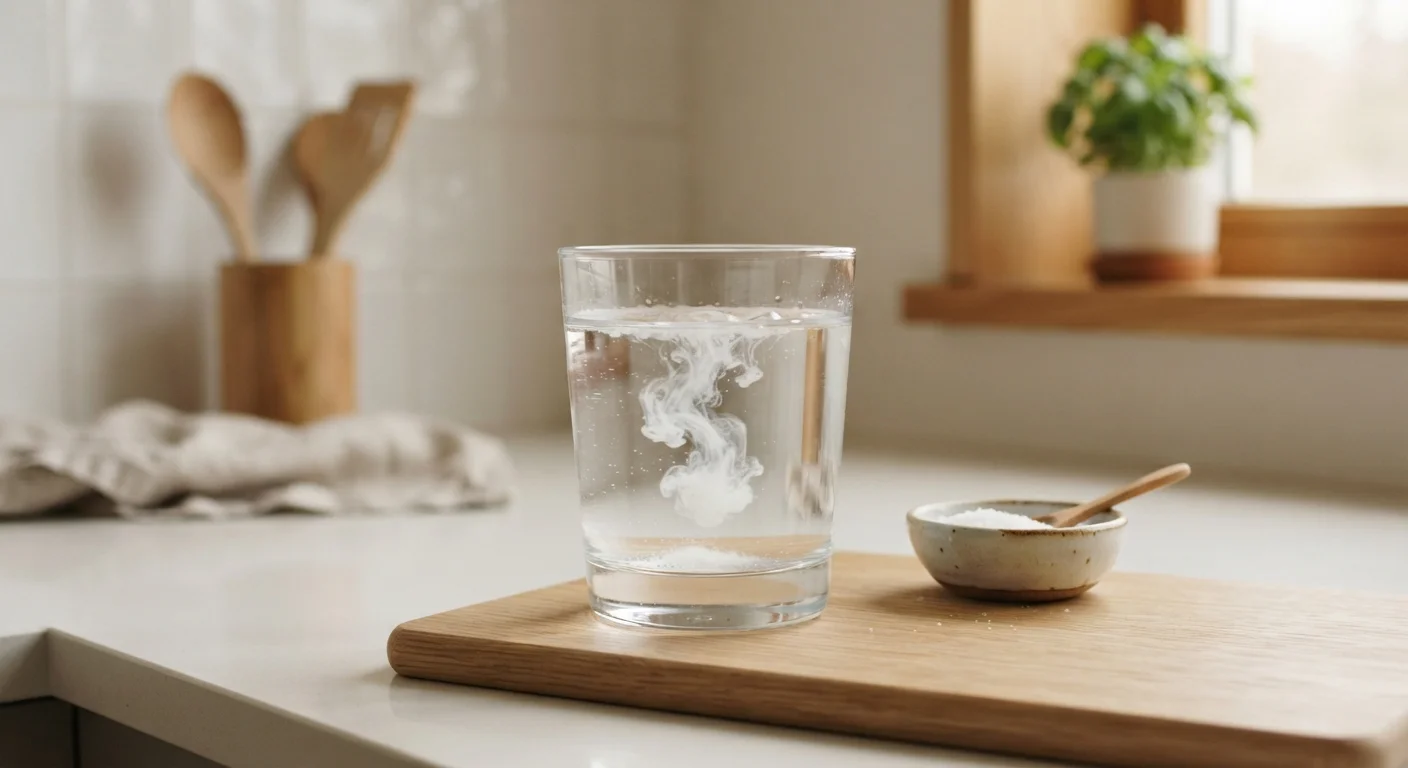
A salt water gargle is a home remedy involving dissolving a small amount of table salt in warm water and swishing the solution at the back of the throat before spitting it out. The practice is commonly used to ease mild sore throat discomfort. It has a long history in traditional medicine and is still recommended by many healthcare providers as a low-risk supportive measure.
The mechanism is primarily osmotic: salt draws fluid across the mucous membrane gradient, which may temporarily reduce swelling and thin mucus in the throat lining.
The Osmosis Explanation: What Salt Actually Does
When you dissolve salt in water and swish it around the back of your throat, a basic principle of biology kicks in: osmosis. Your throat's mucous membranes contain cells that hold water. When those tissues are inflamed, they swell because extra fluid has accumulated in them.
Salt water creates a higher concentration of dissolved particles outside the cells than inside. This prompts water to move out of the swollen tissue and into the saltier solution — a process your body follows automatically. The result can be a temporary reduction in puffiness and some relief from the tight, scratchy sensation that comes with throat inflammation.
At the same time, gargling helps thin and dislodge mucus that coats the throat, making it easier to clear. This mechanical flushing action may also wash away some surface-level irritants, allergens, or viral particles clinging to the mucous membrane, though the extent of this effect in a real-world gargle is hard to quantify precisely.
Salt Water Is Not a Treatment for Strep
Streptococcal (strep) throat is a bacterial infection that typically requires antibiotic treatment prescribed by a doctor. A salt water gargle may ease discomfort temporarily, but it will not clear the infection. If you suspect strep — especially with fever, swollen lymph nodes, or white patches in the throat — seek medical evaluation rather than relying on home remedies alone.
What the Evidence Suggests
Salt water gargles sit in a category of remedies with plausible biological rationale and a long track record of use, but limited high-quality clinical trial data. Several small studies have suggested that regular saline gargling may reduce the incidence or duration of upper respiratory symptoms. A notable Japanese study found that people who gargled with plain water regularly experienced fewer colds than those who did not — though the precise mechanism and the role of salt specifically remain areas of ongoing discussion.
Importantly, salt water gargling does not treat the root cause of a sore throat. Whether that sore throat stems from a virus, bacteria, postnasal drip, or dry air matters enormously for how it should be managed. You can read more about distinguishing those causes in our overview of common sore throat causes.
Salt water is also not the only at-home option worth knowing about. Our guide on comparing salt water, steam, and humidifiers for congestion covers how these remedies stack up for different symptoms.
~30%
Reduction in cold incidence with regular gargling
A study published in the American Journal of Preventive Medicine found gargling with water reduced upper respiratory infections by roughly 36% compared to a control group.
30 seconds
Recommended gargle duration per mouthful
General clinical guidance suggests holding and gargling the saline solution for at least 30 seconds to allow adequate contact with throat tissue.
¼–½ tsp
Salt per 8 oz of water
This commonly cited ratio balances osmotic effectiveness with comfort, avoiding the excessive dryness caused by overly concentrated solutions.
How to Do It Properly
The method matters. Using too little salt produces a plain-water rinse with minimal osmotic effect. Using too much can dry out already-irritated tissues and worsen discomfort.
- Mix: Dissolve one-quarter to one-half teaspoon of plain table salt in eight ounces of warm (not hot) water. Warm water is more comfortable and may help the salt dissolve evenly.
- Gargle: Take a mouthful, tilt your head back slightly, and gargle for about 30 seconds, allowing the solution to reach the back of the throat.
- Spit: Always spit the solution out — do not swallow it.
- Repeat: You can repeat several times per session and return to it every few hours during the day while symptoms persist.
For comparison, another popular approach for throat discomfort involves warm liquids like a ginger-honey infusion, which works differently — soothing through warmth, coating, and the properties of its ingredients rather than osmosis.
Who Should Use Caution
For most healthy adults, a salt water gargle is low-risk. But certain groups should be more careful:
- Young children: Safe gargling requires enough coordination to avoid swallowing the solution. This is not appropriate for toddlers or young children without pediatric guidance.
- People on sodium-restricted diets: While most of the solution is spit out, anyone managing hypertension or kidney disease should discuss this with their care team before making it a regular habit.
- People with oral sores or mouth wounds: Concentrated salt can sting and potentially irritate open tissue, so dilute accordingly or skip if it causes noticeable discomfort.
Salt water gargles are a supportive measure, not a treatment. If your symptoms fit the profile described in our broader look at respiratory folk remedies, understanding their limits helps you know when to call a doctor instead.
This article is for general informational purposes only and does not constitute medical advice. Always consult a qualified healthcare provider for personal medical concerns, diagnosis, or treatment decisions.