

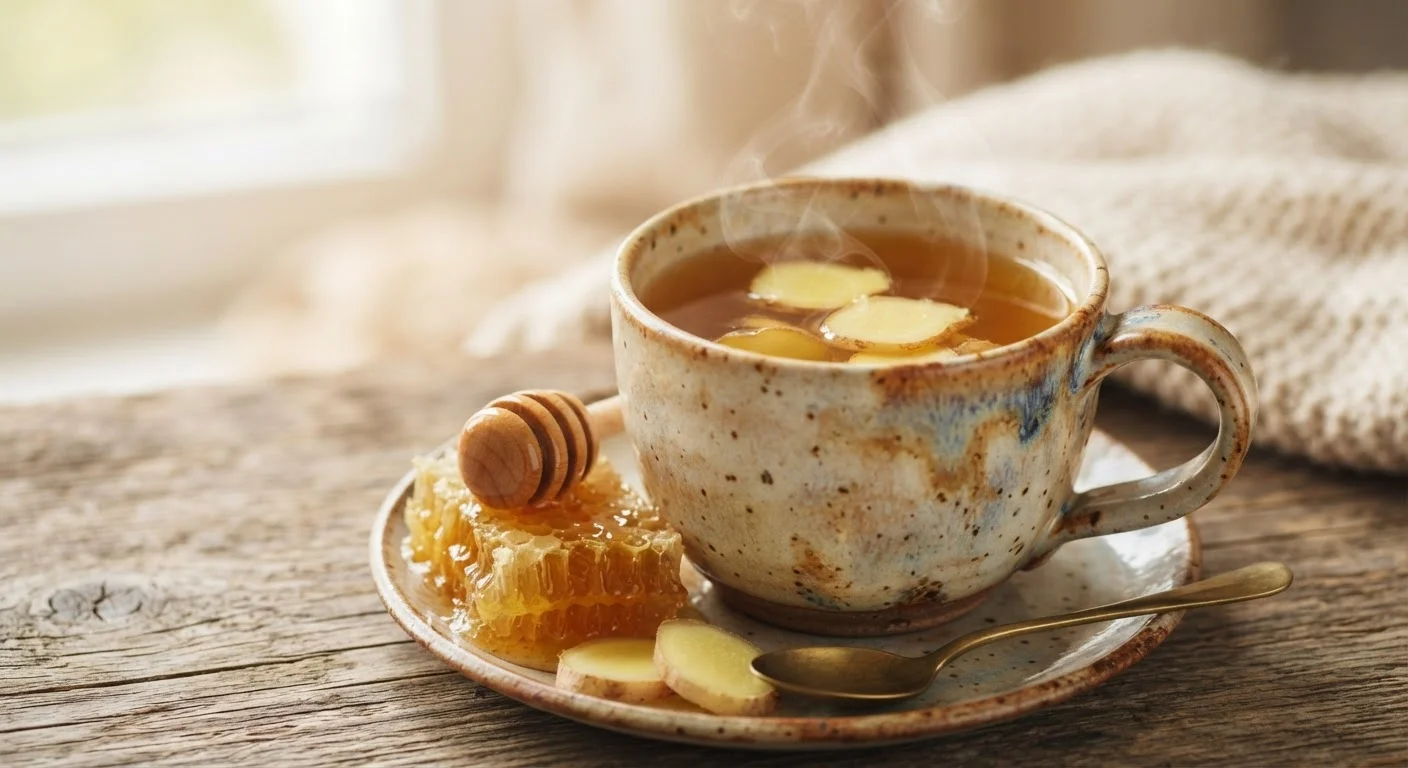
Key Takeaways
- Ginger and honey each have traditional and research-supported roles in soothing throat discomfort.
- The infusion takes under 15 minutes to prepare using common pantry ingredients.
- Honey should never be given to children under 12 months due to botulism risk.
- This remedy may ease mild symptoms but is not a substitute for medical treatment.
- Water temperature matters — boiling destroys some of honey's beneficial compounds.
- Persistent or severe sore throats warrant evaluation by a healthcare professional.
What you will need
Why These Two Ingredients Work Well Together
Ginger and honey have individually long histories as folk remedies, but their combination is particularly well-suited to throat complaints. Understanding what each contributes helps set realistic expectations — this is a comfort measure, not a cure.
Ginger contains compounds called gingerols and shogaols that have been studied for anti-inflammatory and antimicrobial properties in laboratory settings. Traditional medicine systems across Asia and the Middle East have used ginger for respiratory complaints for centuries. For a broader look at how ginger fits into wellness traditions, see our overview of ginger's uses and evidence.
Honey coats and lubricates irritated throat tissues, which helps explain the immediate soothing sensation many people report. Research — particularly in the context of cough and upper respiratory symptoms — suggests honey may offer modest benefits compared to no treatment. Our article on honey as a throat soother covers the science in more depth.
Together, the warmth of the liquid, ginger's pungent compounds, and honey's coating effect create a layered approach to mild throat discomfort. It's worth noting that while these ingredients are studied separately, high-quality clinical trials on the specific combination are limited — most support comes from traditional use and individual-ingredient research.
Add Lemon for Extra Comfort
A squeeze of fresh lemon juice is a popular addition to this infusion. Lemon provides vitamin C and a mild astringent quality that many people find soothing. Stir it in just before drinking, after the water has cooled slightly, to preserve its flavor and nutritional value.
This infusion fits within a broader category of herbal teas used for common ailments. If you're curious how it compares to chamomile, peppermint, or elderflower teas, our guide to herbal teas and the evidence behind them is a good companion read.
Preparation Steps and Safety Considerations
What you will need
Small saucepan or kettle
Used to heat water to the appropriate temperature for the infusion.
Sharp knife and cutting board
Used to peel and slice fresh ginger root into thin pieces.
Mug or heat-safe cup
Holds the finished infusion for drinking.
Fine mesh strainer
Removes ginger pieces before drinking for a smoother texture.
Thermometer
Confirms water temperature stays below boiling to protect honey's compounds.
Peel and slice the ginger
Rinse a 1-inch piece of fresh ginger root under cold water. Use a spoon edge or vegetable peeler to remove the thin skin. Slice the peeled ginger into thin rounds — roughly 4 to 6 slices. Thinner slices release more of ginger's active compounds, including gingerols, into the water.
Simmer the ginger in water
Place the ginger slices in a small saucepan with about 8 ounces (one standard mug) of water. Bring the water to a gentle simmer — not a rolling boil — and let the ginger steep for 8 to 10 minutes. Simmering extracts the active compounds more effectively than simply steeping in hot water.
Cool the liquid slightly before adding honey
Remove the saucepan from heat and let the ginger water cool for 2 to 3 minutes. You're aiming for a temperature around 140°F (60°C) or just below — hot enough to drink comfortably but not steaming vigorously. Adding honey to boiling liquid degrades some of its naturally occurring enzymes and antimicrobial compounds.
Strain into a mug and stir in honey
Pour the warm ginger liquid through a fine mesh strainer into your mug to remove the ginger pieces. Add one to two teaspoons of honey and stir until fully dissolved. Taste and adjust — some people prefer more honey for sweetness, others less.
Sip slowly while warm
Drink the infusion slowly in small sips rather than gulping it down. Slow sipping keeps the warm liquid in contact with the throat tissues longer, which is where the soothing effect is most direct. Most people find one to two cups per day reasonable for mild throat discomfort.
Never Give Honey to Infants
Honey — raw or commercial — must never be given to children under 12 months of age. It can contain Clostridium botulinum spores, which can cause infant botulism, a potentially life-threatening illness. This infusion is intended for adults and older children only. Always consult a pediatrician before using any home remedy for young children.
When to Seek Medical Attention
A ginger-honey infusion may help ease mild throat irritation, but it cannot treat bacterial infections, strep throat, or other conditions requiring medical care. If your sore throat is severe, lasts more than a week, comes with a high fever, difficulty swallowing, or swollen lymph nodes, stop home treatment and see a healthcare provider promptly.
For additional home approaches to throat and respiratory symptoms, you may find it useful to compare this infusion with other traditional methods. Our article on salt water gargles, steam inhalation, and other respiratory folk remedies covers what the evidence says about those alternatives.
This article is for informational purposes only and is not medical advice. Always consult a qualified healthcare professional for diagnosis, treatment, or any questions you have regarding a medical condition.