

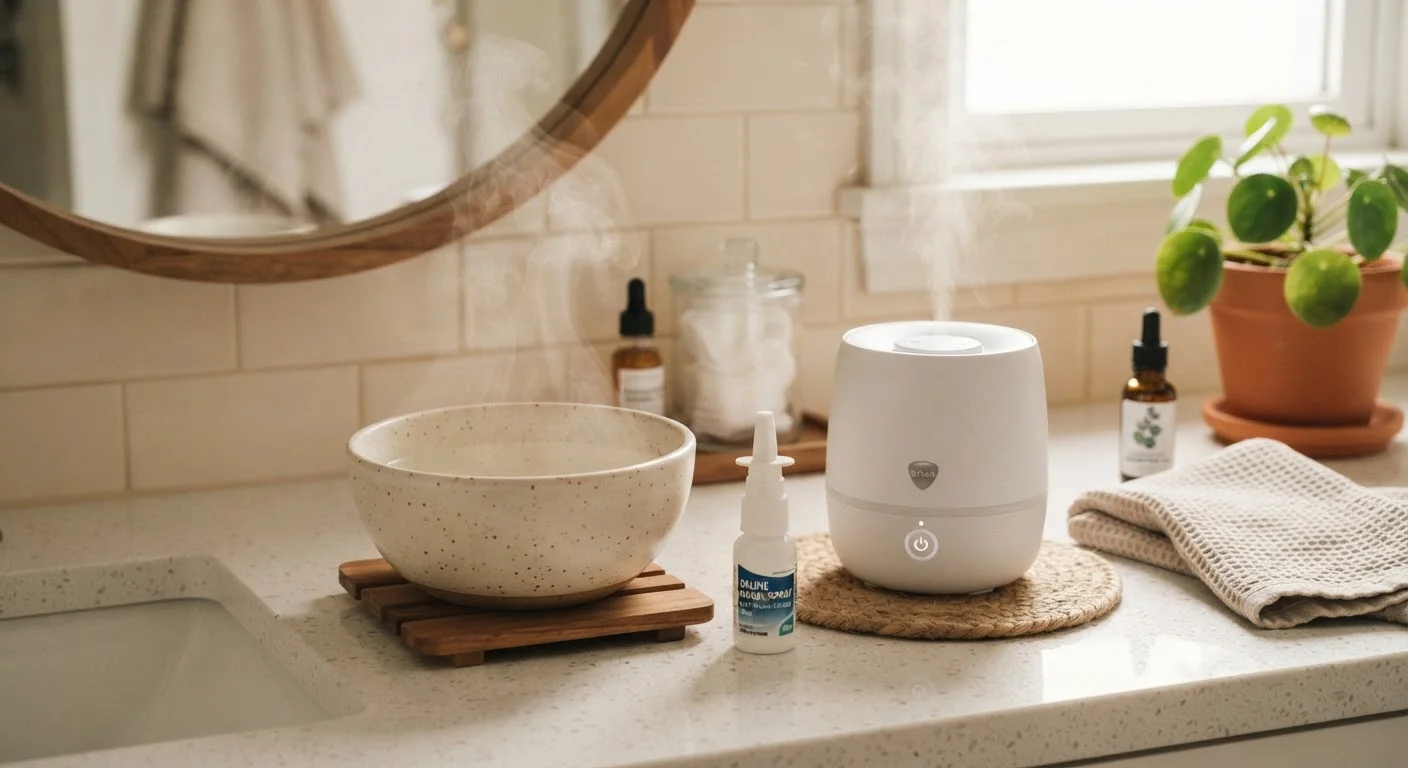
Key Takeaways
- Steam inhalation offers quick, temporary relief by loosening mucus through direct moisture and heat.
- Saline rinses physically flush irritants and excess mucus from nasal passages, with solid research support.
- Humidifiers add ambient moisture to a room, making them a passive, ongoing option rather than a targeted treatment.
- Each method carries its own safety considerations — steam in particular requires care to avoid burns.
- None of these approaches treats the underlying cause of congestion; see a doctor if symptoms persist or worsen.
Our Verdict
All three methods can provide genuine comfort for mild nasal congestion, but they work through different mechanisms and fit different situations. Saline rinses have the strongest research backing for direct symptom relief. Steam inhalation works fast but demands careful handling. Humidifiers shine as a preventive or overnight support tool rather than an acute remedy.
| Best for | Recommended |
|---|---|
| Those wanting immediate, targeted relief during the day | Steam inhalation |
| Those looking for a well-studied, direct method to clear mucus | Saline rinse |
| Those dealing with chronic dry-air congestion or nighttime discomfort | Humidifier |
| Those managing congestion in children or elderly family members | Saline rinse (with professional guidance) |
Why Congestion Happens and What Home Approaches Target
Nasal congestion occurs when the tissues lining the nasal passages become inflamed and blood vessels swell, often in response to a cold, allergies, dry air, or sinus irritation. Mucus production can also increase, compounding the blocked feeling. None of the home-based approaches discussed here treat the root cause — a viral infection remains viral, and an allergen still needs to be addressed — but each can reduce the stuffed-up sensation in different ways.
For a broader look at how home strategies are applied to common everyday symptoms, see our guide to everyday symptom relief. Here, we focus specifically on how steam, saline, and humidifiers compare when congestion is your main complaint.
Steam Inhalation: Fast but Short-Lived
Steam inhalation — leaning over a bowl of hot water with a towel draped over your head, or simply breathing in a hot shower — works by delivering warm, moist air directly to inflamed nasal passages. The heat can temporarily reduce swelling, while moisture may help thin and loosen mucus, making it easier to clear.
The relief tends to be noticeable but brief, typically lasting anywhere from a few minutes to around an hour. Research on steam inhalation for colds and sinusitis is modest; some studies suggest mild, short-term comfort benefits, but it has not been shown to shorten illness duration or significantly reduce infection symptoms.
Steam Inhalation Burns Are a Real Risk
Hot water burns happen quickly, especially when leaning over a bowl. Keep your face at a safe distance from the water surface, never use boiling water directly, and supervise children closely — or avoid this method for young children entirely. Those with conditions affecting sensation or balance should also take extra care.
Steam also pairs naturally with other respiratory home strategies. Our overview of respiratory folk remedies discusses how it fits alongside practices like salt water gargles.
Saline Rinses: The Most Studied Option
Saline (salt water) nasal rinses — used via a neti pot, squeeze bottle, or pre-filled saline spray — work by physically irrigating the nasal passages. This flushes out mucus, allergens, and irritants, and the salt solution may help reduce inflammation in the mucous membranes.
Among the three methods compared here, nasal saline irrigation has the most supportive research. Multiple clinical reviews suggest it can reduce symptom severity for sinusitis and allergy-related congestion, and it is commonly recommended alongside other treatments. Saline sprays offer a gentler version of the same principle and are widely regarded as safe for most people, including children, though technique and hygiene matter greatly.
Getting Saline Rinse Technique Right
Always use distilled, sterile, or previously boiled (and cooled) water when preparing a saline rinse — tap water can contain microorganisms that may cause harm when introduced directly into nasal passages. Rinse and air-dry your neti pot or squeeze bottle after every use, and replace the device regularly. A slightly warm solution tends to be more comfortable than cold.
Salt water is also the basis of gargling for sore throats — a related but distinct use. Our article on what happens when you gargle salt water explains the physiology behind that practice.
Humidifiers: Passive and Preventive
A humidifier adds moisture to the air in a room, targeting the environment rather than the nasal passages directly. When indoor air is very dry — common in winter with central heating running — nasal tissues can become irritated and inflamed more easily. Maintaining indoor relative humidity between roughly 40–50% may help keep nasal passages from drying out.
Humidifiers are best thought of as a supportive or preventive measure rather than an acute treatment. They work slowly and passively, making them well suited for overnight use or for households where dry air is a recurring trigger. The trade-off is maintenance: humidifiers that are not cleaned regularly can harbor mold or bacteria, potentially worsening respiratory symptoms instead of easing them.
| Steam Inhalation | Saline Rinse | Humidifier | |
|---|---|---|---|
| How it works | Warm moisture loosens mucus, reduces swelling | Flushes mucus and irritants physically | Raises room humidity to prevent dryness |
| Speed of relief | Fast (minutes) | Fast to moderate | Slow and gradual |
| Duration of effect | Short-lived (minutes to ~1 hour) | Moderate; repeated use needed | Ongoing while device runs |
| Research support | Modest; comfort benefit only | Strongest of the three | Limited; indirect benefit |
| Key safety concern | Burn risk from hot water or steam | Must use sterile water and clean equipment | Mold/bacteria if not cleaned regularly |
| Best use case | Quick daytime relief | Active congestion, sinusitis, allergies | Dry-air environments, overnight use |
| Suitable for children | Use with caution; burn risk | Generally yes, with guidance | Yes, cool-mist preferred |
If you are considering warm-mist versus cool-mist models, note that both can raise humidity effectively; the choice often comes down to safety preferences, particularly in homes with young children where cool-mist units reduce burn risk.
Safety, Limitations, and When to See a Doctor
Each method comes with practical cautions. Steam inhalation carries a real burn risk — particularly for children and older adults — if the water is too hot or the face is held too close. Saline rinses require clean, properly prepared water (distilled, sterile, or previously boiled) and sterile equipment to avoid introducing pathogens into the nasal passages. Humidifiers demand regular cleaning to prevent microbial growth.
None of these approaches is appropriate as a replacement for medical care when symptoms are severe, prolonged, or accompanied by fever, facial pain, thick discolored mucus lasting more than 10 days, or difficulty breathing. These may signal a bacterial sinus infection or another condition requiring professional evaluation. If you are pregnant, managing a chronic respiratory condition, or seeking guidance for a young child or elderly person, consult a healthcare provider before relying heavily on any home remedy.
This article is for general informational and educational purposes only and is not a substitute for professional medical advice, diagnosis, or treatment. Always consult a qualified healthcare provider with questions about your health or before starting any home treatment.