

Key Takeaways
- Most mild, everyday symptoms can be supported with simple at-home approaches before reaching for medications.
- Common kitchen ingredients like ginger, honey, and oats have well-documented traditional use for minor complaints.
- Knowing when a symptom exceeds at-home care is just as important as knowing what remedies to try.
- None of these strategies replace professional medical advice, diagnosis, or treatment.
- Persistent, worsening, or unusual symptoms always warrant a conversation with a healthcare provider.
When Mild Symptoms Call for Simple Strategies
Not every sore throat or bout of bloating demands a trip to the doctor or a run to the pharmacy. For many minor, everyday complaints, there are time-tested, non-prescription approaches that people have relied on at home for generations. Some of these have meaningful scientific support; others are rooted primarily in traditional use. Knowing the difference matters.
Before trying any at-home approach, it helps to honestly assess what you're dealing with. Our pre-treatment symptom checklist walks through how to evaluate whether a mild complaint is suitable for self-care. And if you'd like a broader picture of how home-based relief works and what the evidence actually says, the complete educational resource on natural symptom relief is a solid starting point.
Below are eight common symptoms and the at-home strategies most frequently associated with them — along with honest notes on what the evidence does and doesn't support.
Bloating and Gas
Bloating after meals is one of the most common digestive complaints adults report. Warm ginger tea is frequently used to ease abdominal discomfort — ginger contains compounds called gingerols that may support gastric motility (the movement of food through the digestive tract). Peppermint tea is another traditional option, though people with acid reflux are often advised to avoid it. Gentle walking after meals may also help move trapped gas along. For a deeper look at what's actually driving bloating, see why bloating happens and what your body is signaling.
Warm ginger tea has a long history of traditional use for easing post-meal abdominal discomfort.
Sore Throat
A mild sore throat — often associated with a cold or dry air — is one of the most frequently managed complaints at home. Warm water with honey and lemon is probably the most widely used approach. Honey has demonstrated antibacterial properties in laboratory settings and may coat the throat to temporarily reduce irritation. Gargling with warm salt water (a mild saline solution) is another traditional practice that may help reduce swelling in throat tissue. Neither approach treats the underlying cause, but both may ease discomfort while the body heals.
Honey's documented antibacterial properties make it a practical, evidence-adjacent choice for sore throat relief.
Minor Burns and Skin Irritation
For very minor thermal burns — such as a brief contact with a hot pan — cooling the area under cool (not ice-cold) running water for around 10 to 20 minutes is considered the most appropriate immediate step. Aloe vera gel, applied from the leaf or a pure gel product, is widely used afterward for its traditionally soothing properties. Some small studies suggest aloe may support healing in superficial burns, though the evidence remains limited. Do not apply butter, oil, or toothpaste — these can trap heat and increase infection risk. Any burn that blisters, covers a large area, or involves the face or hands should be evaluated by a professional.
Cool running water — not ice — is the first and most important step for any minor burn.
Itchy or Dry Skin
Dry, itchy skin is common, especially during winter months or after prolonged hot showers. An oatmeal bath — using colloidal oatmeal (finely ground oats) added to lukewarm water — is a time-honored approach with some scientific backing. Oats contain compounds called avenanthramides that may have mild anti-inflammatory effects on skin. Moisturizing immediately after bathing, while skin is still slightly damp, is another widely recommended practice to help retain moisture. Fragrance-free, plain moisturizers are generally preferred for sensitive skin. Persistent or worsening rashes always deserve professional evaluation. The kitchen remedies hub covers additional ingredient options commonly used for skin comfort.
Colloidal oatmeal baths have real science behind them — one of the better-supported skin-soothing home remedies.
Tension Headache
Mild tension headaches — often felt as a band of pressure around the forehead — are among the most common pain complaints. Staying well hydrated is a reasonable first step, since even mild dehydration can contribute to headache onset. Applying a cool or warm compress to the forehead or neck is another frequently reported self-care measure. Some people find that peppermint oil applied to the temples provides short-term relief; a small body of research suggests topical peppermint may have mild analgesic effects, though this evidence is preliminary. Rest in a quiet, dim room is a simple but often effective supportive measure.
Hydration is a simple, low-risk first response to a mild tension headache that's easy to overlook.
Nausea
Mild nausea — from motion sickness, overeating, or a minor stomach bug — is commonly addressed with ginger in various forms: tea, candied ginger, or ginger chews. Ginger has more clinical research behind it than most herbal remedies, particularly for nausea related to pregnancy and chemotherapy, though it's important to note that pregnant individuals should consult their provider before using any supplement. Sipping clear fluids slowly and avoiding strong smells and fatty foods are standard supportive measures. Acupressure at the P6 point (on the inner wrist) is also a traditionally used approach with some supporting studies, particularly for motion sickness.
Ginger is one of the most studied herbal remedies for nausea, with a meaningful body of supporting research.
Congestion and Stuffy Nose
Nasal congestion from a cold or minor allergy flare is a common complaint. Saline nasal rinses or sprays — using a sterile saline solution — are widely recommended as a safe, non-medicated way to flush irritants and thin mucus. Steam inhalation (carefully breathing in steam from a bowl of hot water, keeping a safe distance to avoid burns) is another traditional approach. Staying well hydrated and using a humidifier in dry indoor environments may also help. For a broader picture of how respiratory infections develop and resolve, see the comprehensive overview of infections and illness.
Saline rinses are a safe, well-supported non-medicated approach to easing nasal congestion.
Minor Muscle Soreness
Delayed-onset muscle soreness (DOMS) — the achiness felt a day or two after unaccustomed exercise — is generally self-limiting and manageable at home. Applying a cold pack wrapped in cloth during the first 24 to 48 hours may help manage initial inflammation. After that window, gentle warmth (a warm bath or heating pad) is often preferred to ease stiffness. Light movement and gentle stretching are generally more helpful than complete rest for muscle recovery. Epsom salt baths are popularly used for muscle aches; while magnesium absorption through skin is not well established, many people report subjective comfort from a warm soak regardless.
Light movement typically supports muscle recovery better than complete rest for ordinary post-exercise soreness.
A Few Things Worth Keeping in Mind
At-home approaches work best when symptoms are mild, short-lived, and clearly identifiable. They're not substitutes for evaluation when something feels serious, unusual, or persistent. If you're pregnant, caring for a young child, managing a chronic condition, or taking prescription medications, check with a healthcare provider before trying any new remedy — even a "natural" one. Interactions and contraindications can occur with herbal preparations and supplements just as they can with conventional medicines.
Stock Your Pantry Before You Need It
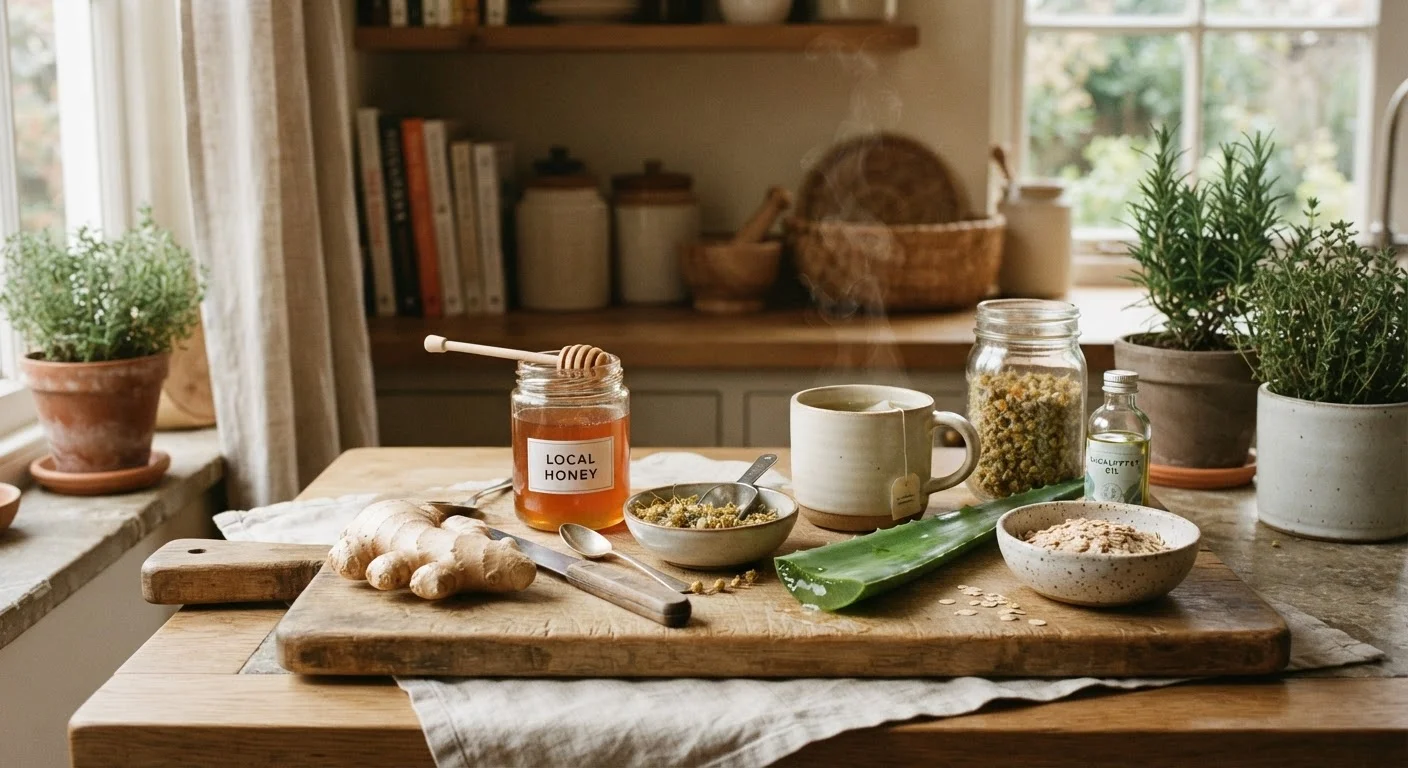
Many of the approaches listed here — ginger, honey, oats, saline, aloe — are inexpensive and have a shelf life long enough to keep on hand. Having them available means you're less likely to reach for more aggressive options when a mild symptom appears. See what's worth stocking and why for a practical reference guide.
For a balanced look at the genuine advantages and real limitations of relying on home remedies, see The Tradeoffs of Relying on Home Remedies for Everyday Symptoms. And if you'd like to stock your kitchen thoughtfully, Keeping a Home Remedy Pantry outlines which ingredients are most commonly used and why.
This article is for general informational purposes only and is not a substitute for professional medical advice, diagnosis, or treatment. Always consult a qualified healthcare provider with questions about your health or before starting any new health practice.