

Key Takeaways
- Natural symptom relief is most appropriate for mild, self-limiting complaints that don't require diagnosis.
- Evidence quality varies widely — some remedies have solid research support, others rely on traditional use alone.
- Always assess symptoms carefully before deciding to manage them at home.
- Herbs and supplements can interact with medications; professional guidance matters.
- Persistent, worsening, or severe symptoms always warrant a healthcare provider's evaluation.
What 'Natural Symptom Relief' Actually Means
The phrase "natural symptom relief" covers a wide range of non-prescription, at-home strategies people use to ease everyday complaints — think sore throats, mild headaches, upset stomachs, or minor muscle tension. It typically includes dietary adjustments, hydration practices, heat or cold application, herbal preparations, and rest-based approaches.
Importantly, these strategies are aimed at managing symptoms, not diagnosing or treating underlying disease. That distinction matters. A runny nose from a cold and a runny nose from a more serious infection can feel identical; the approach to each, however, may be very different.
"Natural" does not automatically mean safe, gentle, or effective. Some plant compounds are pharmacologically active and carry real risks, especially in higher amounts or when combined with prescription medications. Understanding this helps readers approach home remedies with appropriate care rather than uncritical enthusiasm.
This article is for general informational and educational purposes only. It is not medical advice, and it is not a substitute for evaluation by a qualified healthcare professional.
Assessing Your Symptoms First
Before reaching for any remedy — natural or otherwise — a brief, honest symptom check is the most important step you can take. Key questions include: How long have symptoms been present? Are they getting better, staying the same, or getting worse? Do you have any underlying health conditions that might complicate a straightforward complaint?
Our pre-treatment symptom checklist walks through exactly this process, helping you determine whether at-home management is appropriate before you act.
Start With an Honest Symptom Check
Before trying any remedy, take two minutes to honestly assess what you're experiencing. Note when symptoms started, how severe they feel, and whether anything makes them better or worse. This simple habit helps you make a more informed decision about whether home management is appropriate — and gives you useful context if you do need to contact a provider.
Red-flag symptoms — high fever, chest pain, difficulty breathing, sudden severe headache, or signs of dehydration — always require prompt medical attention. No home remedy is a substitute for emergency care.
Common Approaches and What the Evidence Shows
Several non-prescription strategies have accumulated a meaningful body of supportive research, while others remain rooted primarily in tradition. Here is a plain-language breakdown:
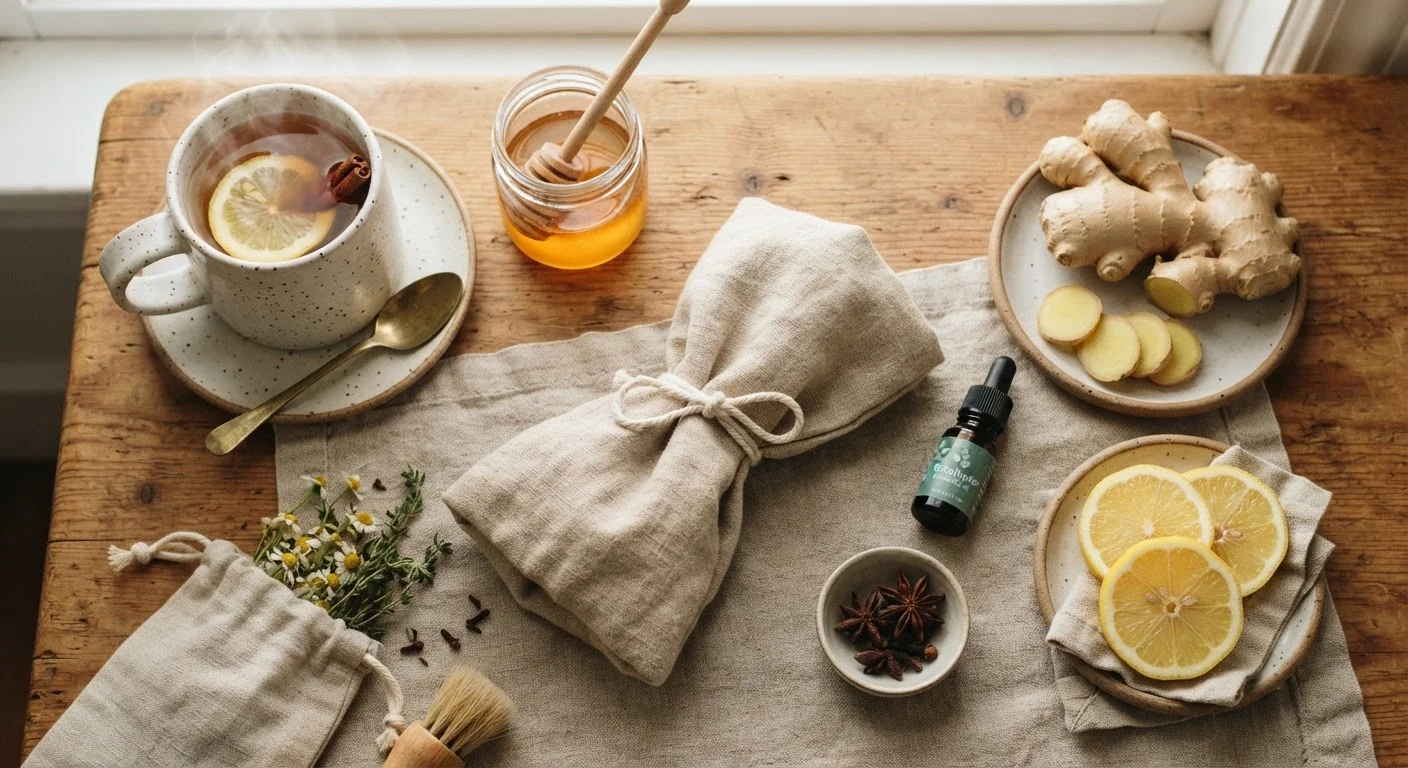
- Hydration and rest — Consistently supported by medical consensus for mild viral illnesses. Adequate fluid intake helps the body's natural recovery processes.
- Honey for cough — Multiple clinical reviews suggest honey may modestly reduce cough frequency and severity in adults, though it should never be given to children under 12 months due to botulism risk.
- Warm saltwater gargle — A longstanding practice for sore throat discomfort. Some evidence suggests it may temporarily ease mild throat irritation.
- Cold and heat therapy — Well-established for minor muscle soreness and tension. Cold reduces acute inflammation; heat promotes circulation and eases stiffness.
- Ginger for nausea — Several small studies suggest ginger preparations may help ease mild nausea, though evidence is not yet definitive.
38%
U.S. adults using complementary health approaches
According to the National Center for Complementary and Integrative Health (NCCIH), roughly 38% of American adults use some form of complementary or alternative health practice.
~1 in 5
Adults using herbal supplements annually
Surveys conducted by the American Botanical Council indicate approximately one in five U.S. adults uses herbal supplements in a given year.
Where evidence is weak or conflicting, we note it — because an honest account of what we know and don't know is more useful than confident overclaiming.
Herbs and Plants: Foundational Knowledge
Herbal remedies draw on centuries of traditional use across many cultures. Some — like echinacea, chamomile, and peppermint — are now subjects of active clinical research. Others have limited formal study but remain widely used based on accumulated anecdotal experience.
A few principles apply across the board:
- Dose matters. Many herbs that appear harmless in culinary amounts can cause effects at supplement doses.
- Interactions are real. St. John's Wort, for example, is well-documented to interact with several prescription medications, including antidepressants and blood thinners.
- Quality is inconsistent. Herbal supplement manufacturing is less tightly regulated than pharmaceuticals in the U.S., so product quality varies.
For a deeper foundation on this area, our herbal and plant basics hub covers the most commonly used herbs in everyday wellness practice.
When trying any new herbal preparation, start with a small amount and observe your response for at least 24 hours before increasing. Individual reactions — including allergic responses — vary considerably.
Practitioners consistently note that sensitivity to botanicals is highly individual, and a cautious introduction reduces the risk of unexpected reactions.
Keep a brief symptom log when managing complaints at home — note what you tried, when, and whether it helped. This record is genuinely useful if you do eventually consult a clinician.
Healthcare providers make better-informed decisions when they have a clear timeline of symptom progression and any interventions already attempted.
Knowing the Limits: When to Seek Professional Care
At-home strategies have a clear scope: they are appropriate for mild, self-limiting complaints in generally healthy adults. They are not appropriate as a replacement for professional diagnosis or ongoing medical care.
Seek care from a healthcare provider if:
- Symptoms persist beyond a week without improvement, or worsen at any point.
- You experience symptoms that are unusual, severe, or difficult to explain.
- You are pregnant, elderly, immunocompromised, or managing a chronic health condition.
- You are considering herbal supplements alongside existing medications.
Finding trustworthy health information online is also part of navigating this landscape wisely. Our online health advice hub offers guidance on evaluating sources and avoiding misinformation.
Home-based care is one tool among many — most effective when used with clear-eyed awareness of its boundaries and a willingness to escalate to professional support when the situation calls for it.
This article is for informational purposes only and does not constitute medical advice. Always consult a qualified healthcare professional for personal health concerns, diagnosis, or treatment decisions.