

Key Takeaways
- Not every mild symptom requires medication — self-assessment is a useful first step.
- Certain red-flag signs always warrant prompt professional medical attention.
- Tracking symptom duration and severity helps you describe your health accurately to a doctor.
- People with chronic conditions, pregnancy, or young children should consult a professional before self-managing.
- At-home strategies work best for low-risk, short-duration complaints with no alarming features.
Summary
18 items · 10–20 minutes
Why Pause Before Treating?
When a headache strikes or a sore throat flares up, the instinct to immediately reach for the medicine cabinet is understandable. But not every mild symptom needs medication, and some symptoms that feel minor are actually early signals worth discussing with a healthcare provider. Taking a few minutes to assess what you're experiencing — before acting — can help you make a safer, more informed decision.
This checklist is designed for everyday adults dealing with common, seemingly mild complaints: things like a runny nose, low-grade fatigue, a mild headache, or an upset stomach. It is not a diagnostic tool and does not replace professional medical advice. Think of it as a structured way to pause, observe, and decide whether home management makes sense — or whether calling a provider is the wiser move.
If you're already managing a chronic condition, are pregnant, or are assessing symptoms in a child or older adult, please consult a qualified healthcare professional rather than relying on general at-home guidance. For more on what warrants a doctor's visit, see our guide to seeking professional medical care.
Some Symptoms Are Always an Emergency
Chest pain or pressure, sudden difficulty breathing, one-sided weakness or numbness, sudden severe headache, or signs of a severe allergic reaction (swelling of the throat, difficulty swallowing) require emergency services immediately — call 911 or your local emergency number. Do not attempt to manage these symptoms at home or wait to see if they improve.
Tools You May Find Helpful
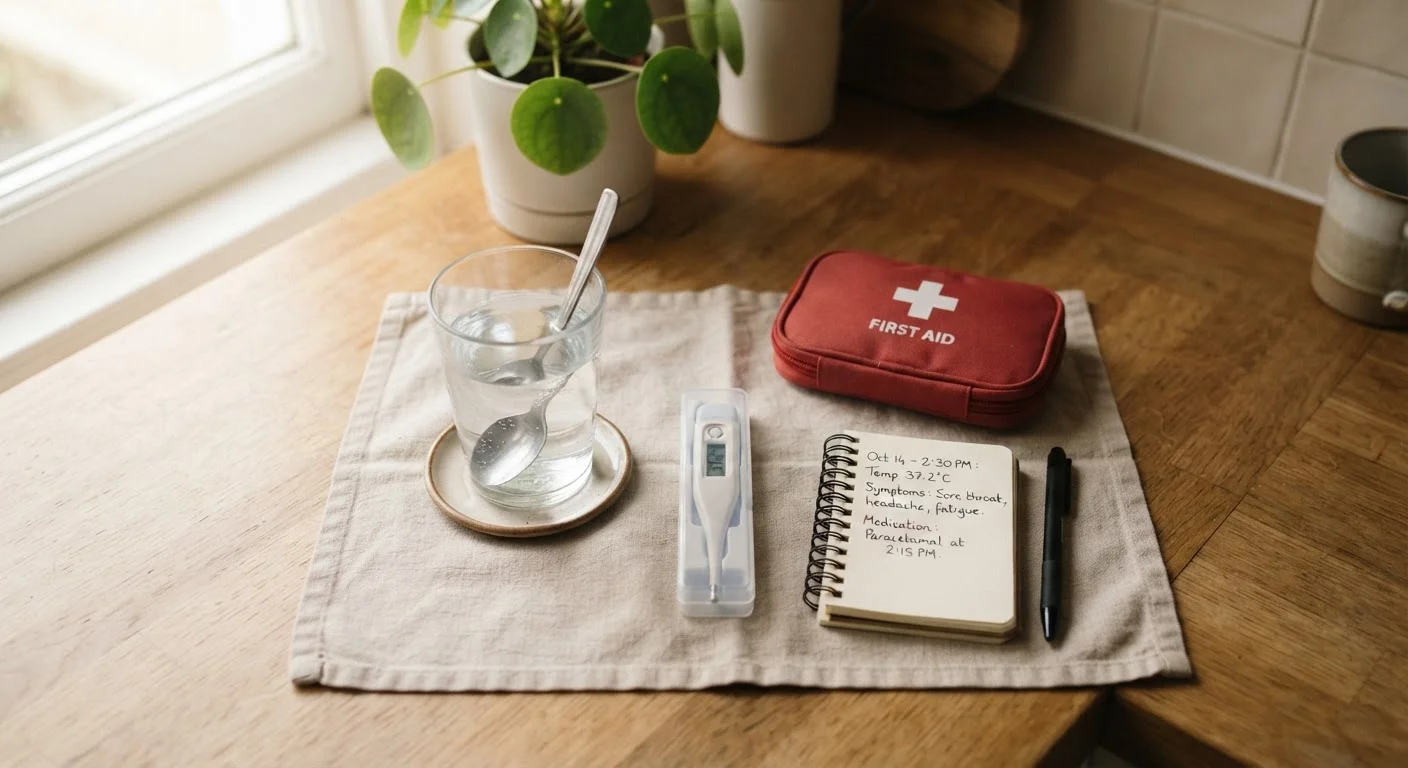
You don't need much to run through this checklist effectively. A few basic items can help you gather accurate observations.
Digital or Mercury-Free Thermometer
Accurately measures body temperature to help you distinguish a mild fever from a high one.
Symptom Log (Notepad or Phone App)
Tracks onset time, severity ratings, and changes over time — useful if you later speak with a provider.
Blood Pressure Monitor (Home Cuff)
Helpful for adults with known cardiovascular concerns who want to rule out elevated pressure as a contributing factor.
Pulse Oximeter
Measures blood oxygen levels, which can be informative for respiratory symptoms in adults with known lung or heart conditions.
The Pre-Treatment Symptom Checklist
Work through each group below before deciding on a course of action. Items marked must are non-negotiable checkpoints. Should items are strongly recommended for a complete picture. Nice-to-have items add helpful context but aren't essential.
Safety Check — Screen for Red Flags First
Symptom Snapshot — Understand What You're Dealing With
Personal Context — Know Your Own Health Picture
Home Management Readiness — Set Yourself Up to Act Safely
If you answered yes to any red-flag questions in the Safety Check group, stop here and contact a healthcare provider or emergency services. For common illnesses where you're unsure whether your symptoms cross that threshold, our overview of common infections and illnesses can help you understand what different symptoms may indicate.
Don't Delay Care if Symptoms Worsen
At-home management is appropriate only when symptoms remain mild and stable. If a symptom you've been monitoring gets noticeably worse, spreads, or is joined by new concerning signs within 24–48 hours, contact a healthcare provider promptly. Waiting too long can allow a manageable condition to become more serious.
What to Do With Your Assessment
Once you've worked through the checklist, you'll fall into one of two categories. If your symptoms are mild, short-lived, and free of any red flags, at-home strategies — rest, hydration, and simple comfort measures — are often appropriate starting points. For example, if you're dealing with a tension headache, there are well-documented non-prescription approaches worth trying before reaching for pain relievers. Our article on at-home strategies for mild tension headaches walks through several of these evidence-informed options.
If your checklist reveals worsening symptoms, an unusual pattern, or any features you can't easily explain, the next step is booking a professional consultation. When you do, arriving prepared makes a real difference. Our checklist for preparing for a diagnostic appointment can help you organize your symptom history, medications, and questions before you go.
Self-assessment is a useful habit, but it has limits. Use this checklist as a starting point — not a final answer. When in doubt, reach out to a qualified healthcare professional.
This article is for general informational and educational purposes only and does not constitute medical advice, diagnosis, or treatment. Always consult a qualified healthcare professional for concerns about your health or before making changes to any treatment plan.