

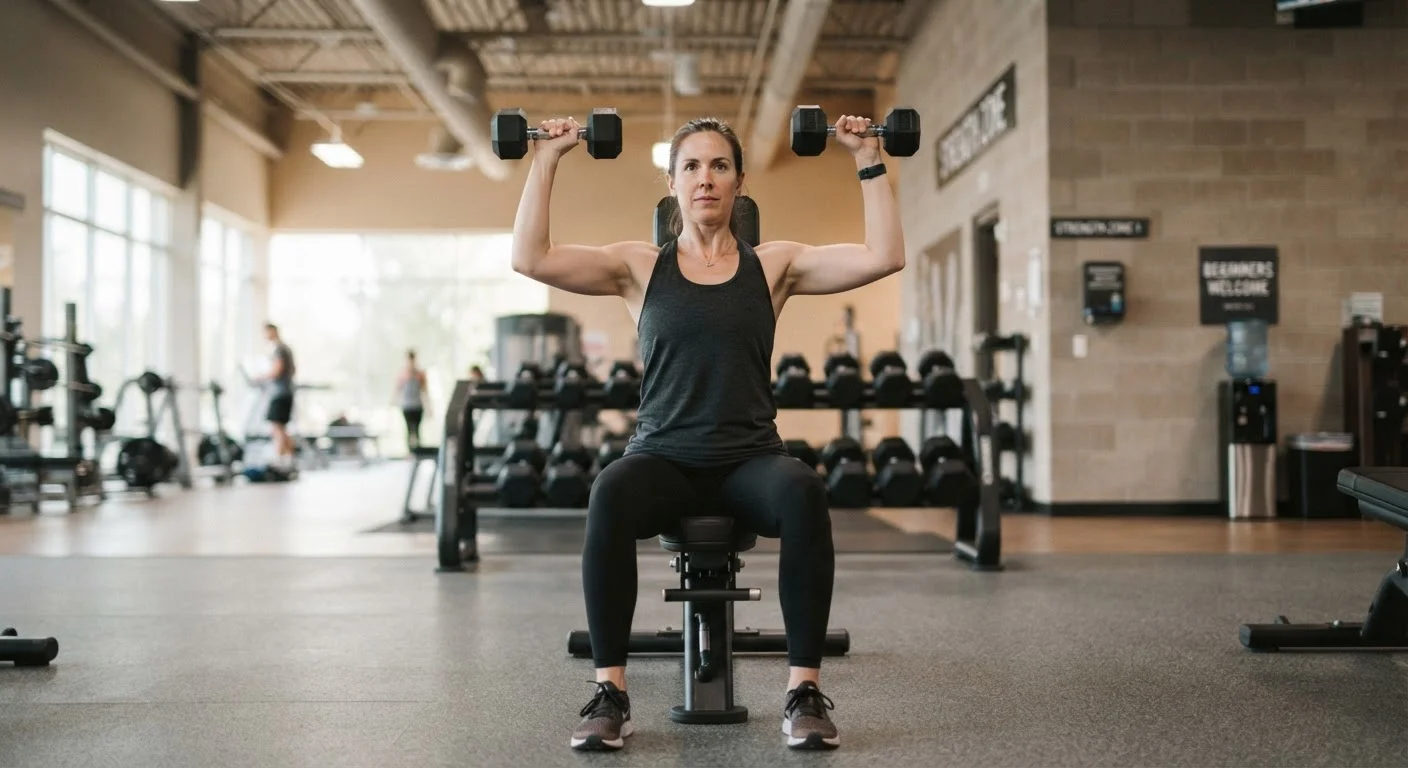
Key Takeaways
- Strength training preserves muscle mass and supports metabolic health at any age.
- Progressive overload — gradually increasing the challenge — is the core driver of results.
- Beginners can start with bodyweight or light resistance and still make meaningful gains.
- Two to three sessions per week with adequate rest is enough to begin building strength.
- Form always takes priority over the amount of weight lifted, especially when starting out.
Start here
Why Strength Training Matters for Adults
Build your foundation
Core Principles Every Beginner Needs to Know
Make your choice
Choosing Your Starting Point
See it in practice
What a First Month Actually Looks Like
Train smarter
Common Mistakes and How to Avoid Them
Why Strength Training Matters for Adults
Adults naturally begin losing muscle mass in their 30s — a process called sarcopenia — at a rate of roughly 3–8% per decade without intervention. Strength training is the most effective tool known to slow this loss, support bone density, improve metabolic function, and maintain the physical independence most people take for granted until it starts to slip.
The good news: you do not need to be an athlete, own expensive equipment, or join a gym to benefit. The fundamentals of resistance training are accessible to nearly every healthy adult. For a broader picture of how strength and flexibility work together, see the complete overview of strength and flexibility training.
Sarcopenia
The gradual loss of muscle mass and strength that occurs with aging. It can be significantly slowed through regular resistance training.
Progressive overload
Gradually increasing the difficulty of your workouts over time — by adding resistance, reps, or reducing rest — so your muscles continue adapting and growing stronger.
DOMS
Delayed onset muscle soreness — the muscle ache that appears 24–48 hours after unfamiliar exercise. It is a normal response to new physical stress, not a sign of injury.
Repetitions and sets
A repetition (rep) is one complete execution of an exercise. A set is a group of repetitions performed consecutively before resting.
Resistance training
Any form of exercise that uses an opposing force — such as bodyweight, bands, dumbbells, or machines — to make muscles work harder and adapt over time.
Core Principles Every Beginner Needs to Know
Understanding a few foundational concepts will help you train more effectively from day one.
Progressive Overload
Your body adapts to whatever stress you consistently place on it. To keep improving, you need to gradually increase the challenge — whether by adding a small amount of resistance, performing one more repetition, or reducing rest time. This principle, called progressive overload, is the engine behind every strength gain.
Recovery Is Part of the Work
Muscle tissue is broken down during exercise and rebuilt during rest. Skipping recovery — through poor sleep, training too frequently, or under-eating — limits your progress and raises injury risk. Most beginners benefit from at least one rest day between strength sessions targeting the same muscle groups.
Consistency Beats Intensity
A moderate workout performed reliably three times a week will produce far better results than occasional intense efforts. Build the habit first; intensity can increase as your body adapts.
Track Your Reps, Not Just Your Feelings
Keep a simple log of what you did each session — exercises, sets, and reps. Progress in strength training is often gradual enough that it is hard to feel day-to-day. A written record makes improvement visible and helps you apply progressive overload systematically.
Choosing Your Starting Point
Beginners have more choices than they might expect. Each approach has legitimate merit, and the best option is often the one you will actually stick with.
- Bodyweight training: Exercises like squats, push-ups, glute bridges, and planks require no equipment and scale effectively for newcomers. Our beginner's guide to bodyweight training walks through the full structure.
- Resistance bands: Lightweight, affordable, and joint-friendly, bands add variable resistance to movements. Understand their strengths and limits before relying on them exclusively — see what resistance bands can and can't do.
- Free weights (dumbbells or a barbell): Provide consistent, measurable resistance that is easy to increase incrementally. If you are unsure whether bodyweight or weights suits you better, the evidence comparing both approaches is a useful read.
Before committing to a programme, it is worth running through a readiness checklist to confirm you have the basics covered.
What a First Month Actually Looks Like
Expectations matter. Here is a realistic picture of what a beginner's first four weeks typically involve:
- Week 1–2: Focus entirely on learning movement patterns. Use light resistance or just bodyweight. Expect muscle soreness (DOMS) after the first session or two — this is normal and will lessen as your body adapts.
- Week 3–4: Movements begin to feel more natural. You may notice slightly improved energy, better posture, and the ability to complete more repetitions with the same effort. This is your neuromuscular system becoming more efficient — a real and meaningful form of progress.
A practical starting structure might look like two full-body sessions per week, each lasting 30–45 minutes, covering a push movement (e.g., push-up), a pull movement (e.g., resistance band row), a lower-body movement (e.g., squat), and a core exercise (e.g., plank). Simple, balanced, and repeatable.
Early Gains Are Largely Neural
The strength improvements most beginners notice in the first four to six weeks come primarily from the nervous system learning to recruit muscles more efficiently — not from significant muscle growth. This is why noticeable changes in muscle size take longer to appear than increases in strength or exercise capacity.
Common Mistakes and How to Avoid Them
A few patterns consistently derail beginners. Recognising them early saves both time and injury risk.
Starting Too Heavy
Choosing a weight you can barely lift for a few reps might feel productive, but it undermines form and increases injury risk. Start lighter than you think you need to, master the movement, then progress gradually.
Skipping the Warm-Up
Moving cold muscles through heavy ranges of motion is a shortcut to strains and pulls. Five to ten minutes of light cardio or dynamic movement prepares joints and tissues for the work ahead.
Training the Same Muscles Every Day
Muscles need 48–72 hours to recover between sessions. Beginners who train every day without rotating muscle groups often plateau quickly or develop overuse issues.
Comparing Progress to Others
Strength development is highly individual. Genetics, sleep, stress, nutrition, and training history all influence how quickly someone adapts. Track your own numbers week to week — that is the only comparison that matters.
If you have been away from exercise for a long time rather than starting fresh, the guide to returning after a long break addresses some different considerations worth reviewing.
This article is for general informational purposes only and does not constitute medical advice. Consult a qualified healthcare professional before beginning any new exercise programme, particularly if you have existing health conditions, injuries, or concerns about physical readiness.