
Cold Compress vs. Warm Compress: Matching the Right Temperature to the Right Symptom

Key Takeaways
- Cold compresses reduce swelling and inflammation, making them ideal for acute, fresh injuries.
- Warm compresses relax muscles and improve circulation, suiting chronic stiffness and cramps.
- Applying the wrong temperature can worsen symptoms — heat on a fresh sprain may increase swelling.
- Neither compress type replaces medical evaluation for severe or persistent pain.
- A standard guideline is cold for the first 48–72 hours after acute injury, then warmth if needed.
- Always protect skin with a cloth barrier; never apply ice or heat directly to bare skin.
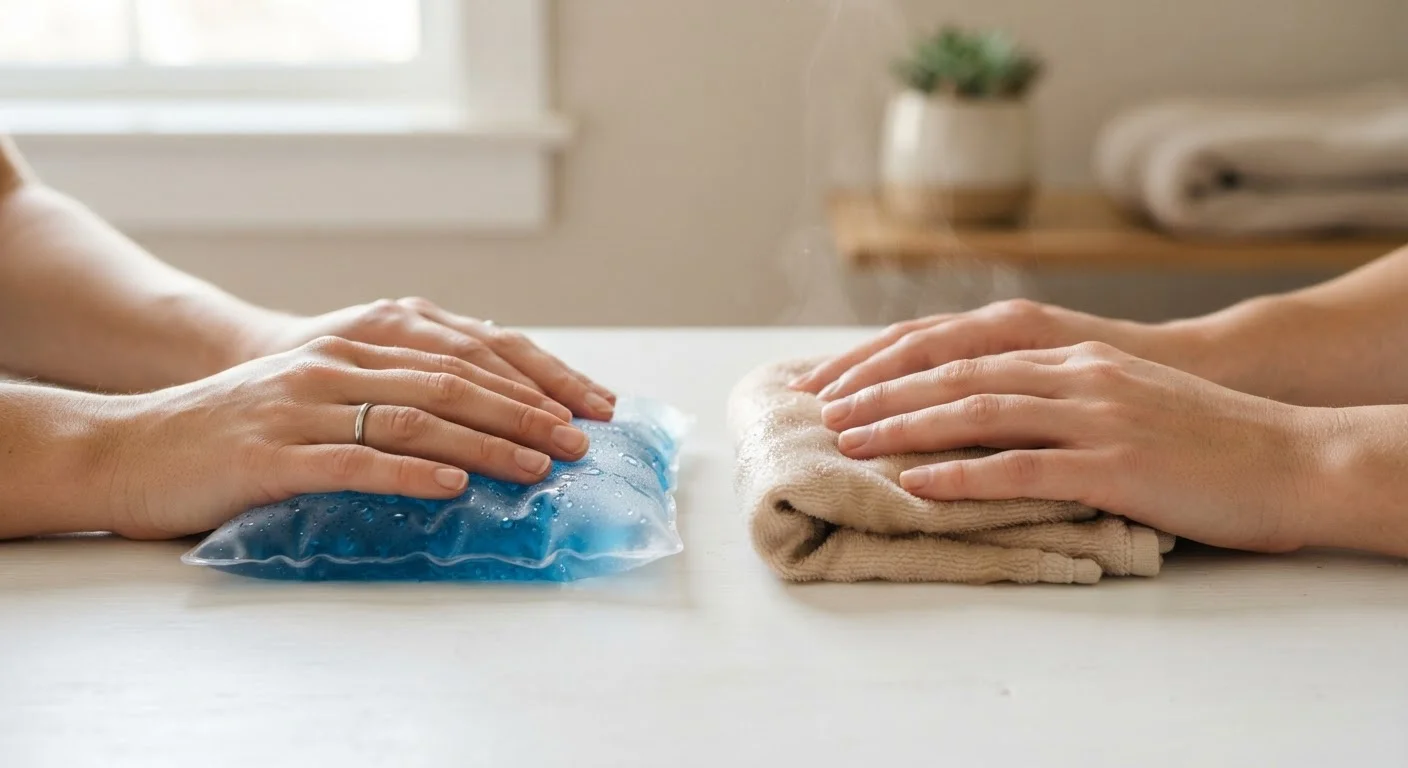
Option A
Cold Compress
The go-to for acute injury and inflammation.
Best for: Best for fresh injuries, swelling, bruising, and sharp or throbbing pain that just started.
Option B
Warm Compress
The soother for tension, stiffness, and chronic aches.
Best for: Best for muscle stiffness, chronic pain, cramps, and stress-related tension that lingers.
If you just twisted an ankle or bumped into something hard
Cold Compress
Cold limits the inflammatory response in the first hours after acute injury, reducing swelling and numbing sharp pain before it peaks.
If your neck or shoulders feel stiff after hours at a desk
Warm Compress
Warmth relaxes contracted muscle tissue and encourages blood flow, easing the tension buildup that comes from sustained posture strain.
If you have menstrual cramps or general abdominal cramping
Warm Compress
Heat applied to the lower abdomen can relax smooth muscle contractions, a use supported by traditional practice and some clinical observations.
If you have a throbbing tension headache
Cold Compress
A cold pack at the forehead or base of the skull may help constrict dilated blood vessels and dull the throbbing sensation.
If you have a recurring sore joint or old injury flaring up
Warm Compress
Gentle warmth before movement helps loosen stiff tissue around chronically affected joints, while cold may be preferred after activity if the area feels inflamed.
Why Temperature Matters
Reaching for the nearest pack without thinking twice is an easy habit, but temperature has a direct and opposite effect on tissue. Cold slows blood flow and decreases nerve signaling, which is why it reduces acute swelling and numbs sharp pain. Heat does the opposite — it widens blood vessels and loosens tight muscle fibers, which is why it eases stiffness and helps sore, knotted tissue relax.
Applying the wrong temperature at the wrong time doesn't just feel uncomfortable — it can genuinely slow recovery. Heat applied to a fresh sprain, for example, can amplify the body's inflammatory response and increase swelling. Understanding the basic mechanism behind each helps you make a quick, confident choice at home.
For a broader look at when home symptom relief is appropriate versus when it's time to call a provider, see our guide to home remedy boundaries.
| Criterion | Cold Compress | Warm Compress |
|---|---|---|
| Primary mechanism | Constricts blood vessels, reduces swelling | Dilates blood vessels, relaxes muscle |
| Best timing | First 48–72 hours after acute injury | After acute phase; chronic or stiff conditions |
| Swelling | Reduces swelling effectively | Can increase swelling if used acutely |
| Muscle stiffness | Less effective; may worsen tightness | Effective at loosening tight muscles |
| Headaches | Useful for throbbing, vascular headaches | May suit tension headaches at the neck |
| Cramps | Generally not recommended | Helpful for menstrual and muscle cramps |
| Skin safety risk | Frostbite if applied too long or unprotected | Burns if too hot or applied without barrier |
| Ease of use at home | Frozen peas, ice in towel, gel pack | Warm damp cloth, grain pack, heating pad |
When to Reach for Cold
Cold compresses work best within the first 48 to 72 hours of an acute injury — think a freshly twisted ankle, a bruised shin, or swollen knuckles after impact. The cold narrows blood vessels near the skin, limiting the fluid that rushes into damaged tissue. Less fluid means less swelling and less pressure on nerve endings, which translates to reduced pain.
Cold is also useful for certain headaches. A cold pack pressed to the forehead or back of the neck may help constrict dilated blood vessels that contribute to a throbbing, vascular-type headache. For more non-medication approaches to headache discomfort, our article on at-home tension headache strategies covers several options side by side.
Practical tip: Wrap ice or a frozen gel pack in a thin towel — never apply directly to bare skin. Limit sessions to around 15 to 20 minutes to prevent tissue damage from prolonged cold exposure.
48–72 hrs
Window for cold therapy after acute injury
Clinical guidelines generally recommend cold application in the first two to three days following acute soft-tissue injury to manage swelling and pain.
15–20 min
Recommended single-session duration for either compress
Most physical therapy guidance suggests limiting cold or heat sessions to 15–20 minutes per application to avoid skin damage.
~45–50°C
Upper safe skin surface temperature for heat therapy
Research on thermal pain thresholds suggests sustained contact above roughly 45–50°C (113–122°F) risks superficial burns, underscoring the need for a cloth barrier.
When to Reach for Warmth
Warmth becomes the better choice once the acute inflammatory phase has passed, or when stiffness rather than swelling is the primary complaint. Muscle tension from prolonged sitting, menstrual cramps, chronic lower back stiffness, and old injuries that flare up periodically are all scenarios where a warm compress tends to provide more relief than ice.
Heat improves circulation to the area, bringing more oxygen and nutrients to fatigued or contracted muscle fibers. For cramps — whether menstrual or from exercise — gentle heat applied to the affected area may help the muscle relax its contraction. Traditional practice has long used warm compresses or heating pads for abdominal cramps, and some controlled studies support modest benefits, though researchers note the effect size varies.
A warm, moist cloth (heated in hot water and wrung out) is a simple, no-equipment option. Microwavable grain-filled packs retain heat for longer and can be shaped around joints. Again, always use a fabric barrier and check the temperature on your inner wrist before applying to avoid burns.
Note for special populations: Pregnant individuals, people with diabetes or circulatory conditions, and older adults with reduced skin sensitivity should consult a healthcare professional before using heat or cold therapy, as temperature tolerance and risk profiles can differ significantly.
The Gray Areas: Symptoms That Could Go Either Way
Some situations don't fit neatly into one category. Chronic joint conditions like osteoarthritis are one example — warmth before activity can loosen stiff joints, while cold after activity can manage post-exercise soreness and inflammation. Some people find alternating sessions (contrast therapy) helpful, though the evidence for this is mixed and largely anecdotal for home use.
Sinus congestion and facial pressure present another gray area. Warm, moist compresses over the sinus area may ease facial tightness and promote drainage. If congestion is your main concern, you might also explore how compresses compare to other approaches — our article comparing steam, saline, and humidifiers for congestion walks through those options in detail.
When in doubt, a useful starting rule: if there's visible swelling or the injury just happened, start cold. If there's no swelling and the problem is stiffness or chronic aching, try warmth. If symptoms are severe, worsening, or don't improve with home care, that's the signal to seek professional evaluation rather than continuing to self-manage.
This article is for general informational purposes only and is not a substitute for professional medical advice, diagnosis, or treatment. Always consult a qualified healthcare provider with questions about a specific health condition or symptom.