

Key Takeaways
- Turmeric is a whole plant root; curcumin is one of its active chemical compounds.
- Curcumin makes up only about 2–5% of dried turmeric by weight.
- Curcumin is poorly absorbed on its own; pairing it with black pepper may improve bioavailability.
- Most clinical research uses concentrated curcumin extracts, not plain turmeric powder.
- Neither turmeric nor curcumin is a proven substitute for medical treatment.
- Always consult a healthcare provider before using either as a supplement, especially alongside medications.
Option A
Turmeric
The whole spice with centuries of traditional use.
Best for: Everyday culinary use and mild general wellness support as part of a balanced diet.
Option B
Curcumin
The isolated active compound drawing the most research interest.
Best for: Standardized supplementation studied in clinical research contexts.
If you want to add flavor and mild antioxidant support to everyday meals
Turmeric
Turmeric powder is safe, widely available, and appropriate as a culinary ingredient with a long history of traditional use in cooking.
If you are exploring supplements studied in clinical research
Curcumin
Standardized curcumin extracts are what most studies actually test; however, always discuss supplementation with a healthcare provider first.
If you have a known medication interaction risk or chronic condition
Neither without professional guidance
Both turmeric and curcumin can interact with certain medications, including blood thinners. A qualified clinician should evaluate your individual situation.
What Each Term Actually Means
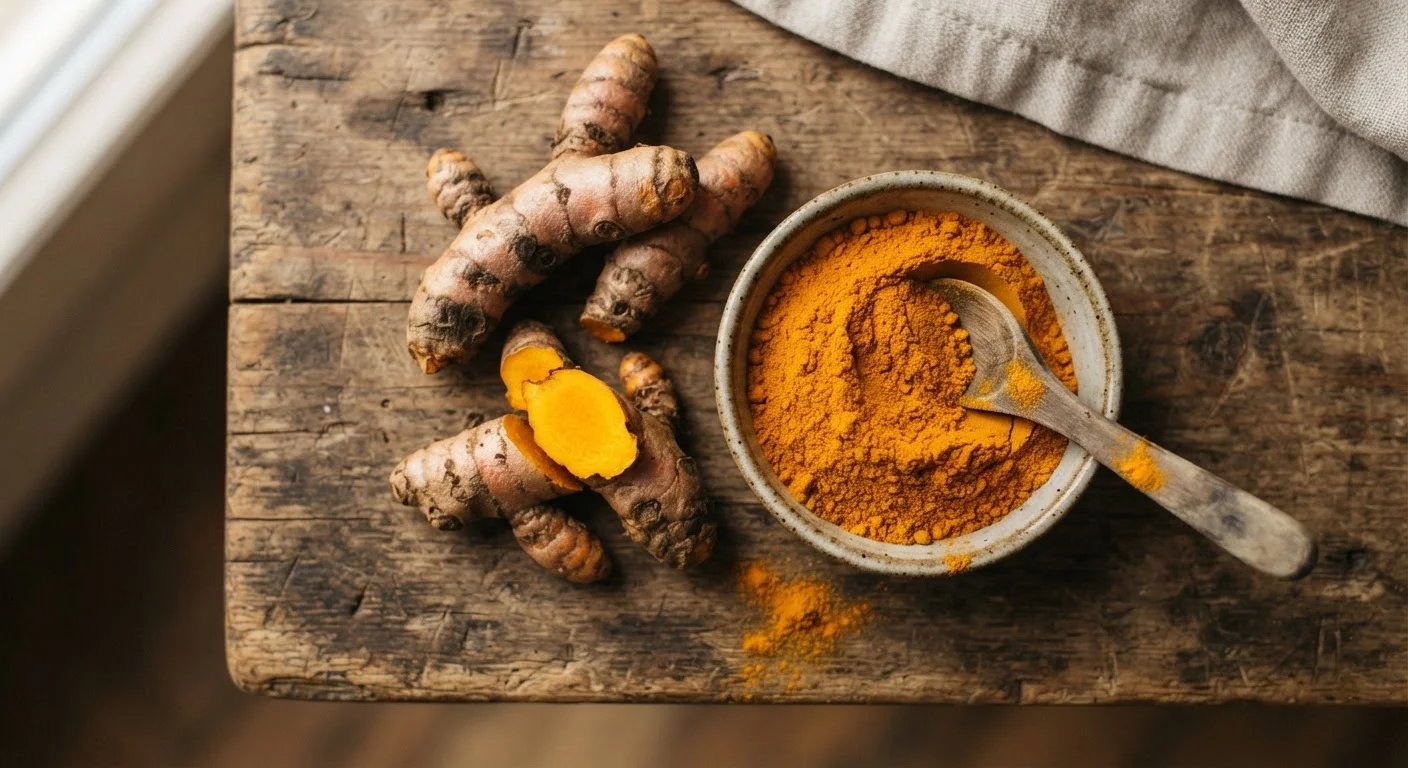
Turmeric (Curcuma longa) is a flowering plant in the ginger family, native to South and Southeast Asia. The part most people encounter is the rhizome — the underground root — which is dried and ground into the familiar golden-yellow spice used in curries, teas, and traditional medicine.
Curcumin is a naturally occurring chemical compound found within that root. It belongs to a class of plant pigments called curcuminoids, and it is the primary one responsible for turmeric's deep yellow color and for most of the biological activity researchers have studied. So when someone says turmeric has anti-inflammatory properties, they are largely referring to what curcumin does — not the whole spice acting uniformly.
This distinction matters because the two terms are regularly used as though they mean the same thing, which can lead to confusion about what you are actually consuming. For a broader look at how herbs with overlapping names or effects can be mistaken for one another, see this practical identification reference.
How They Differ in Composition and Concentration
Dried turmeric root contains curcumin at relatively low concentrations — generally estimated at around 2–5% by weight. That means a teaspoon of turmeric powder (roughly 3 grams) provides only a small fraction of the curcumin doses used in laboratory and clinical research settings, which are typically much higher and delivered in concentrated extract form.
Turmeric also contains hundreds of other compounds — essential oils, fiber, vitamins, and additional curcuminoids — that may work in combination. Isolating curcumin strips most of this away, producing a more concentrated but less complex substance.
| Criterion | Turmeric | Curcumin |
|---|---|---|
| What it is | Whole plant root / spice | Isolated chemical compound |
| Curcumin content | Approx. 2–5% by weight | Concentrated extract (varies by product) |
| Primary use | Culinary and traditional remedies | Dietary supplements and research |
| Bioavailability | Low on its own | Low on its own; enhanced with piperine or lipids |
| Research basis | Mostly traditional and observational | Subject of clinical trials (results mixed) |
| Interaction risk | Low at culinary doses | Higher at supplement doses; consult a provider |
A parallel distinction exists in the nutrition world. As explained in the article on folate vs. folic acid, the form a nutrient takes — and how the body processes it — can matter significantly in practice. The same logic applies here.
The Bioavailability Problem
One of curcumin's most studied limitations is poor bioavailability — meaning the body absorbs relatively little of it when consumed on its own. Curcumin is poorly soluble in water, metabolized quickly, and rapidly eliminated.
Researchers have explored several strategies to improve this. The most widely cited is combining curcumin with piperine, the active compound in black pepper. Some studies suggest piperine can substantially increase curcumin absorption, which is why many supplements include both. However, piperine can also affect the metabolism of certain medications, so this combination is not without potential considerations.
Plain turmeric powder in food faces the same absorption challenge. Cooking it with fat — common in traditional South Asian cuisine — may also help, since curcumin has some fat solubility.
About Piperine and Medication Interactions
Piperine, found in black pepper and often added to curcumin supplements, can inhibit certain liver enzymes involved in drug metabolism. This means it may increase blood levels of some medications, potentially amplifying their effects or side effects. If you take any prescription medications, talk to your pharmacist or doctor before using piperine-enhanced curcumin supplements.
For context on how traditional medicine has long understood turmeric's role, see what the evidence actually shows about turmeric's use.
What the Research Actually Tests — and What It Shows
The vast majority of human clinical trials on turmeric's health properties have actually used standardized curcumin extracts, not everyday turmeric powder. This is a critical reading point: study results attributed to turmeric in headlines are often based on highly concentrated curcumin supplements that bear little resemblance to adding a pinch of spice to a soup.
Research into curcumin's anti-inflammatory and antioxidant activity is ongoing and shows some promising signals, but findings remain mixed and sample sizes in many trials are small. No regulatory body has approved curcumin as a treatment for any specific condition. Traditional usage in Ayurvedic and Chinese medicine predates modern clinical methods and should be understood as historical context rather than clinical evidence.
2–5%
Curcumin content in dried turmeric root
A commonly cited estimate from food science literature describing curcuminoid concentration in raw dried turmeric by weight.
~12,000
Published studies referencing curcumin
As indexed in scientific literature databases, reflecting significant research interest though not confirming established clinical outcomes.
This same principle of distinguishing clinical evidence from traditional or popular use applies in other wellness contexts too — much like the difference between what researchers study and what marketing claims, a nuance also explored in our comparison of probiotics and prebiotics.
This article is for general informational purposes only and is not a substitute for professional medical advice, diagnosis, or treatment. Always consult a qualified healthcare provider before starting any supplement regimen.