

Key Takeaways
- Light, heat, and moisture are the three main forces that degrade dried herbs over time.
- Airtight glass containers stored in cool, dark spaces preserve potency far longer than plastic bags or open shelving.
- Whole dried herbs generally retain their properties longer than pre-ground versions.
- Crushing or grinding herbs just before use releases more active compounds than using pre-ground material.
- Most dried herbs should be used within one to two years for best effect.
- Consult a healthcare provider before using any herb to address a specific health concern.
Why Storage Conditions Matter More Than Most People Realize
Dried herbs aren't inert once they leave the garden or the store. The essential oils, flavonoids, and other compounds responsible for their traditional uses continue to break down after harvest — they just do so slowly. How quickly depends almost entirely on the conditions they're kept in.
Three factors accelerate degradation the most: light, heat, and moisture. Ultraviolet exposure breaks down volatile compounds. Heat speeds up oxidation. Humidity invites mold and further chemical breakdown. A spice rack above the stove, or a windowsill jar that looks charming, is one of the worst places you can keep dried herbs if you want them to remain useful.
If you're building a home remedy pantry, understanding storage basics is foundational. See our guide to stocking a home remedy pantry for a broader look at what's worth keeping on hand.
1–2 years
Typical useful life of most dried leafy herbs
General guidance from herbalists and food safety sources suggests most dried herbs retain meaningful potency for one to two years when stored correctly.
~3×
Surface area increase when grinding whole dried herbs
Grinding significantly increases a herb's exposure to oxygen and light, which is why grinding just before use is consistently recommended by herbal preparation references.
Best Practices for Storing Dried Herbs at Home
Getting storage right doesn't require expensive equipment — it mostly requires discipline about containers and placement.
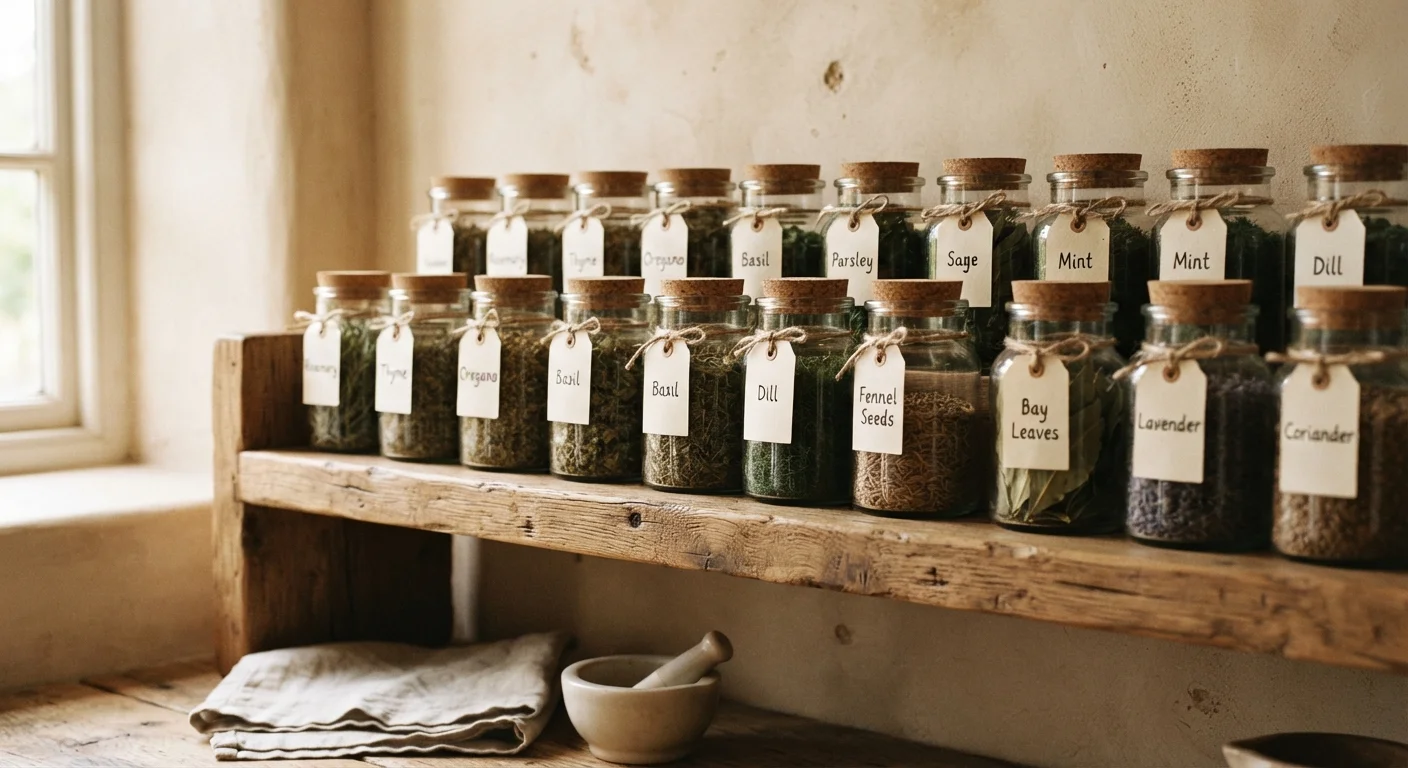
Store dried herbs in airtight glass containers rather than plastic bags or loosely sealed jars.
Glass is non-porous and doesn't absorb or transfer odors or compounds the way plastic can. An airtight seal limits oxygen exposure, which slows oxidation of the volatile oils that give herbs their traditional properties.
Keep containers in a cool, dark, and dry location — not above the stove or near a window.
Heat and light are the two fastest ways to degrade the active compounds in dried herbs. A consistent cool temperature, such as inside a closed cabinet away from appliances, dramatically slows this process.
Store whole dried herbs and grind or crush them only when you're ready to use them.
Grinding dramatically increases the surface area exposed to air and light, accelerating the loss of volatile compounds. Keeping the herb whole preserves those compounds until the moment of use.
Label every container with the herb name and the date it was stored.
Without labeling, it becomes difficult to track how long an herb has been stored, and some dried herbs are visually similar enough to cause confusion. Dating containers helps you rotate stock before quality drops too far.
Match your preparation method to the type of herb and the compounds you're trying to release.
Delicate leafy herbs like lemon balm or peppermint are typically prepared as a covered infusion (tea) at lower temperatures to prevent volatile oils from escaping with steam. Tougher roots and bark generally require a longer simmering process called a decoction to extract their constituents effectively.
Preparing Dried Herbs Without Sacrificing What's in Them
Even perfectly stored herbs can lose their value during preparation if the method is poorly matched to the material. Different compounds extract at different temperatures and through different solvents, so preparation approach genuinely matters.
One common misstep is assuming all herbs are interchangeable in preparation. For a broader look at where well-meaning habits go wrong, our piece on assumptions that lead herbal wellness astray is worth reading alongside this one.
A Note on Herb–Drug Interactions
Some commonly used herbs — including those found in everyday kitchen pantries — are known to interact with certain medications. St. John's Wort, for example, is well-documented for interactions with a range of prescription drugs. Even familiar herbs like chamomile or ginger may be relevant for people on blood thinners or other treatments. Always disclose herb use to your doctor or pharmacist, especially if you take any regular medication.
For more on preparation errors specifically, see getting kitchen remedies wrong, which covers concentration and frequency missteps in detail.
Knowing When Herbs Have Lost Their Potency
Dried herbs don't spoil the way fresh produce does, but they do lose effectiveness over time. A rough general guideline — not a hard rule — is that most dried leafy herbs hold their properties reasonably well for one year, while roots and seeds may last somewhat longer. Pre-ground herbs tend to degrade faster than whole dried material.
Practical signs that a dried herb may have passed its useful life include a noticeably faded color, little to no aroma when rubbed between your fingers, or a flat, dusty taste. None of these signals is perfectly precise, but a herb with no discernible scent is unlikely to deliver much of what it's traditionally used for.
If you're new to using herbs at home and want a grounded starting point, our article on starting out with home remedies covers what to expect and how to approach them responsibly. Similarly, herbs commonly confused with one another can help you confirm you're working with what you think you have.
This article is for general informational purposes only and does not constitute medical advice. If you have a specific health concern, or before using herbs alongside any medication or treatment, consult a qualified healthcare professional.