

Key Takeaways
- Stress triggers a hormone cascade led by cortisol and adrenaline that affects the whole body.
- Short-term stress can sharpen focus and boost performance in demanding situations.
- Chronic stress keeps the body in a prolonged alert state, raising risks for heart disease, immune dysfunction, and mental health conditions.
- The brain's amygdala acts as an alarm system, initiating the stress response before conscious thought kicks in.
- Evidence-based strategies like regular exercise, sleep, and breathing techniques can measurably reduce the physiological impact of stress.
The Stress Response
The stress response is your body's automatic reaction to any demand or perceived threat. It triggers a coordinated release of hormones and nerve signals that prepare you to act quickly — commonly called the 'fight-or-flight' response. This biological process affects your heart, lungs, muscles, brain, and immune system simultaneously.
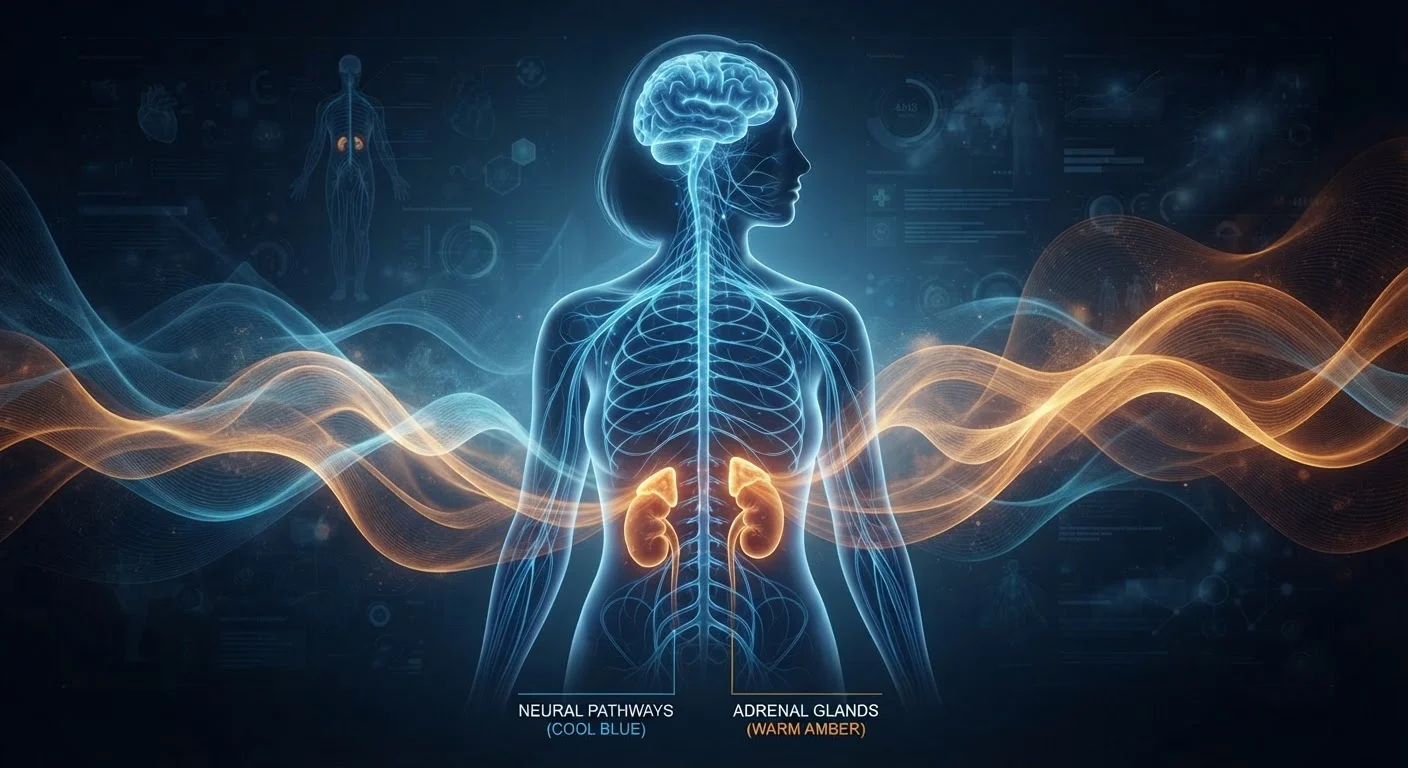
The response is orchestrated by the hypothalamic-pituitary-adrenal (HPA) axis and the sympathetic nervous system, two overlapping systems that regulate hormone output and autonomic arousal.
How Your Brain Sounds the Alarm
Before you consciously register a stressor — a near-miss on the highway, a looming deadline, an unexpected argument — a small, almond-shaped brain structure called the amygdala has already signaled danger. The amygdala processes emotional cues rapidly and sends an emergency message to the hypothalamus, the brain's command center, which then activates the sympathetic nervous system.
This sequence unfolds in milliseconds. The adrenal glands, sitting atop each kidney, flood the bloodstream with adrenaline (epinephrine), causing the heart to beat faster, airways to dilate for more oxygen, and glucose to surge into the bloodstream for immediate energy. You feel it as a rush: heightened alertness, quickened breath, tensed muscles. This is the classic fight-or-flight response, an ancient survival mechanism.
For a fuller account of what each body system experiences moment by moment, see what actually happens in your body during a stress response.
“Stress is not just a psychological state — it is a biological event with measurable effects on every major organ system. Understanding that biology is the first step toward managing it effectively.”
— Robert Sapolsky, Professor of Biology and Neurology, Stanford University, and author of 'Why Zebras Don't Get Ulcers'
Cortisol: The Sustained Stress Hormone
While adrenaline handles the immediate alarm, cortisol — released by the adrenal cortex via the hypothalamic-pituitary-adrenal (HPA) axis — sustains the response. Cortisol raises blood sugar to fuel muscles, temporarily suppresses non-essential functions like digestion and reproduction, and modulates immune activity. In the short term, this is adaptive and protective.
The difficulty is that cortisol takes longer to clear the body than adrenaline. Under repeated or ongoing stress, cortisol levels stay elevated, and that sustained exposure carries real costs. Research has linked chronically high cortisol to disrupted sleep architecture, impaired memory consolidation, reduced immune defense, and increased abdominal fat storage.
77%
Adults reporting physical stress symptoms
According to the American Psychological Association's Stress in America surveys, a large majority of adults regularly experience physical symptoms they attribute to stress.
2–3×
Increased cardiovascular risk with chronic stress
Research published in cardiology literature suggests chronically stressed individuals face substantially elevated risk of cardiovascular events compared with low-stress populations.
50%
Of cortisol clearance occurs during sleep
Sleep science research indicates that a significant portion of the body's cortisol regulation and hormonal recovery happens during adequate, quality sleep.
Understanding the difference between a short-lived cortisol spike and a chronically elevated baseline is essential context. The article acute vs. chronic stress explains why the duration of stress matters just as much as its intensity.
What Chronic Stress Does to Your Body Over Time
When the stress response stays switched on for weeks or months, the cumulative strain is significant. Cardiovascular effects are among the most studied: persistently elevated heart rate and blood pressure can contribute to arterial stiffness and increase risk for heart disease. The immune system, meant to ramp up briefly during acute stress, becomes dysregulated — with chronic inflammation emerging as a common outcome.
The brain itself is affected. Prolonged cortisol exposure has been associated with reduced volume in the hippocampus, a brain region critical for memory and learning. Mental health is also at stake: the anxiety and stress landscape includes evidence linking chronic stress to higher rates of depression and anxiety disorders.
Chronic stress can also be a contributing factor in the development or worsening of long-term health conditions, including metabolic disorders, autoimmune conditions, and gastrointestinal disease.
Evidence-Based Ways to Interrupt the Stress Cycle
The good news is that the stress response is not one-directional. The parasympathetic nervous system — sometimes called the "rest and digest" counterpart to fight-or-flight — can be deliberately activated through several well-studied practices.
- Controlled breathing: Slow exhalations (longer than the inhale) stimulate the vagus nerve and reduce heart rate. Even a few minutes of intentional breath work measurably lowers cortisol.
- Physical activity: Exercise metabolizes excess stress hormones and promotes the release of endorphins. Physical activity as a stress tool reviews the specific types of movement supported by research.
- Sleep: The brain clears cortisol most efficiently during deep sleep. Chronic sleep deprivation and chronic stress form a reinforcing cycle, each worsening the other.
- Social connection: Positive social interaction triggers oxytocin release, which actively blunts the HPA axis stress response.
Start With Your Breath
When you notice signs of acute stress — racing heart, tight chest, shallow breathing — try the 4-6 technique: inhale for four counts, exhale slowly for six. Repeat for two to three minutes. This simple shift in breathing pattern can activate the parasympathetic nervous system and help bring your body back toward its resting state.
For a comprehensive approach that integrates all of these strategies, the complete picture of stress management offers an end-to-end guide grounded in current evidence.
This article is for general informational and educational purposes only and does not constitute medical advice. If you are experiencing significant stress-related symptoms, please consult a qualified healthcare professional.