

Key Takeaways
- The stress response is a protective biological system, not a sign of weakness or dysfunction.
- Adrenaline and cortisol are the two main hormones driving physical stress symptoms.
- Common symptoms like a racing heart and tense muscles are purposeful survival adaptations.
- Modern stressors can trigger the same response as physical danger, even when no real threat exists.
- Chronic activation of this system can have measurable effects on long-term health.
- Understanding the stress response is the first step toward managing it more effectively.
The Stress Response
The stress response is your body's automatic, built-in reaction to a perceived threat or challenge. Within seconds, your brain and body coordinate a cascade of physical and hormonal changes designed to help you survive danger. This reaction — often called 'fight-or-flight' — is completely normal and was essential for human survival throughout history.
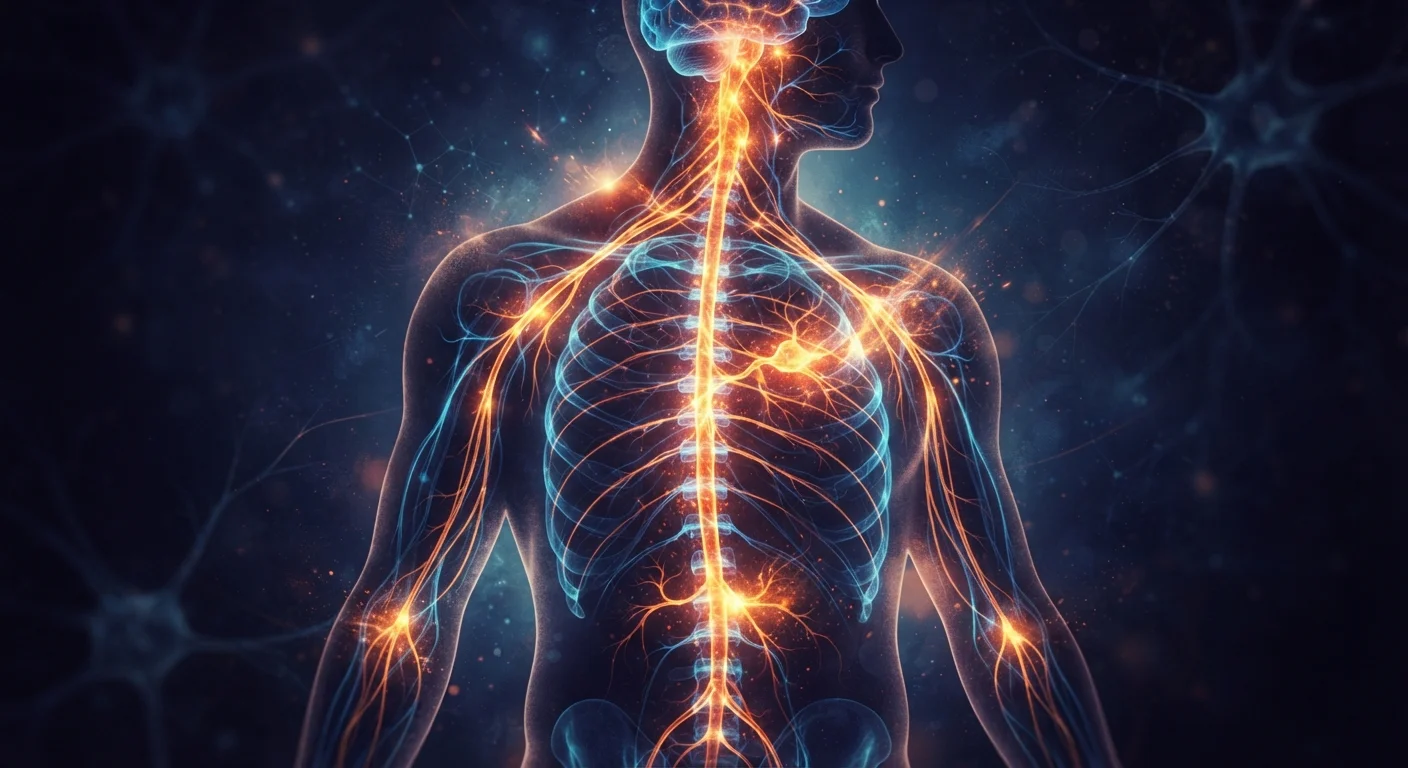
Technically, the stress response involves the hypothalamic-pituitary-adrenal (HPA) axis and the sympathetic nervous system, working together to release hormones like adrenaline (epinephrine) and cortisol.
The Alarm Goes Off: What Triggers the Response
It starts in a small, almond-shaped region of your brain called the amygdala — the brain's threat-detection center. The moment it perceives something as dangerous, whether that's a car swerving toward you or a notification about a looming work deadline, it fires off an alert to the hypothalamus. Think of the hypothalamus as mission control: it immediately activates the body's emergency communications network.
Within milliseconds, two parallel systems kick in. The sympathetic nervous system sends signals through nerve fibers to your adrenal glands, triggering an almost instant release of adrenaline (also called epinephrine). Simultaneously, the hypothalamic-pituitary-adrenal (HPA) axis begins a slightly slower hormonal chain reaction that culminates in the release of cortisol — the hormone that keeps the stress response sustained if the threat doesn't pass quickly.
Crucially, this all happens before your conscious mind has fully registered what's happening. Your body is already responding before you've had time to think.
Your Brain Can't Always Tell Real from Imagined
One of the most important things to understand about the stress response is that the brain processes imagined, remembered, and anticipated threats similarly to real physical danger. This is why replaying a difficult conversation or worrying about the future can produce genuine physical symptoms. It also means that practices that shift your mental focus — like mindfulness and grounding techniques — can have real, measurable physiological effects.
The Physical Cascade: A Head-to-Toe Breakdown
Once adrenaline floods your system, the physical changes happen fast and with purpose:
- Heart rate increases to push oxygenated blood toward large muscle groups in your arms and legs — the ones you'd need to fight or flee.
- Breathing quickens so your lungs can take in more oxygen, which is why many people feel short of breath or notice chest tightness under stress.
- Muscles tense, particularly in the shoulders, neck, and jaw — priming the body for physical effort.
- Pupils dilate to sharpen vision and take in more visual information about potential threats.
- Digestion slows because digesting food is a low priority during a crisis. This explains the nauseous, knotted feeling stress often brings.
- Blood flow is redirected away from the skin and toward the muscles — which is why people often look pale or feel cold under acute stress.
Cortisol, meanwhile, ensures your body has enough energy by releasing stored glucose into the bloodstream. It also temporarily suppresses functions considered non-essential in a crisis, including parts of the immune response and reproductive systems.
For a deeper look at how these biology basics translate to real-world pressure, see the science of stress inside your body.
~1 second
Time for amygdala to trigger adrenaline release
Research in neuroscience indicates the amygdala can initiate the stress cascade in under a second, before conscious awareness catches up.
77%
Americans reporting physical symptoms of stress
According to the American Psychological Association's Stress in America surveys, a significant majority of U.S. adults experience physical stress symptoms regularly.
20–60 min
Typical time to clear adrenaline after acute stress
Physiological research suggests it generally takes 20 to 60 minutes for the body to metabolize adrenaline and begin returning to baseline after a stressful event.
Why Modern Life Keeps Triggering an Ancient System
Here's the core tension: the stress response evolved to handle immediate, physical threats — a predator, a fall, a fight. It was designed to activate hard, resolve quickly, and then switch off as the body returned to baseline (a state called homeostasis).
But modern stressors — a difficult boss, financial pressure, social conflict, global news — are rarely over in seconds. They're ongoing, ambiguous, and often impossible to physically fight or flee. The result? The same ancient alarm system fires repeatedly, or never fully shuts off.
Chronic stress differs from acute stress in meaningful ways, and understanding that distinction matters for how you approach managing it. When cortisol remains elevated over weeks or months, research suggests it can affect sleep quality, memory, cardiovascular health, and immune function.
This doesn't mean stress is always harmful — short bursts can actually enhance focus and performance. The concern arises when the response becomes the body's default setting. Physical activity is one evidence-backed way to help the body metabolize stress hormones and restore balance.
Try Box Breathing to Reset Your Nervous System
When you notice stress symptoms ramping up, slow, controlled breathing is one of the fastest ways to activate the parasympathetic 'rest and digest' system. Try inhaling for 4 counts, holding for 4, exhaling for 4, and holding again for 4. Even two or three cycles can begin to counteract the fight-or-flight response. This technique is used in clinical settings and doesn't require any equipment or special training.
Coming Back to Calm: The Recovery Side of the Response
The stress response has a counterpart: the parasympathetic nervous system, often called the 'rest and digest' system. Once your brain determines the threat has passed, this system begins the work of returning your body to baseline — slowing the heart rate, relaxing muscles, resuming digestion, and clearing cortisol from the bloodstream.
This recovery process takes time and isn't always automatic, particularly if the stressor is ongoing or if your nervous system is frequently activated. Practices like slow diaphragmatic breathing, gentle movement, and mindfulness have measurable effects on parasympathetic activation — they're not just feel-good strategies, they're physiologically grounded ones.
If you find that stress — particularly in workplace settings — feels difficult to manage on your own, recognizing the signs of work-related stress is a meaningful first step. And for a comprehensive framework covering both the biology and behavioral strategies, a complete guide to stress management can offer structured next steps.
This article is for general informational purposes only and is not a substitute for professional medical or mental health advice. If you are experiencing persistent stress, anxiety, or related symptoms, please consult a qualified healthcare provider.