

Key Takeaways
- Cortisol is a stress hormone that normally peaks in the morning and tapers off by evening to support sleep.
- Chronic stress disrupts this natural rhythm, keeping cortisol high at night and delaying sleep onset.
- Poor sleep raises cortisol levels the following day, creating a damaging cycle.
- Evening wind-down routines, consistent sleep timing, and stress-reduction practices may help restore balance.
- Persistent sleep problems linked to stress warrant consultation with a qualified healthcare provider.
Cortisol and Sleep Disruption
Cortisol is a hormone produced by your adrenal glands that rises in response to stress and naturally peaks in the morning to help you wake up. When stress keeps cortisol elevated into the evening or overnight, it signals your brain to stay alert — making it harder to fall asleep and stay asleep. The result is a self-reinforcing cycle: poor sleep raises cortisol, and elevated cortisol worsens sleep quality.
Cortisol operates through the hypothalamic-pituitary-adrenal (HPA) axis, a hormonal feedback loop that governs the body's stress response and plays a direct role in regulating circadian rhythms.
How Cortisol Is Designed to Work
Under normal circumstances, cortisol follows a predictable 24-hour rhythm. Levels surge in the early morning — a phenomenon called the cortisol awakening response — giving you the energy and mental alertness needed to start the day. Through the afternoon, levels gradually taper. By late evening, cortisol should be low enough to allow the brain to shift toward sleep-promoting processes.
This rhythm is closely synchronized with your body's internal clock, known as the circadian system. The two systems reinforce each other: your circadian rhythm cues cortisol to drop at night, while stable cortisol patterns help keep that internal clock on schedule. When either system is disturbed, both can suffer. To understand the broader biology behind this, see our article on the science of stress.
What Happens When Stress Disrupts the Rhythm
Stress — whether from work pressure, relationship difficulties, financial worry, or health concerns — activates the body's fight-or-flight response. This triggers the HPA axis to release cortisol, which is helpful in short bursts. The problem arises with chronic or ongoing stress, which keeps cortisol elevated well into the evening hours when it should be declining.
High evening cortisol acts like an internal alarm system that won't switch off. It suppresses melatonin — the hormone that cues sleepiness — and keeps the brain in a state of arousal. The practical result: difficulty falling asleep, more frequent awakenings during the night, and less time spent in slow-wave (deep) and REM sleep, both of which are critical for physical recovery and memory consolidation.
~50%
Adults reporting stress-related sleep disruption
The American Psychological Association's Stress in America surveys have consistently found that roughly half of adults report lying awake at night due to stress.
5–6 hrs
Cortisol half-life of caffeine in the body
Pharmacological research indicates that caffeine's half-life means afternoon consumption can still be circulating at bedtime, interfering with the cortisol decline needed for sleep onset.
~20–30 min
Additional wake time linked to high pre-sleep arousal
Studies on pre-sleep cognitive arousal suggest that elevated mental stress at bedtime is associated with meaningfully longer sleep onset latency compared to low-arousal states.
It's worth noting that the relationship runs in both directions. Sleep and stress reinforce each other — poor sleep increases next-day cortisol, which in turn makes the body more reactive to stressors. Over time, this loop can become entrenched.
Recognising the Signs in Everyday Life
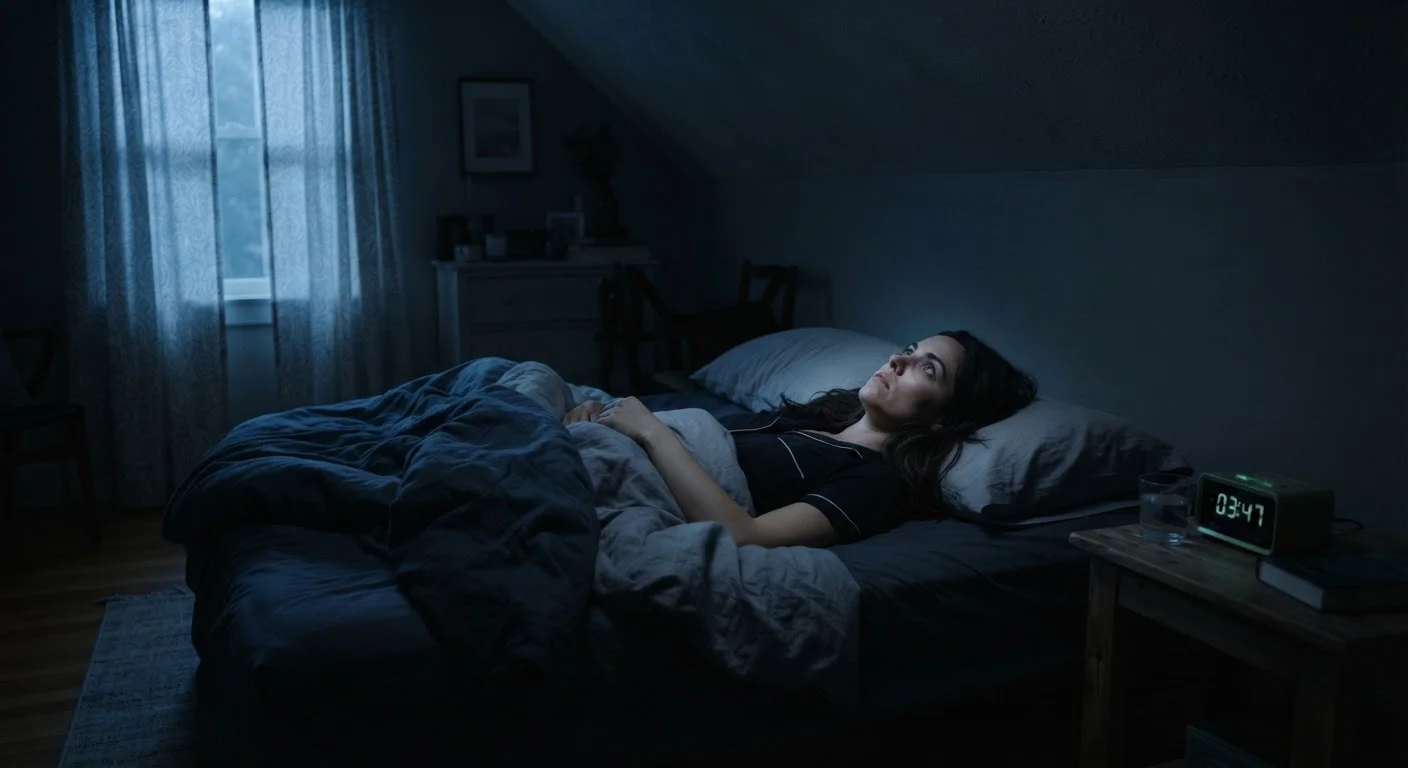
The stress-cortisol-sleep cycle often shows up in recognizable patterns. You might notice your mind racing at bedtime despite feeling physically exhausted during the day — a mismatch sometimes called tired but wired. Waking between 2 and 4 a.m. and struggling to return to sleep is another common signal, as is feeling unrefreshed even after a full night in bed.
Because these symptoms overlap with other conditions — including anxiety disorders, thyroid dysfunction, and depression — it's important not to self-diagnose. If these patterns are persistent or severe, a healthcare provider can help identify what's driving them. Our complementary piece on sleep and mental health explores how mood conditions and sleep difficulties interact.
General Strategies That May Help Break the Cycle
No single approach will eliminate stress or guarantee better sleep, but a combination of consistent habits may help your cortisol rhythm return closer to its natural pattern. The following are general wellness strategies supported by a reasonable body of research — they are not personal medical advice.
- Consistent sleep timing: Going to bed and rising at the same time daily reinforces circadian rhythms, which in turn supports healthier cortisol patterns.
- Evening wind-down routine: Dimming lights and reducing screen use 60–90 minutes before bed signals the brain that the day is ending, creating conditions for cortisol to drop.
- Relaxation practices: Slow diaphragmatic breathing, progressive muscle relaxation, and mindfulness meditation have each shown some evidence of reducing physiological stress markers in research settings.
- Limiting stimulants: Caffeine has a half-life of roughly 5–6 hours; consuming it in the afternoon can interfere with evening cortisol decline and sleep onset.
- Physical movement: Regular moderate exercise is associated with more stable HPA axis activity, though vigorous exercise close to bedtime may temporarily raise cortisol for some people.
For a fuller picture of evidence-based daily habits, our article on sleep hygiene covers environmental and behavioral factors in detail. If sleep has never been a deliberate priority, this introduction to sleep basics is a useful starting point.
This article is for general informational and educational purposes only and does not constitute medical advice. If you are experiencing persistent sleep problems, high stress, or related symptoms, please consult a qualified healthcare professional.