

Key Takeaways
- Sleep deprivation heightens emotional reactivity and reduces the brain's ability to regulate mood.
- Anxiety and depression are among the most common causes of chronic sleep disturbance.
- Addressing sleep problems can meaningfully improve mental health outcomes, and vice versa.
- Behavioral strategies such as consistent sleep timing and wind-down routines are broadly recommended.
- A healthcare professional should be consulted when sleep problems are persistent or severe.
Sleep–Mental Health Bidirectional Link
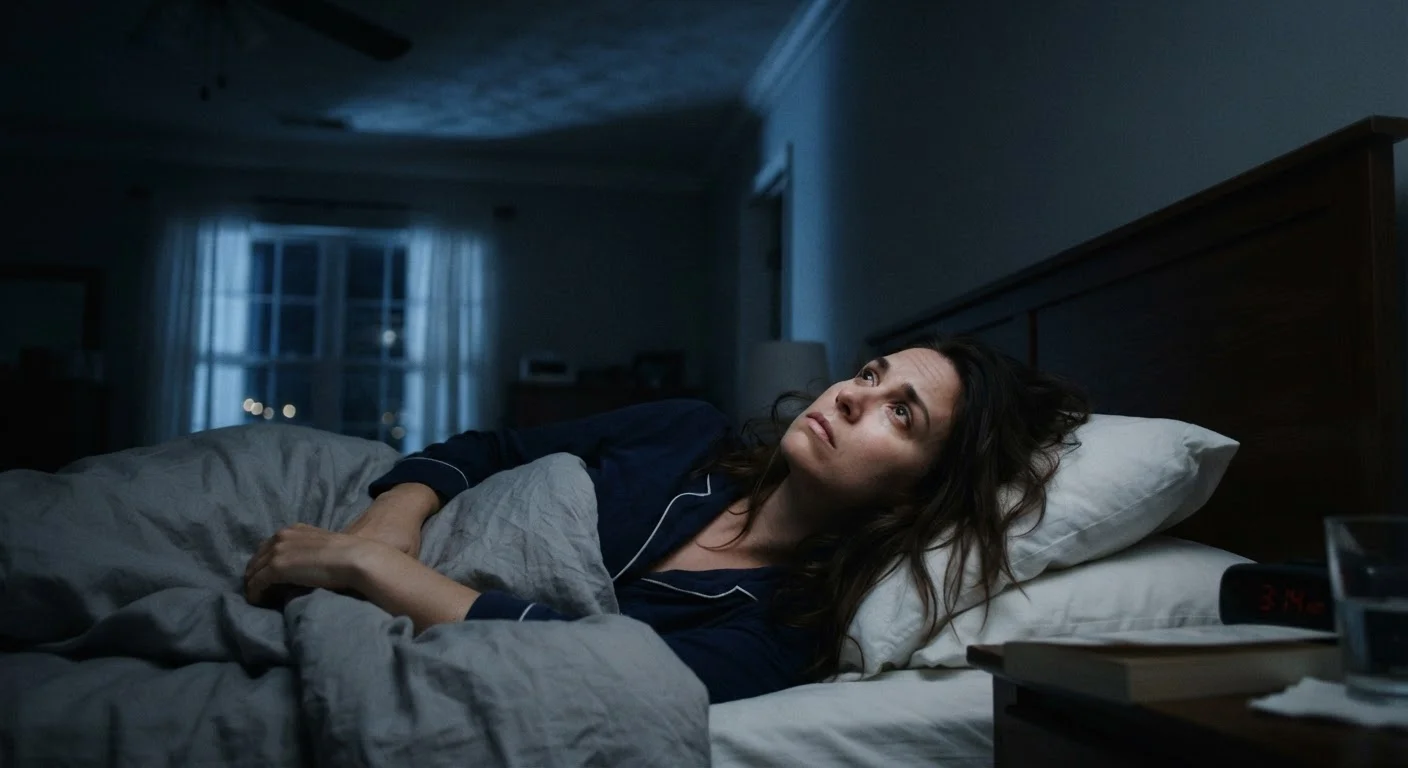
The relationship between sleep and mental health runs in both directions: disrupted sleep can contribute to anxiety, depression, and emotional dysregulation, while those same mental health conditions often make it harder to fall or stay asleep. This is not a simple cause-and-effect; it's a self-reinforcing cycle where each side amplifies the other.
Researchers refer to this as a bidirectional relationship, confirmed across large-scale epidemiological studies showing that insomnia is both a symptom and a risk factor for mood and anxiety disorders.
Why Sleep and Mental Health Are Inseparable
For decades, clinicians viewed poor sleep primarily as a symptom of mental health conditions — a side effect of depression or anxiety rather than a contributing factor. Research over the past two decades has shifted that understanding considerably. Sleep and mental health are now understood to influence each other continuously, forming a cycle that can either support wellbeing or erode it.
When you sleep, your brain is far from idle. It consolidates memories, clears metabolic waste products, regulates emotional processing, and rebalances key neurotransmitters including serotonin and dopamine — all chemicals closely tied to mood stability. Disrupt that process repeatedly, and the downstream effects on how you think, feel, and cope become significant.
For a deeper look at how the stress hormone cortisol fits into this picture, see how stress and cortisol disrupt sleep.
~40%
Adults with insomnia meeting criteria for a mood disorder
Research consistently finds that roughly 40% of people with chronic insomnia also meet diagnostic criteria for at least one mood or anxiety disorder.
2–3×
Increased depression risk with chronic sleep problems
Epidemiological studies estimate that people with persistent insomnia have two to three times the risk of developing depression compared to normal sleepers.
7–9 hrs
Recommended nightly sleep for most adults
The American Academy of Sleep Medicine and the Sleep Research Society recommend seven to nine hours of sleep per night for healthy adults.
How Sleep Loss Affects Emotional Health
Even a single night of poor sleep can heighten emotional reactivity — making frustrations feel larger, threats feel more pressing, and recovery from stressors feel slower. The amygdala, the brain region involved in processing fear and threat, becomes more reactive under sleep deprivation, while the prefrontal cortex — responsible for rational thought and emotional regulation — becomes less effective at moderating those signals.
Over time, chronic sleep insufficiency is associated with elevated rates of anxiety, irritability, and depressive symptoms. It doesn't mean lack of sleep causes a clinical disorder in everyone, but it creates neurological and hormonal conditions that lower resilience and make mental health harder to maintain.
Daily habits including sleep, exercise, and nutrition all shape anxiety levels — and understanding these connections can help adults make more informed choices about their routines.
“We have long known that sleep problems are a symptom of psychiatric disorders. But the evidence now shows clearly that sleep disruption is also a cause — and that treating sleep may be one of the most powerful tools we have for improving mental health.”
— Matthew Walker, Professor of Neuroscience and Psychology, University of California, Berkeley; author of research on sleep and brain health
How Mental Health Conditions Disrupt Sleep
The other side of the cycle is equally well established. Anxiety and depression are among the leading causes of chronic insomnia. Generalized anxiety tends to produce racing thoughts, physical tension, and hyperarousal at bedtime — all of which delay sleep onset and increase nighttime waking. Depression is often associated with early morning awakening, disrupted sleep architecture, and changes in REM (rapid eye movement) sleep patterns.
Depression and anxiety frequently co-occur, and when they do, sleep disturbances tend to be more severe. Other mental health conditions — including PTSD and bipolar disorder — also have well-documented effects on sleep continuity and quality. This is why treating only one side of the relationship often produces incomplete results.
General Approaches Worth Understanding
Because the relationship runs both ways, behavioral approaches that target sleep can support mental health — and vice versa. Cognitive behavioral therapy for insomnia (CBT-I) is considered a first-line treatment by many clinical guidelines. It addresses the thought patterns and habits that perpetuate poor sleep without relying solely on medication. Research suggests CBT-I can also reduce symptoms of anxiety and depression alongside improving sleep.
Consistent sleep timing, a calming pre-bed routine, limiting screens before bed, and managing light exposure are commonly recommended foundations. The core principles of sleep hygiene offer practical environmental and behavioral strategies that support this. Your bedroom environment also plays a measurable role in sleep quality.
For those whose sleep problems are driven largely by stress, understanding the stress-sleep loop is a useful starting point. Practical anxiety and stress resources can also complement sleep-focused strategies.
This article is for general informational purposes only and does not constitute medical advice. If you are experiencing persistent sleep problems or symptoms of a mental health condition, please consult a qualified healthcare professional for an evaluation and personalized guidance.