
What 'Incubation Period' Really Means — and Why It Varies So Much by Illness

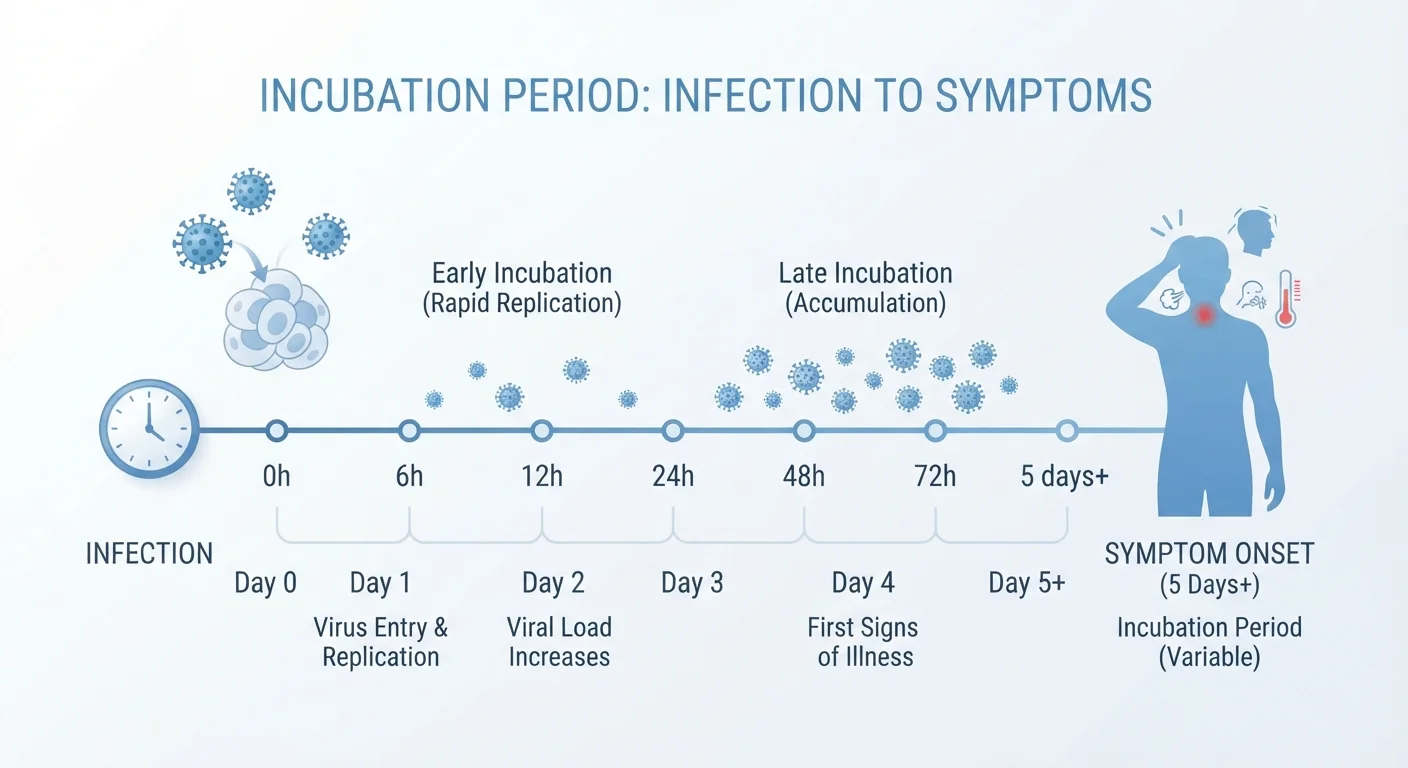
Key Takeaways
- Incubation periods vary widely — from hours for foodborne illness to weeks for diseases like hepatitis A.
- During the incubation period, a person may be contagious even before they feel sick.
- Factors like pathogen type, infectious dose, and immune status all influence how long incubation lasts.
- Public health authorities use incubation period data to set quarantine and contact-tracing guidelines.
- Knowing typical incubation windows helps individuals make informed decisions after a known exposure.
Incubation Period
The incubation period is the time between when a person is first exposed to a pathogen — such as a virus or bacteria — and when symptoms first appear. During this window, the infectious agent is multiplying inside the body, but the infected person typically feels well. Depending on the illness, this period can last hours, days, or even weeks.
The incubation period is distinct from the latent period, which refers specifically to the time before a person becomes infectious to others — the two windows do not always overlap.
The Silent Window: What Happens Between Exposure and Symptoms
When you encounter a pathogen — whether by breathing in viral droplets, consuming contaminated food, or touching a surface and then your face — you are not immediately sick. Instead, the microorganism begins to replicate inside your body, gradually building to a level where your immune system sounds the alarm and symptoms emerge. That quiet interval is the incubation period.
Understanding this window matters for more than academic reasons. It shapes how we respond after a known exposure, whether a healthcare provider recommends watchful waiting or immediate action, and how public health agencies design quarantine policies. For a broader grounding in how infections progress from first contact to recovery, see our guide to the stages of a respiratory infection.
1–4 days
Typical influenza incubation period
According to the CDC, flu symptoms usually appear one to four days after exposure, with an average of about two days.
2–14 days
COVID-19 incubation range
The CDC notes that SARS-CoV-2 symptoms most commonly appear within three to five days of exposure, though the window extends to 14 days.
Up to 50 days
Maximum hepatitis A incubation
The WHO reports that hepatitis A's incubation period ranges from 15 to 50 days, averaging approximately 28 days.
Why Incubation Periods Differ So Dramatically
There is no universal incubation period because no two pathogens are the same. Several key factors drive the variation:
- Pathogen biology: Viruses that replicate rapidly — like norovirus — can trigger symptoms within 12 to 48 hours. Slower-replicating agents or those requiring a more complex life cycle, like the hepatitis A virus or Mycobacterium tuberculosis, take days to weeks before the body reacts visibly.
- Infectious dose: The amount of pathogen you were exposed to can shift the timeline. A higher initial dose often shortens the incubation period because less replication time is needed to reach a threshold that provokes symptoms.
- Route of entry: How a pathogen enters the body affects where it first takes hold and how quickly it spreads to target tissues. Inhaled pathogens that infect respiratory epithelium may act faster than those that must migrate from the gut to other organs.
- Host immune status: A person with a robust immune response may mount defenses that slow early replication, sometimes extending the incubation period or reducing ultimate symptom severity. Immunocompromised individuals may experience faster progression.
These variables mean incubation periods are always reported as a range, not a fixed number. Published estimates reflect population-level data and individual experiences can differ. For context on how the same pathogen can behave differently depending on the host, see our article on childhood vs. adult infections.
Track Your Exposure Date When Possible
If you know when a potential exposure occurred, note it. This single piece of information helps healthcare providers significantly when evaluating your symptoms — they can map your timeline against known incubation windows for plausible pathogens. A simple note in your phone with the date and context of exposure is enough.
Real-World Incubation Ranges: Common Illnesses Compared
Placing familiar illnesses side by side illustrates just how wide the spectrum is:
| Illness | Typical Incubation Range |
|---|---|
| Norovirus (stomach flu) | 12–48 hours |
| Influenza | 1–4 days |
| COVID-19 (SARS-CoV-2) | 2–14 days (commonly 3–5 days) |
| Chickenpox (varicella) | 10–21 days |
| Hepatitis A | 15–50 days |
| Rabies | Weeks to months |
These ranges, drawn from established clinical and epidemiological sources such as the CDC, show that some illnesses declare themselves within a day while others take months. The infectious disease landscape is far from uniform.
Public Health Significance — and What It Means for You
Incubation period data is foundational to outbreak control. When health authorities identify a cluster of cases, knowing the typical incubation window tells them how far back to trace contacts and how long exposed individuals should monitor themselves or isolate. Quarantine lengths — such as those established during the COVID-19 pandemic — are derived directly from observed incubation distributions for that specific pathogen.
On a personal level, this knowledge empowers you. If you know you sat beside someone who later tested positive for influenza, understanding that flu typically incubates in one to four days helps you decide when to watch for symptoms and when the window has likely passed. The same logic applies to foodborne illnesses after a suspect meal, or to travel-associated infections after returning from a high-risk region.
This concept connects naturally to how conditions are classified over time — our piece on acute, chronic, and episodic illness explains how a disease's timing shapes diagnosis and management. For a comprehensive foundation on how infections spread and what symptoms signal, explore our infections and illness overview.
This article is for informational purposes only and does not constitute medical advice. Always consult a qualified healthcare professional if you have concerns about a potential exposure, new symptoms, or any personal health decision.