

Key Takeaways
- Eight fundamental movement patterns cover almost every strength exercise an adult will encounter.
- Training these patterns systematically builds strength that transfers directly to everyday life.
- Mastering bodyweight versions of each pattern before adding load reduces injury risk.
- Most strength programs already use these patterns — understanding them helps you train smarter.
- Balanced programming trains opposing patterns equally to support joint health and posture.
Why Movement Patterns Matter More Than Exercises
Walk into any gym and you'll encounter hundreds of exercises — cable rows, goblet squats, Romanian deadlifts, push-ups. The variety can feel overwhelming. But underneath all that apparent complexity, the same small set of fundamental movement patterns repeats itself over and over.
Understanding these patterns changes how you think about strength training. Instead of memorizing an endless list of exercises, you recognize the underlying template each one follows. A barbell row and a seated cable row look different but are both horizontal pull patterns. A kettlebell swing and a trap-bar deadlift are both hip hinge patterns. Once you see the patterns, building a balanced program becomes straightforward.
Exercise scientists and strength coaches have long organized movement into categories that reflect how the body actually produces force. For a broader look at how strength training fits into overall fitness, see our complete overview of strength and flexibility training. The eight patterns below cover the vast majority of movements you'll use in any well-designed program.
Start With Bodyweight, Then Add Load
Before adding external resistance to any pattern, practice the bodyweight version until the movement feels natural and controlled. This builds motor patterns, body awareness, and joint integrity. For most adults, spending two to four weeks on bodyweight-only training before progressing is time well invested — not time lost.
The Eight Foundational Movement Patterns
The Squat
The squat is a knee-dominant pattern in which the hips and knees flex simultaneously while the torso stays relatively upright. It mirrors everyday movements like sitting down and standing up, making it one of the most practical patterns to train. Common variations include the bodyweight squat, goblet squat, and back squat. Focus on controlled descent, knees tracking over toes, and a neutral spine throughout.
The squat mirrors sitting and standing — one of the most practical patterns you can train.
The Hip Hinge
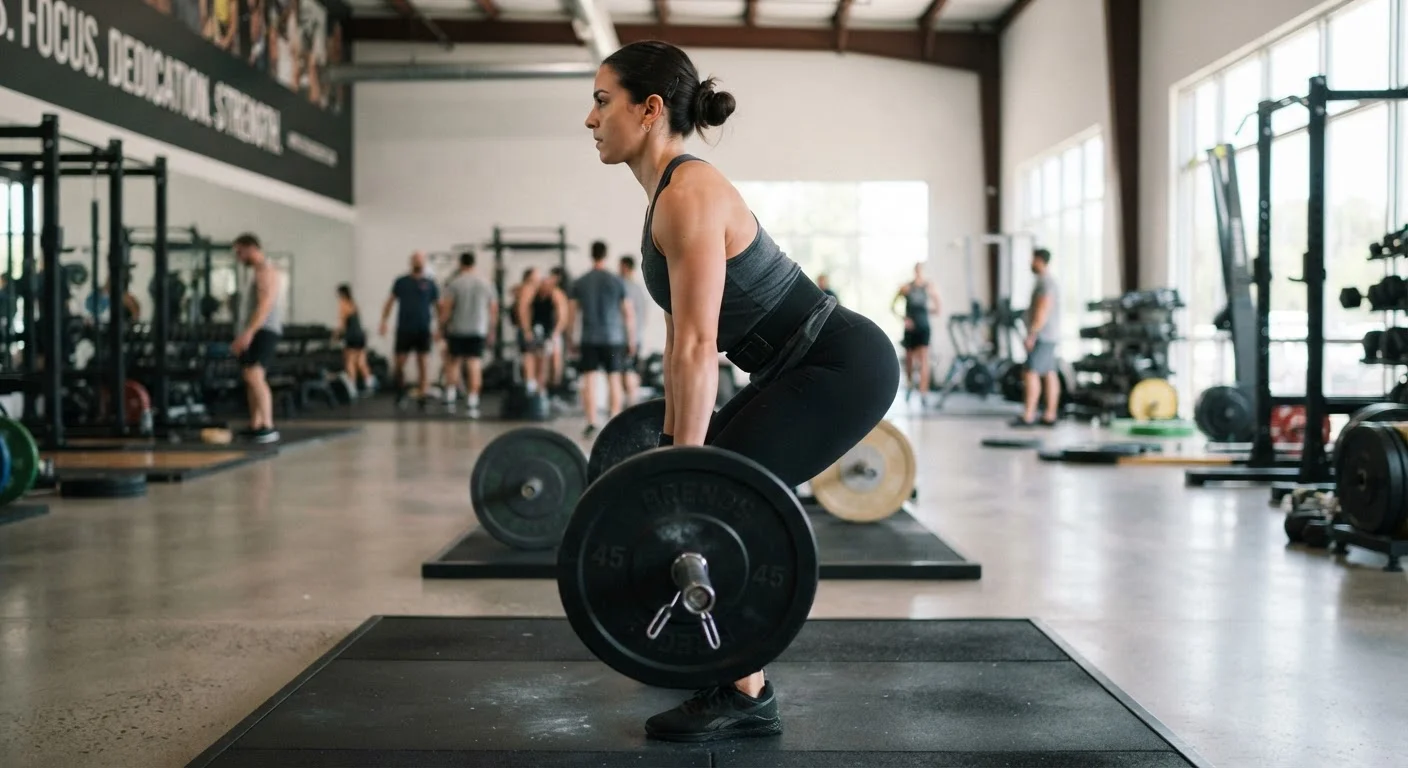
The hip hinge involves pushing the hips backward while maintaining a long, neutral spine — loading the hamstrings and glutes rather than the quads. Deadlifts, Romanian deadlifts, and kettlebell swings all use this pattern. It's essential for safe lifting mechanics in daily life, from picking up a bag of groceries to loading a dishwasher from a low shelf.
Every safe lift from the floor relies on understanding and owning the hip hinge.
The Horizontal Push
Horizontal pushing moves resistance away from the body along a roughly parallel-to-floor path. Push-ups and bench press variations are the clearest examples. This pattern primarily trains the chest (pectorals), front shoulders (anterior deltoids), and triceps. Because most adults already spend time in a forward-rounded posture, horizontal pushing should be balanced with equal or greater horizontal pulling volume.
Balance your horizontal push work with equal pulling to protect shoulder joint health.
The Horizontal Pull
Horizontal pulling draws resistance toward the body from in front — think dumbbell rows, cable rows, and inverted rows. These movements strengthen the upper and mid back (rhomboids, trapezius, rear deltoids) and the biceps. Strong horizontal pulling capacity directly counteracts the rounding posture associated with long hours at a desk, making it especially valuable for many working adults.
Strong horizontal pulling is one of the best posture-support investments you can make.
The Vertical Push
Vertical pushing presses resistance overhead — shoulder press variations, pike push-ups, and landmine presses. This pattern develops the deltoids, upper trapezius, and triceps, and requires meaningful shoulder mobility and thoracic (upper spine) extension. Adults with limited overhead range should address mobility restrictions before loading this pattern heavily to avoid placing undue stress on the lower back or neck.
Adequate shoulder mobility is a prerequisite before loading any vertical pushing pattern.
The Vertical Pull
Vertical pulling draws the body upward or resistance downward — pull-ups, chin-ups, and lat pulldowns are prime examples. This pattern builds the latissimus dorsi (the broad muscles of the back), biceps, and rear shoulder. It also requires scapular (shoulder blade) control, which many adults lack. Band-assisted pull-ups or lat pulldowns allow beginners to build the pattern progressively.
Lat pulldowns and band-assisted pull-ups build the vertical pull from the ground up.
The Carry
Carries involve moving through space while supporting a load — farmer's carries, suitcase carries, and overhead carries. Unlike the other patterns, carries are inherently functional because they combine grip strength, core stability, and locomotive coordination simultaneously. They transfer directly to carrying luggage, groceries, and children, making them uniquely practical. Carries are often underutilized in recreational training despite their broad benefits.
Carries combine grip, core, and locomotion — making them among the most functional patterns.
Core Anti-Movement
The core's primary job in most movements is resisting unwanted motion — preventing the spine from bending, rotating, or extending under load — rather than producing movement itself. Planks, Pallof presses, and dead bugs all train this anti-movement function. A strong anti-movement capacity protects the spine during all other patterns and is the quiet foundation beneath every exercise listed above.
A strong core resists movement first — it's the foundation beneath every other pattern.
Patterns, Not Muscles
Traditional programs are often organized by muscle group — 'chest day,' 'leg day.' Movement-pattern programming takes a different approach: train the pattern, and the relevant muscles follow. This lens makes it easier to spot imbalances, fill gaps, and build strength that actually transfers to how your body moves in real life. For more foundational concepts, see our Exercise Basics hub.
Putting the Patterns to Work
A well-rounded strength program trains all eight patterns across the week, pairing opposing movements — push with pull, knee-dominant with hip-dominant — to maintain muscular balance around each joint. This approach supports long-term joint health and helps correct the postural imbalances many adults develop from prolonged sitting.
Start by identifying which patterns feel least comfortable and give them priority. If your daily movement habits are mostly sedentary, bodyweight versions of each pattern are an excellent starting point before any external load is introduced. If you encounter unfamiliar terminology along the way — eccentric, isometric, range of motion — our glossary of strength and flexibility terms explains each concept clearly.
This article is for general informational and educational purposes only and does not constitute medical or exercise advice. If you have an existing injury, health condition, or are new to structured exercise, consult a qualified healthcare provider or certified fitness professional before beginning any strength training program.