

Key Takeaways
- Bringing complete medication information — including supplements — prevents dangerous prescribing errors.
- Writing down symptoms before your appointment helps you communicate accurately under pressure.
- Knowing your insurance details and prior records saves time and avoids gaps in care.
- Preparing specific questions ensures you leave with the information you actually need.
- Organizing paperwork and logistics in advance reduces stress and appointment delays.
Summary
22 items · 20–45 minutes
Why Preparation Makes Every Appointment More Effective
Doctor appointments — whether routine checkups, specialist consultations, or urgent visits — are often shorter than patients expect. Research consistently shows that adults who arrive prepared ask better questions, report higher satisfaction, and are less likely to forget key information under the stress of a clinical setting. This checklist is designed to help you walk in organized and walk out informed.
Whether you're managing a long-term condition or seeing a new provider for the first time, the steps below apply broadly. For those navigating follow-up visits related to a specific diagnosis, see our guide to preparing for a diagnostic appointment for additional detail. You can also explore our complete guide to seeing a doctor for end-to-end guidance from booking through follow-up.
Documents and Insurance
Medication and Supplement Information
Symptom and Health History Notes
Questions to Ask Your Provider
Tools You'll Need to Get Ready
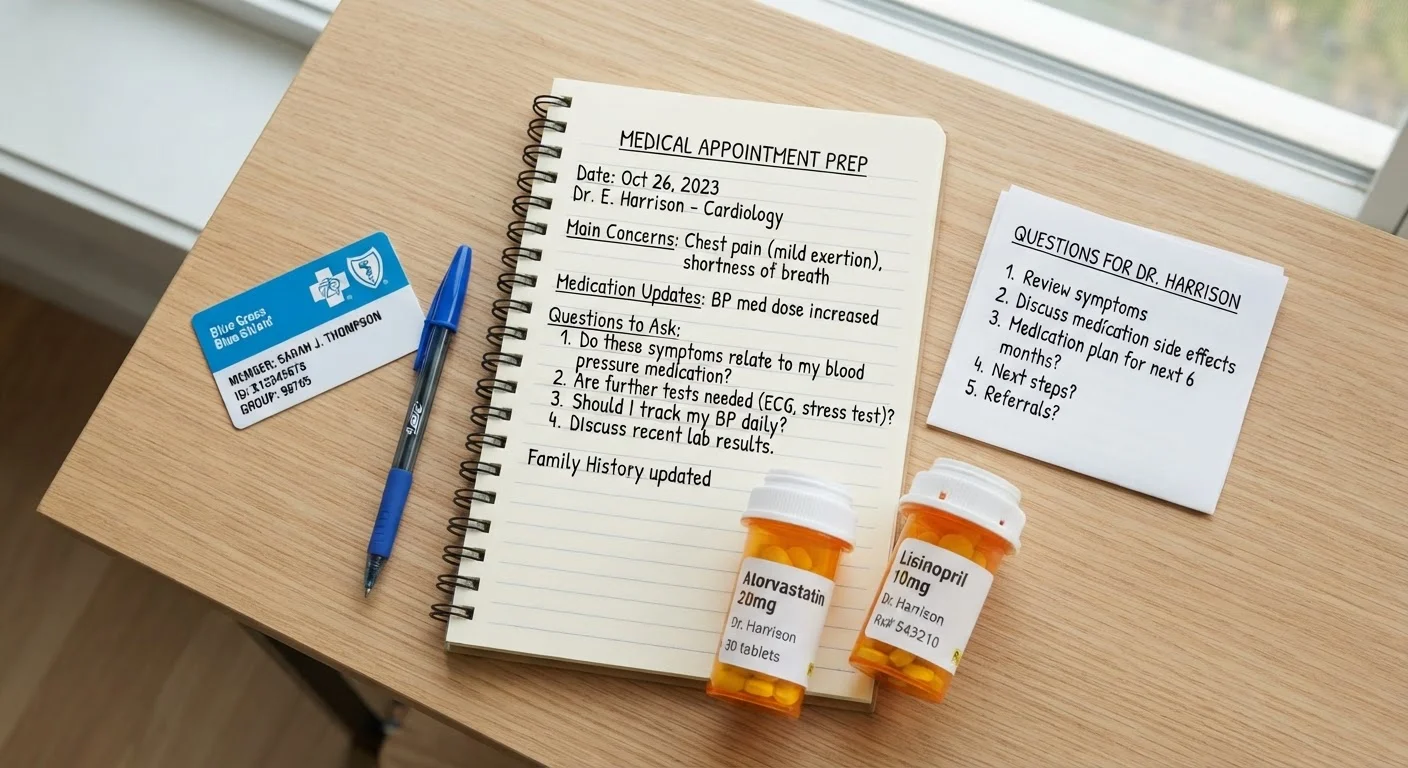
Most preparation requires nothing more than what you already have at home. The tools below help you organize information clearly so nothing is left out during your visit.
Notepad or notes app
Record your symptom history, medication list, and questions before the appointment, and capture your provider's answers during it.
Insurance card and ID
Required at check-in to verify identity and confirm coverage for services rendered.
Medication bottles or list
Provides accurate medication names, dosages, and schedules — reduces the risk of prescribing errors.
Prior medical records or test results
Gives your provider context from previous diagnoses, imaging, or lab work that may be relevant to today's visit.
Home monitoring log (blood pressure monitor, glucose meter, etc.)
Provides objective data that supplements what you describe verbally, especially for chronic condition management.
Getting the Most from a Short Visit
Primary care appointments in the US average around 18 minutes, according to published research. That's not much time to cover symptoms, ask questions, and understand next steps. Preparation bridges that gap.
Prioritize your concerns before you arrive. If you have three issues to discuss, rank them so the most pressing comes first. If you're raising a sensitive topic — such as mental health — knowing it's on your list makes it easier to bring up. Our article on raising mental health concerns with your GP can help you prepare for that conversation specifically.
After the appointment, review any new instructions, prescriptions, or referrals before you leave the building. If you receive a new diagnosis, our piece on questions to ask after any new diagnosis walks you through what to clarify before leaving the clinic.
Don't Skip Medications to Discuss Them
Never stop taking a prescribed medication without your doctor's guidance, even if you want to discuss concerns about it at your appointment. Stopping certain medications abruptly can cause serious health consequences. Instead, take your medication as usual and raise your questions during the visit.
This article provides general health information for educational purposes only and is not a substitute for personalized medical advice. Always consult a qualified healthcare professional regarding your individual health needs, symptoms, or treatment decisions.