

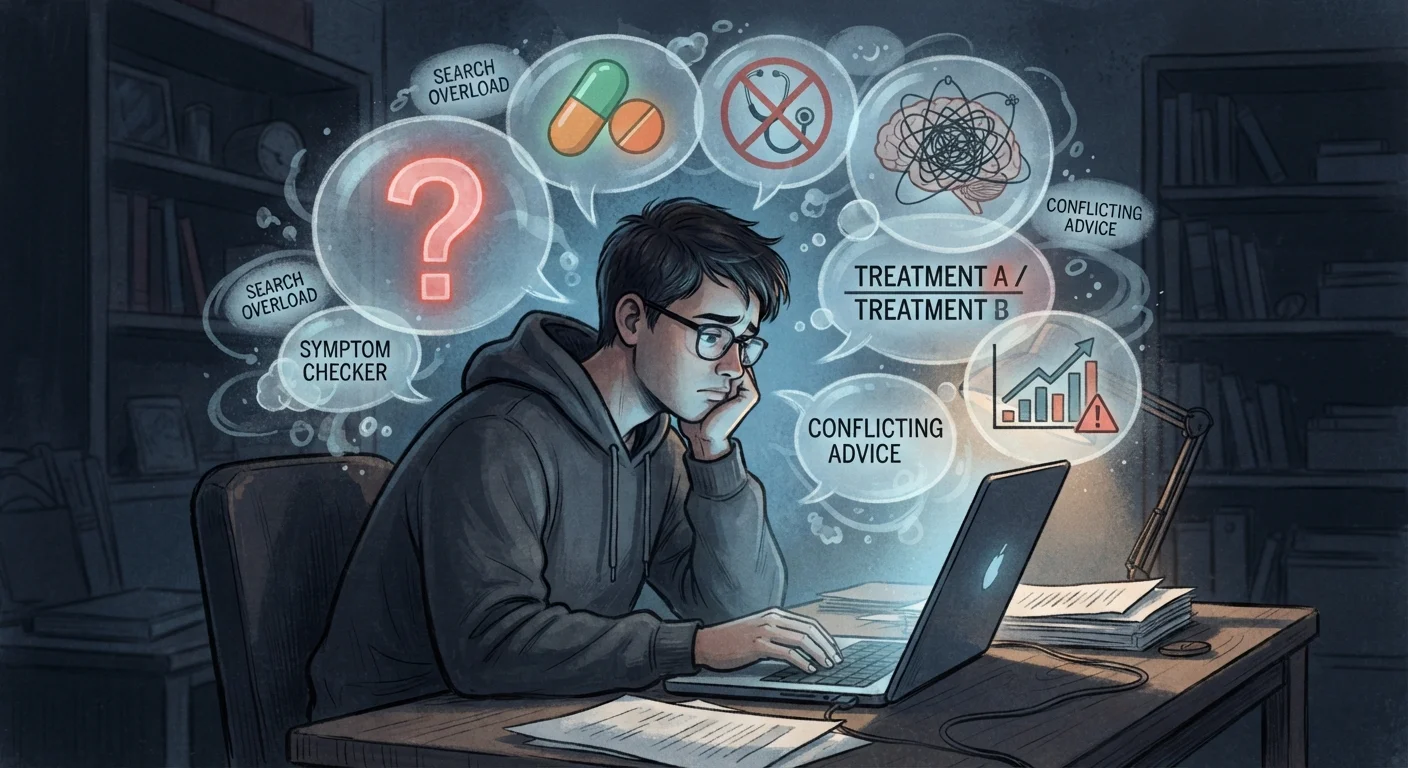
Key Takeaways
- Online health forums can reduce isolation but frequently spread unverified or incorrect medical information.
- Anecdotal accounts from other users are not a substitute for evidence-based clinical guidance.
- Confirmation bias causes readers to favor forum posts that align with what they already believe.
- Cross-checking forum claims with sources like the CDC, NIH, or Mayo Clinic improves accuracy.
- Always discuss anything you read in a forum with a qualified healthcare provider before acting on it.
Online Health Forums
Online health forums are internet-based communities where people share personal experiences, symptoms, treatments, and advice related to health conditions. They range from Reddit communities and Facebook groups to dedicated patient platforms like PatientsLikeMe or WebMD's message boards. While they can provide emotional support and practical insights, they are not staffed by medical professionals and should not replace clinical guidance.
Research in health informatics identifies these platforms as a primary source of 'peer-generated health information' — content created by patients rather than clinicians — which carries distinct risks of anecdotal bias and misinformation propagation.
Why People Turn to Health Forums
A diagnosis, a confusing symptom, or a treatment decision that feels overwhelming — these are the moments that send millions of Americans to online health forums every day. The appeal is understandable. Forums offer something a busy clinical appointment often cannot: time, relatability, and the comfort of hearing from someone who has been through the same thing.
For people managing chronic or rare conditions, these communities can be genuinely valuable. They help patients formulate questions for their doctors, decode medical jargon in plain language, and feel seen during isolating health experiences. For conditions that carry stigma — mental illness, digestive disorders, reproductive health — the anonymity of a forum can lower the barrier to seeking information at all.
The problem is not that people seek peer support. It is that forums are structurally ill-suited to function as health authorities, yet many users treat them that way.
“Patient communities online can be extraordinary sources of support, but they are not a substitute for the clinical encounter. The danger is when emotional resonance is mistaken for medical authority.”
— A representative view expressed by health communication researchers studying digital patient communities, Health communication and medical informatics research community
How Forums Distort Medical Beliefs
Several cognitive and algorithmic forces push forum content toward inaccuracy:
- Survivorship and severity bias: The people most likely to post are those with dramatic outcomes — unusually bad reactions, miraculous recoveries, or intense grievances. This skews perception of what is typical.
- Confirmation bias: Readers gravitate toward posts that confirm what they already suspect, ignoring contradicting accounts. Someone convinced a medication is harmful will find abundant testimony to support that view.
- Nocebo amplification: Reading about side effects in emotionally charged terms can make people more likely to experience or report those effects themselves — a well-documented psychological phenomenon.
- Misinformation persistence: Corrections rarely spread as far or as fast as the original false claim. An inaccurate post can accumulate hundreds of shares before a rebuttal appears.
These dynamics are not hypothetical. Studies published in journals such as the Journal of Medical Internet Research have documented widespread health misinformation in patient communities covering vaccines, cancer treatments, and chronic disease management. For a practical guide to spotting these patterns, see red flags in online health content.
72%
Adults who search online for health information
According to Pew Research Center surveys, roughly seven in ten U.S. adults have looked online for health information, making digital literacy a critical component of health decision-making.
~25%
Health posts on social media containing misinformation
A systematic review published in PLOS ONE found that approximately one in four social media posts about health topics contained inaccurate or misleading information.
Up to 50%
Patients who share forum info with doctors
Research published in the Journal of Medical Internet Research found that roughly half of patients who use online health communities discuss what they find with their clinicians, underscoring the forums' real-world influence.
The Self-Diagnosis Trap
Forums are a frequent starting point for self-diagnosis — and that is where the stakes rise considerably. A user describes their symptoms, receives a flood of responses suggesting possible conditions, and begins to construct a diagnosis before ever seeing a clinician. The responses are sincere, but sincerity does not equal accuracy.
Symptoms overlap across dozens of conditions. Fatigue, joint pain, and brain fog can accompany autoimmune disorders, thyroid dysfunction, depression, sleep apnea, and many other diagnoses — and distinguishing between them requires testing, clinical history, and professional judgment. Self-diagnosis based on symptom searches carries real risks of misattribution that delays appropriate care.
If you find yourself building a diagnosis from forum threads, treat it as a list of possibilities to discuss with your provider — not a conclusion to act on.
Turn Forum Findings Into Doctor Questions
Before your next appointment, write down any claims you read in forums that concerned or confused you. Framing them as questions — 'I read that some people find X medication ineffective; is that relevant to my case?' — invites an informed response without putting your provider on the defensive. This habit converts passive reading into an active part of your healthcare.
How to Use Forums More Critically
The goal is not to avoid patient communities entirely, but to engage with them in a way that informs rather than misleads. A few reliable practices:
- Verify before you internalize. Any factual claim — about a drug, a treatment, a diagnosis criterion — should be checked against a credible institutional source such as the CDC, NIH, or Mayo Clinic. See our guide on reading health information online without getting misled for a practical framework.
- Distinguish experience from evidence. A personal account of what worked for one person is not a clinical recommendation. It is one data point.
- Check the forum's moderation policy. Is there medical oversight? Are unsubstantiated claims flagged? Moderation quality varies enormously across platforms.
- Bring findings to your clinician. Use forum content to generate questions, not conclusions. Your healthcare provider is best positioned to contextualize what you have read within your specific clinical picture.
For a broader look at evaluating digital health resources, the complete overview of online health advice covers additional tools and frameworks.
This article is for general informational purposes only and does not constitute medical advice. Always consult a qualified healthcare professional regarding any health concerns, symptoms, or treatment decisions.