

Key Takeaways
- A fever is an active immune defense, not a sign the body is malfunctioning.
- The hypothalamus deliberately raises core temperature in response to infection signals.
- Higher temperatures can slow bacterial replication and enhance white blood cell activity.
- Most fevers in healthy adults are self-limiting and resolve without medical treatment.
- Certain fever patterns — very high temperatures or fever in vulnerable populations — warrant prompt medical evaluation.
- Fever-reducing medications address discomfort but do not eliminate the underlying cause.
Fever
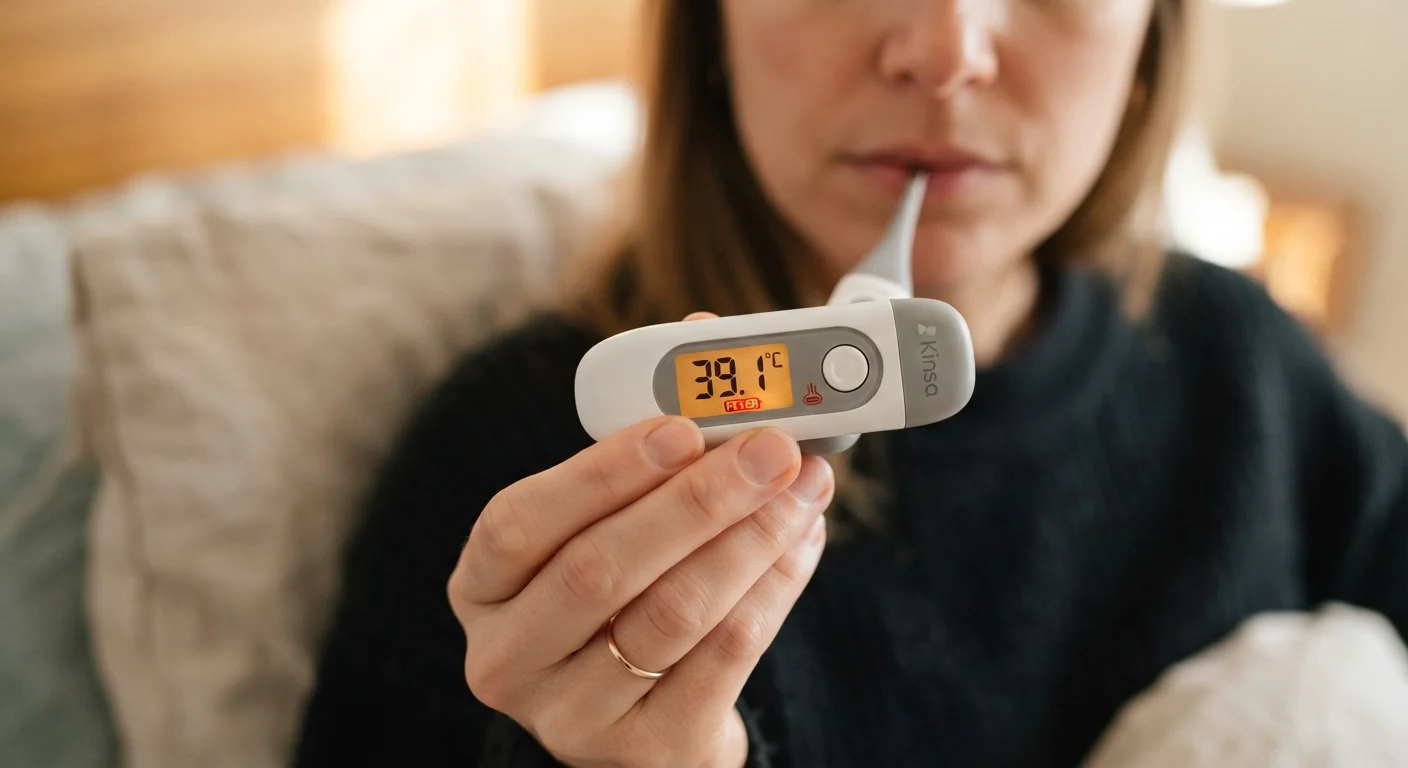
A fever is a temporary increase in body temperature, usually triggered by an infection or illness. It is a controlled biological response — your immune system deliberately raises your core temperature to create a less hospitable environment for pathogens. Most clinicians define a fever as a body temperature at or above 100.4°F (38°C).
The hypothalamus, a region of the brain, acts as the body's thermostat. It resets the temperature set-point upward in response to signaling molecules called pyrogens, which are released during infection or inflammation.
Fever Is a Feature, Not a Bug
When your temperature climbs, the instinct is often to suppress it immediately. But fever is not the immune system failing — it is the immune system executing a deliberate strategy. Understanding the biology behind it changes how you interpret those uncomfortable hours under a blanket.
The process begins when your body detects an invader — a virus, bacterium, or other pathogen. Immune cells called macrophages encounter the threat and release signaling proteins known as cytokines. These cytokines travel to the brain and prompt the hypothalamus to raise the body's temperature set-point, much like turning up a thermostat. The body then generates heat through shivering and restricts heat loss by constricting blood vessels near the skin — which is why you often feel cold and chilly right before a fever fully develops.
To understand how this connects to the broader immune response, see our plain-language walkthrough of how your body fights infection.
“Fever is one of the most conserved responses in biology — fish, reptiles, and mammals all develop fevers when infected. That evolutionary persistence suggests it serves a real purpose.”
— Matthew Kluger, Physiologist and researcher, known for foundational studies on fever and its adaptive role in infection
What Elevated Temperature Actually Does Inside Your Body
The rise in temperature serves several documented biological functions. Many bacteria and viruses replicate most efficiently at normal human body temperature. A modest fever — even just a degree or two above baseline — can slow that replication rate, buying the immune system more time to mount a targeted response.
Elevated temperature also enhances the performance of key immune cells. White blood cells, including T-cells and natural killer cells, become more active and mobile in warmer environments. Some research suggests that interferon, an antiviral protein, is produced more effectively at higher temperatures.
100.4°F
Clinical threshold defining fever in adults
The Centers for Disease Control and Prevention (CDC) and most clinical guidelines use 100.4°F (38°C) as the standard definition of fever across all ages.
~98.6°F
Average normal adult body temperature
Research published in the journal eLife suggests average body temperature has declined slightly over time, with modern measurements clustering around 97.9°F (36.6°C) in healthy adults.
3–5 days
Typical duration of viral fever in adults
Most fevers caused by common viral infections such as influenza or upper respiratory viruses resolve within three to five days in otherwise healthy adults, according to general clinical guidance.
It is worth noting that the evidence on how much these effects benefit outcomes in humans is still being studied. What the research does support clearly is that fever is a regulated, coordinated process — not a random fluctuation.
The Fever Cycle: Chills, Peak, and the Break
Fever typically follows a recognizable arc. The onset phase involves shivering and chills as the body works to reach its new, higher set-point. During the plateau, temperature stabilizes at an elevated level — this is when you feel hottest and most fatigued. Finally, the defervescence (resolution) phase occurs when the hypothalamus resets the set-point downward, and the body releases stored heat through sweating and flushed skin.
This sweating phase is often mistaken for worsening illness, but it is typically a sign of recovery. Fatigue and muscle aches during fever are also partly caused by the cytokines themselves — not just the temperature — which is why the malaise of being sick can persist even as fever resolves.
Many common beliefs about fever do not hold up to scrutiny. For a closer look at what the evidence actually shows, see our article on infection myths that persist despite medical evidence.
When Fever Warrants Medical Attention
Most fevers in otherwise healthy adults are self-limiting and resolve within a few days without intervention. However, certain situations call for prompt professional evaluation.
- Temperature above 103°F (39.4°C) in an adult, especially if it does not respond to fever-reducing measures
- Fever lasting more than three days without a clear improving trend
- Accompanying symptoms such as a stiff neck, severe headache, skin rash, confusion, or difficulty breathing
- Fever in vulnerable groups — infants under 3 months, older adults, pregnant individuals, or those with compromised immune systems should seek evaluation sooner
Fever-reducing medications such as acetaminophen or ibuprofen can reduce discomfort and bring temperature down, but they treat the symptom, not the underlying cause. For guidance on distinguishing symptoms that need care from those that can be safely monitored, see our article on recognizing when an illness needs a doctor.
This article is for informational purposes only and is not a substitute for professional medical advice, diagnosis, or treatment. Always consult a qualified healthcare provider with questions about your health or a specific medical condition.