
The Immune Response: A Plain-Language Walkthrough of How Your Body Fights Infection

Key Takeaways
- Your immune system has two main branches: innate (rapid, general) and adaptive (targeted, memory-forming).
- Fever, inflammation, and fatigue during illness are signs your immune system is actively working.
- Antibodies are proteins produced by the adaptive immune system to neutralize specific pathogens.
- Immunological memory is why vaccines and past infections can protect you from future illness.
- A weakened immune system can result from chronic illness, poor sleep, stress, or certain medications.
- Most mild infections resolve on their own — but persistent or severe symptoms warrant professional evaluation.
Immune Response
The immune response is your body's coordinated defense against foreign invaders such as bacteria, viruses, fungi, and parasites. It involves specialized cells, proteins, and organs working together to detect, neutralize, and remember threats. When it functions well, most infections are cleared before you even notice them.
Immunologists divide the immune response into two main branches: the innate immune system (fast, non-specific) and the adaptive immune system (slower but highly targeted and capable of immunological memory).
Two Systems, One Defense
Your immune system is not a single organ — it is a network of cells, proteins, tissues, and organs distributed throughout your body. At its core, it operates through two interconnected branches: the innate immune system and the adaptive immune system.
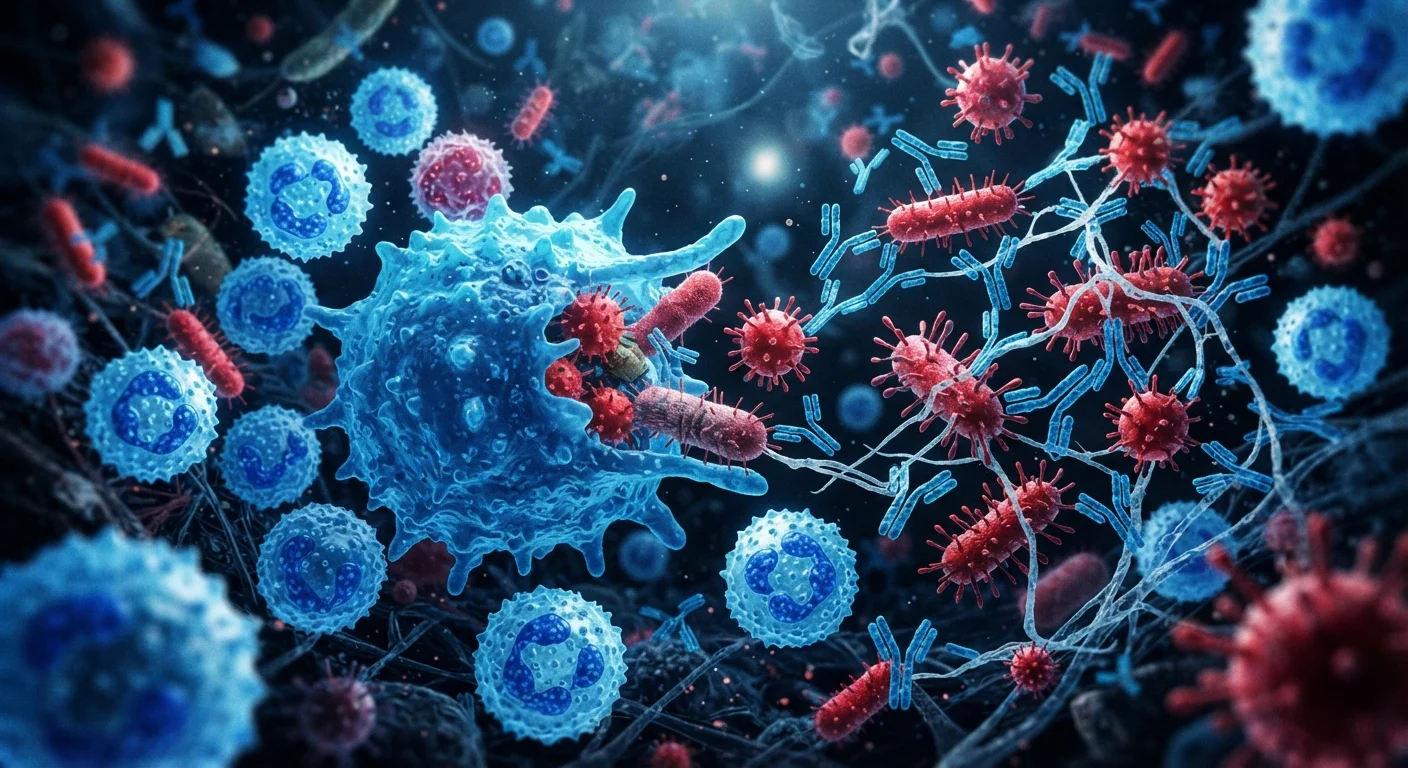
The innate system is your immediate, non-specific response. Within minutes to hours of detecting an invader, innate immune cells — including neutrophils and macrophages — move to the site of infection, consume pathogens, and release chemical signals called cytokines that trigger inflammation. This branch does not distinguish between different types of bacteria or viruses; it simply recognizes that something foreign is present.
The adaptive system, by contrast, takes several days to mobilize but is highly targeted. It identifies the specific pathogen and produces a tailored response — including antibodies — designed to neutralize that exact threat. Crucially, it also creates memory cells, which is why recovering from an illness (or receiving a vaccine) can protect you from that same pathogen in the future.
For a broader picture of how infections develop and spread, see our comprehensive infections and illness overview.
What Happens When a Pathogen Enters Your Body
The sequence of events during an infection follows a recognizable pattern, even if the specifics vary by pathogen.
- Barrier breach: Most pathogens first encounter physical barriers — skin, mucous membranes, and cilia in the airways. Many are stopped here. If a pathogen gets through, the immune response begins.
- Innate recognition: Pattern-recognition receptors on innate immune cells detect molecular signatures common to broad classes of pathogens. This triggers the release of cytokines and recruits immune cells to the area.
- Inflammation: Blood vessels near the infection site widen and become more permeable. This delivers more immune cells to the tissue — causing the classic signs of local inflammation: redness, warmth, swelling, and pain.
- Antigen presentation: Specialized cells called dendritic cells capture fragments of the pathogen (called antigens) and carry them to the lymph nodes, where they activate T cells and B cells of the adaptive immune system.
- Adaptive activation: B cells produce antibodies specific to the pathogen. T cells either directly kill infected cells (cytotoxic T cells) or coordinate the broader immune response (helper T cells).
- Resolution and memory: Once the pathogen is cleared, most active immune cells die off. A small population survives as memory cells, ready to respond much faster if the same pathogen is encountered again.
~100 billion
Antibodies your body can theoretically produce
Research in immunology estimates the human adaptive immune system is capable of generating an extraordinarily diverse antibody repertoire through genetic recombination.
8–12 days
Typical adaptive immune response activation time
According to established immunological research, it generally takes 8 to 12 days after first exposure for the adaptive immune system to produce peak antibody levels.
~70%
Of immune tissue located in the gut
The gastrointestinal tract houses a large proportion of the body's immune cells, underscoring the connection between digestive health and overall immune function, per immunology literature.
Symptoms Are Often the Immune Response Itself
Many of the uncomfortable symptoms associated with infection are not caused directly by the pathogen — they are caused by your immune system doing its job.
Fever is triggered by cytokines acting on the brain's temperature-regulating center. The elevated temperature inhibits the growth of some pathogens and accelerates certain immune reactions. Fatigue is similarly driven by cytokines and is thought to redirect energy toward immune activity. Loss of appetite may reduce resources available to some bacteria, which depend on dietary iron to replicate.
Understanding this helps put common misconceptions in perspective. For example, the idea that you should "sweat out" a fever or that antibiotics speed up recovery from viral infections are not supported by evidence — for a deeper look at such claims, see our article on infection myths that persist despite medical evidence.
Don't Suppress Every Fever Immediately
A low-grade fever (generally below 103°F / 39.4°C in adults) is a sign your immune system is working. Unless the fever is causing significant discomfort, is very high, or persists beyond a few days, it may not need to be aggressively treated. Always consult a healthcare professional if you are unsure, especially for children, elderly individuals, or those with underlying conditions.
When the Immune System Needs Support — and When to Seek Care
A healthy immune system generally handles most common infections without intervention. Supporting that baseline — through consistent sleep, balanced nutrition, physical activity, stress reduction, and staying up to date on recommended vaccinations — is among the most evidence-backed approaches available.
However, the immune system can be compromised. Conditions such as HIV, autoimmune diseases, certain cancers, and treatments like chemotherapy or long-term corticosteroid use can significantly reduce immune function. In these cases, even mild infections may require prompt medical attention.
It is also worth noting that the immune response itself can occasionally cause harm. In rare cases, an exaggerated immune reaction — sometimes called a cytokine storm — can damage healthy tissue. This is one reason why some severe infections require medical management rather than watchful waiting alone.
Overuse of antibiotics does not strengthen immunity; it contributes to antibiotic resistance, a growing public health concern. Learn more in our explainer on antibiotic resistance and why everyday choices matter.
This article is for general informational and educational purposes only and does not constitute medical advice. Always consult a qualified healthcare professional for questions about your individual health, symptoms, or treatment options.