

Key Takeaways
- Antibiotic resistance occurs when bacteria evolve to survive drugs that once killed them.
- Overuse and misuse of antibiotics — in humans and agriculture — are primary drivers of resistance.
- Antibiotics do not treat viral infections; taking them for colds or flu contributes to the problem.
- Resistant infections are harder, more expensive, and sometimes impossible to treat effectively.
- Completing a full antibiotic course as prescribed reduces the risk of leaving resistant bacteria behind.
- Simple habits — like proper handwashing — help prevent the spread of resistant bacteria.
Start here
What Is Antibiotic Resistance?
Next
How Resistance Develops
Then
Why Everyday Choices Accelerate the Problem
Deeper understanding
What Resistant Infections Mean for Treatment
Take action
Practical Steps Anyone Can Take
What Is Antibiotic Resistance?
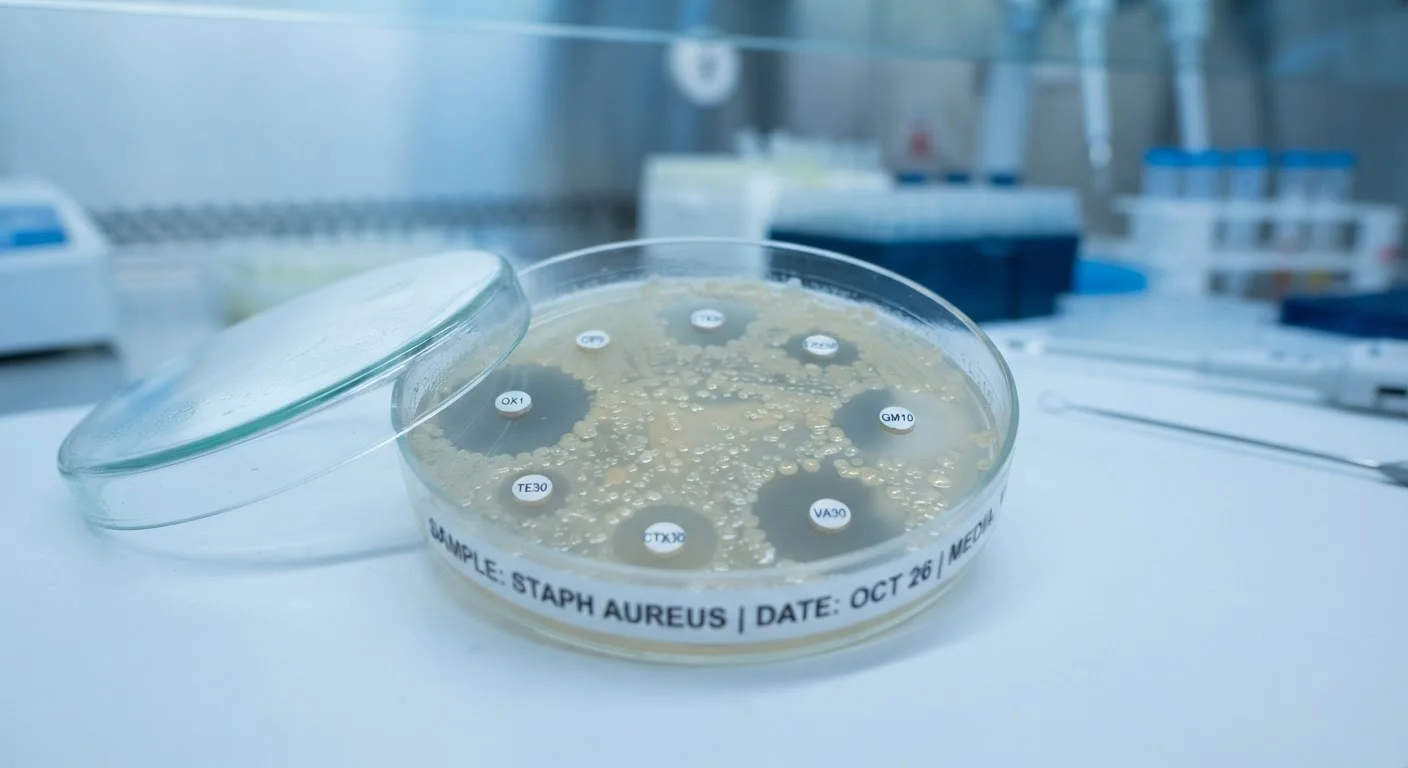
Antibiotics are medicines that kill or stop the growth of bacteria. They transformed modern medicine, turning once-deadly infections into treatable conditions. Antibiotic resistance occurs when bacteria change in ways that allow them to survive exposure to these drugs — meaning the medication that once worked no longer does.
It's important to understand that resistance develops in bacteria, not in people. When a population of bacteria is exposed to an antibiotic, most die — but a small number with natural genetic variations may survive. Those survivors reproduce, passing on the traits that protected them. Over time and repeated exposures, the resistant strain can become dominant.
To understand why antibiotics are only relevant to bacterial infections in the first place, see our guide to bacterial vs. viral infections.
Antibiotic resistance
The ability of bacteria to survive and reproduce despite exposure to an antibiotic that would previously have killed them or stopped their growth.
Selective pressure
The process by which exposure to an antibiotic kills susceptible bacteria but allows resistant ones to survive and become the dominant population.
Horizontal gene transfer
A process where bacteria share genetic information — including resistance traits — directly with neighboring bacteria, even across different species.
Multidrug-resistant organism (MDRO)
A bacterium that has become resistant to multiple types of antibiotics, making infections it causes significantly harder to treat.
Microbiome
The vast community of microorganisms — including bacteria — that live in and on your body, particularly in the gut, and play important roles in health.
Last-resort antibiotics
Powerful antibiotics reserved for infections that do not respond to standard drugs; their use is carefully limited to preserve their effectiveness.
How Resistance Develops
Bacteria are remarkably adaptable organisms. They reproduce rapidly — some species can double their population in as little as 20 minutes — which means genetic mutations that confer resistance can spread through a bacterial population quickly.
Bacteria also share genetic material with one another through a process called horizontal gene transfer. This allows resistance traits to pass not just from parent to offspring, but between entirely different bacterial species — accelerating how widely and quickly resistance can spread across microbial communities, including those living in our own bodies.
This is particularly relevant to gut health. The trillions of microorganisms that make up your gut microbiome can harbor and exchange resistance genes. Repeated antibiotic use disrupts this community, sometimes promoting resistant strains. For more on how daily habits affect your microbiome, see Gut Health and Daily Habits.
Why Everyday Choices Accelerate the Problem
Antibiotic resistance is not just a hospital problem or a distant concern — individual decisions contribute to it every day. The most significant drivers include:
- Taking antibiotics for viral illnesses. Colds, influenza, and most sore throats are caused by viruses. Antibiotics have no effect on viruses, yet they still expose your body's resident bacteria to selective pressure that can breed resistance.
- Not completing a prescribed course. Stopping antibiotics early — once you feel better — can leave the most resistant bacteria alive to multiply.
- Sharing or stockpiling antibiotics. Medications prescribed for one person's specific infection are not interchangeable. Using someone else's prescription or keeping leftovers for later misses the diagnosis step entirely.
- Agricultural use. Antibiotics are used extensively in livestock and aquaculture, and resistant bacteria can enter the food chain and environment, affecting human health indirectly.
Antibiotics Are Not for Every Illness
Taking an antibiotic for a cold, flu, or most sore throats will not help you recover faster — these are almost always caused by viruses, which antibiotics cannot target. Unnecessary antibiotic use exposes your body's bacteria to the drug without benefit, contributing directly to resistance. Always confirm with a healthcare provider whether an antibiotic is genuinely indicated.
What Resistant Infections Mean for Treatment
When a bacterial infection is resistant to standard antibiotics, clinicians must turn to alternative drugs — which are often more expensive, carry greater side effects, or require intravenous administration in a hospital setting rather than oral tablets at home.
Some bacteria have developed resistance to multiple antibiotic classes simultaneously, earning the label multidrug-resistant organisms (MDROs). Infections caused by these bacteria — such as methicillin-resistant Staphylococcus aureus (MRSA) or certain drug-resistant tuberculosis strains — can be very difficult to treat and may require prolonged therapy with last-resort antibiotics.
In rare but serious cases, pan-resistant infections exist against which no currently approved antibiotic is effective. These cases highlight why preserving the effectiveness of existing antibiotics is considered a public health priority. For broader context on how the body responds to infections, the immune response explainer is a useful companion read.
Practical Steps Anyone Can Take
While systemic solutions require action from healthcare systems, regulators, and agricultural industries, individuals can meaningfully contribute to slowing resistance.
- Only use antibiotics when prescribed by a licensed healthcare provider for a confirmed or strongly suspected bacterial infection.
- Complete the full course exactly as directed, even if you feel better sooner.
- Never share or reuse antibiotics from a previous prescription.
- Practice good hygiene — thorough handwashing with soap and water remains one of the most effective ways to prevent bacterial infections from spreading in the first place, including resistant strains.
- Stay up to date on vaccines. Preventing certain bacterial infections (such as pneumococcal disease or pertussis) through vaccination reduces the overall need for antibiotic treatment.
- Ask questions. If a healthcare provider prescribes an antibiotic, it is appropriate to ask what infection is being treated and why an antibiotic is the right choice.
When in Doubt, Ask Your Provider
If you're unsure whether your infection requires an antibiotic, speak with a healthcare professional rather than seeking antibiotics independently. Many viral respiratory illnesses resolve on their own with rest and supportive care. A proper diagnosis protects both your health and the broader effectiveness of these medicines.
For a broader foundation on infections and illness, the Infections & Illness overview covers how infections spread, what symptoms signal, and when to seek care.
This article is for general informational and educational purposes only and does not constitute medical advice. Always consult a qualified healthcare professional for guidance about your specific health situation.