

Key Takeaways
- The gut microbiome is a vast community of trillions of microorganisms living primarily in the large intestine.
- Bacteria are the most numerous residents, but fungi, viruses, and archaea also play important roles.
- A diverse microbiome is generally associated with better digestive and immune health.
- Diet, antibiotics, stress, and early-life exposures all significantly influence microbiome composition.
- Disruption of the microbiome — called dysbiosis — has been linked to several digestive conditions.
- Persistent gut symptoms always warrant evaluation by a qualified healthcare professional.
Start here
What Is the Gut Microbiome?
Next
Who Are the Residents? Types of Gut Microorganisms
Build on it
What the Microbiome Does for Your Health
Go deeper
What Shapes Your Microbiome?
When things go wrong
When the Microbiome Is Disrupted
Take action
When to Talk to a Healthcare Professional
What Is the Gut Microbiome?
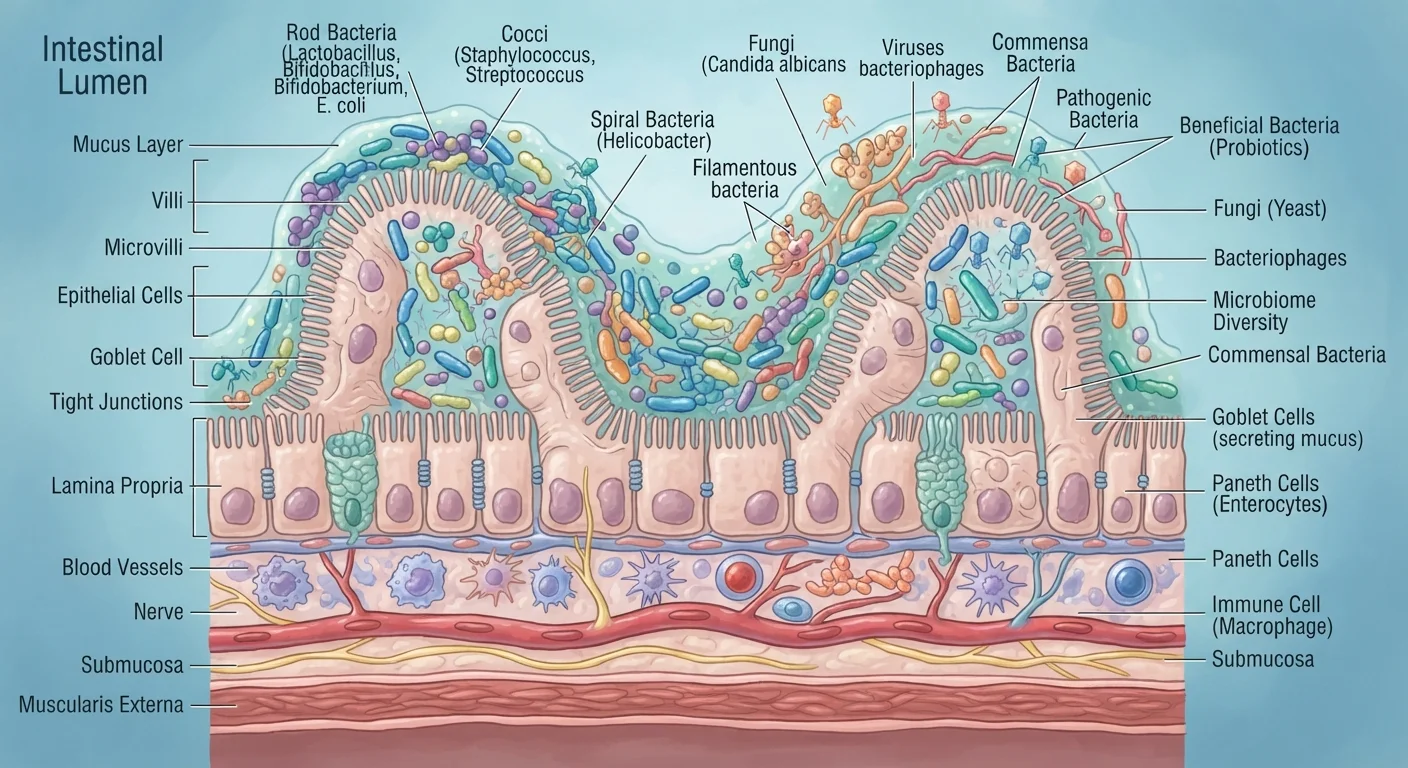
The term gut microbiome refers to the entire community of microorganisms — bacteria, viruses, fungi, and other microbes — that inhabit the human digestive tract, along with their collective genetic material. While microbes are found throughout the gastrointestinal system, the largest and most complex population lives in the large intestine (colon).
This is not a passive colony. The microbiome is a dynamic ecosystem that interacts continuously with your body, influencing digestion, immune signaling, metabolism, and more. Scientists now widely consider it functionally similar to an organ — one that varies considerably from person to person.
Gut microbiome
The full community of microorganisms — bacteria, fungi, viruses, and others — living in your digestive tract, along with their genes.
Dysbiosis
An imbalance in the gut microbial community, where harmful species may outnumber beneficial ones or overall diversity is reduced.
Short-chain fatty acids (SCFAs)
Small molecules produced when gut bacteria ferment dietary fiber; they help nourish the colon lining and support intestinal health.
Microbial diversity
The variety of different microbial species present in the gut; a broader variety is generally associated with better health outcomes in research.
Bacteriophage
A type of virus that infects and regulates bacterial populations in the gut rather than infecting human cells.
Phylum
A major biological classification grouping; in gut science, bacterial phyla like Firmicutes and Bacteroidetes describe the broad categories most gut bacteria fall into.
Who Are the Residents? Types of Gut Microorganisms
Bacteria dominate the gut by sheer numbers and are the most studied group. Major bacterial phyla found in healthy adults include Firmicutes and Bacteroidetes, which together account for the majority of gut bacteria. Other phyla such as Actinobacteria and Proteobacteria are also present in smaller proportions.
Beyond bacteria, the gut microbiome includes:
- Fungi (the mycobiome): Present in smaller numbers but capable of influencing inflammation and bacterial balance.
- Viruses (the virome): Mostly bacteriophages — viruses that infect bacteria — which help regulate bacterial populations.
- Archaea: Single-celled organisms distinct from bacteria, involved in fermenting substances that bacteria cannot fully break down.
Each person's microbial makeup is unique, shaped by genetics, environment, diet, and life history.
What the Microbiome Does for Your Health
The gut microbiome contributes to several essential functions:
- Digestion and nutrient production: Gut bacteria ferment dietary fiber that human enzymes cannot digest, producing short-chain fatty acids (SCFAs) such as butyrate. SCFAs nourish the cells lining the colon and support intestinal barrier integrity.
- Immune system education: A significant portion of immune tissue surrounds the gut. Early and ongoing exposure to gut microbes helps calibrate the immune response, distinguishing harmless substances from genuine threats.
- Protection against pathogens: Beneficial microbes compete with harmful organisms for space and nutrients, reducing the ability of pathogens to colonize the gut.
- Metabolic functions: The microbiome contributes to the synthesis of certain vitamins, including some B vitamins and vitamin K.
For a closer look at how gut activity reaches beyond digestion, see our article on the gut-brain connection.
Fiber Is Foundational for Gut Microbes
Dietary fiber from vegetables, legumes, whole grains, and fruits serves as the primary fuel source for beneficial gut bacteria. Research consistently associates higher fiber intake with greater microbial diversity. Aim to incorporate a variety of plant-based foods rather than relying on a single source. A healthcare provider or registered dietitian can help tailor dietary guidance to your individual needs.
What Shapes Your Microbiome?
The composition of your microbiome is not fixed. Several factors influence it across a lifetime:
- Early-life exposures
- Delivery method (vaginal birth vs. cesarean), breastfeeding, and infant diet establish the microbiome's foundational architecture during a critical developmental window.
- Diet
- High-fiber, plant-rich diets are consistently associated with greater microbial diversity. Diets high in ultra-processed foods and low in fiber tend to reduce diversity over time.
- Antibiotics
- While often medically necessary, antibiotics affect beneficial bacteria as well as harmful ones, sometimes causing lasting changes to microbiome composition.
- Stress and sleep
- Chronic psychological stress and disrupted sleep are linked to measurable shifts in microbial populations, although the mechanisms are still being studied.
- Age
- Microbial diversity tends to shift with age. Our companion article on digestive health through different life stages explores how gut function changes across adulthood.
When the Microbiome Is Disrupted
Dysbiosis describes a state of imbalance in the gut microbial community — characterized by reduced diversity, overgrowth of potentially harmful species, or loss of beneficial ones. It has been associated with conditions including:
- Irritable bowel syndrome (IBS)
- Inflammatory bowel diseases (IBD), such as Crohn's disease and ulcerative colitis
- Antibiotic-associated diarrhea
- Some metabolic conditions
Importantly, research in this area is still maturing. While associations between dysbiosis and these conditions are well-documented, causality is often difficult to establish — it is frequently unclear whether an altered microbiome contributes to a condition or results from it.
Microbiome Research Is Still Evolving
The gut microbiome has been an intensely active area of scientific research over the past two decades, and findings are accumulating rapidly. However, many associations identified in studies have not yet been fully explained mechanistically. Clinical applications — such as microbiome-targeted therapies — remain an emerging field. Treat enthusiastic health claims about the microbiome with appropriate skepticism until backed by robust clinical evidence.
Certain everyday behaviors can quietly undermine microbiome balance without obvious immediate effects. For a practical look at those patterns, see our article on habits that can affect gut health.
When to Talk to a Healthcare Professional
Understanding the microbiome is valuable context, but it does not replace clinical evaluation. Contact a qualified healthcare professional if you experience:
- Persistent abdominal pain, cramping, or bloating
- Significant or unexplained changes in bowel habits
- Blood in your stool
- Unintentional weight loss
- Symptoms that interfere with daily life
For those interested in actively supporting gut health through evidence-backed lifestyle choices, our article on evidence-informed approaches for everyday gut health offers a grounded overview of what the research currently supports.
This article is for informational purposes only and is not a substitute for professional medical advice, diagnosis, or treatment. Always consult a qualified healthcare provider with questions about your health or any symptoms you may be experiencing.