
The Gut-Brain Connection: What Your Digestive System Tells You About Your Health

Key Takeaways
- The gut and brain communicate through nerves, hormones, and the immune system in both directions.
- The vagus nerve is the main physical highway connecting gut and brain signals.
- Gut microbes produce neurotransmitters that can influence mood and cognitive function.
- Chronic stress is known to disrupt gut motility, permeability, and microbial balance.
- Conditions like IBS are increasingly understood as disorders of gut-brain interaction.
- A qualified healthcare professional should be consulted for any persistent digestive or mental health concerns.
The Gut-Brain Axis
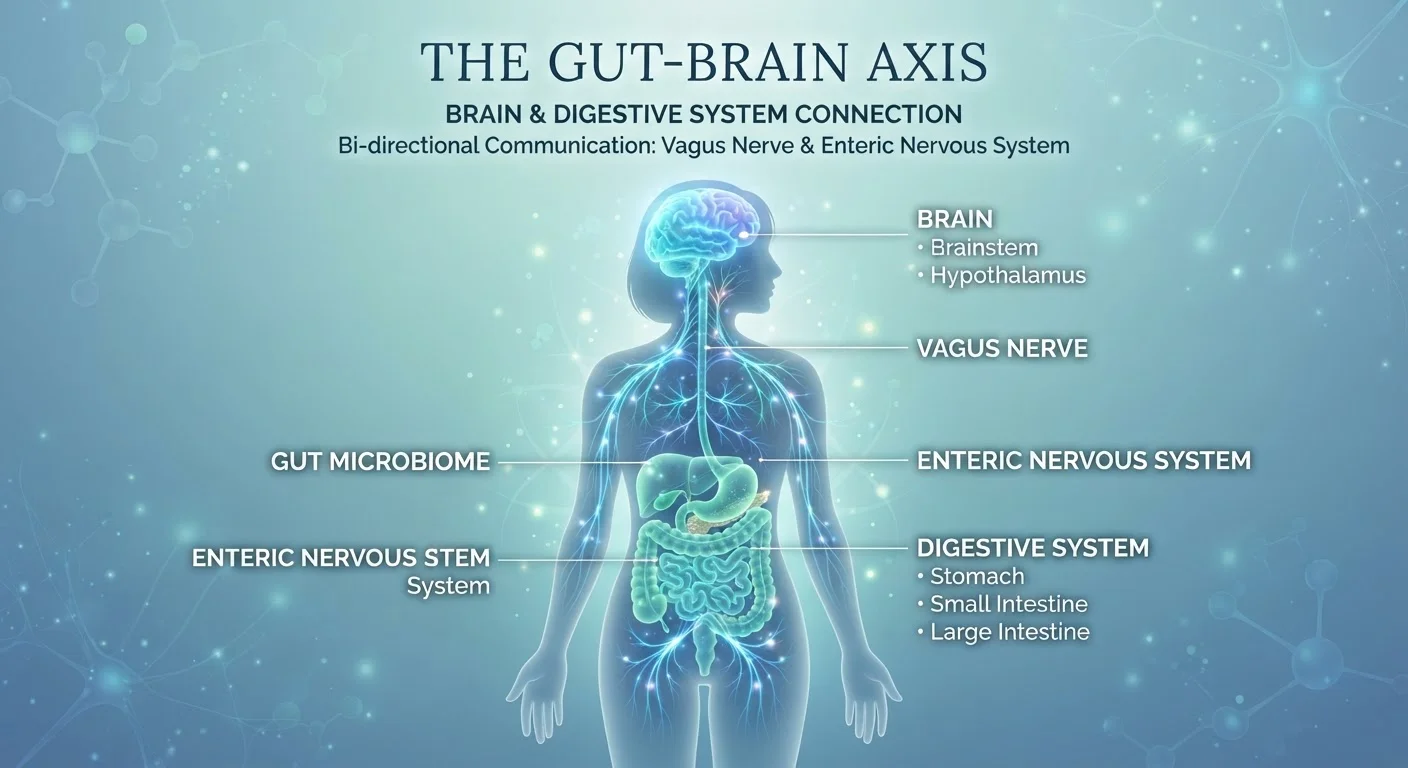
The gut-brain axis is a two-way communication network linking your digestive system and your brain. It involves nerves, hormones, and immune signals that travel in both directions, meaning your gut can influence your mood and your mental state can affect your digestion. This connection helps explain why stress often triggers stomach problems and why gut disorders can affect mental well-being.
The vagus nerve is a primary physical pathway in this system, transmitting signals between the enteric nervous system — often called the 'second brain' — and the central nervous system.
Two Systems, One Conversation
Most people think of the gut and the brain as entirely separate systems — one handles thinking, the other handles digestion. In reality, they are in near-constant dialogue. The scientific term for this communication network is the gut-brain axis, and understanding it helps explain a wide range of symptoms that might otherwise seem disconnected.
This axis operates through several channels: the vagus nerve (a long cranial nerve running from the brainstem to the abdomen), the hormonal system, immune signals, and the metabolic products of gut microbes. Signals travel in both directions — the brain sends instructions to the gut, and the gut sends information back to the brain.
The gut contains its own extensive neural network, the enteric nervous system, which houses roughly 500 million neurons embedded in the gastrointestinal wall. This system can regulate digestion independently but stays in close contact with the central nervous system. Its complexity has led researchers to describe it as the body's "second brain" — though it does not produce conscious thought.
~500 million
Neurons in the enteric nervous system
The gastrointestinal tract contains approximately 500 million neurons, more than in the spinal cord, according to neurogastroenterology research.
90–95%
Of body's serotonin produced in the gut
Research in neurogastroenterology consistently estimates that the vast majority of the body's serotonin is synthesized in the gastrointestinal tract.
10–15%
Of adults affected by IBS globally
Estimates from epidemiological reviews suggest IBS affects roughly 10–15% of the adult population worldwide, making it one of the most common functional gut disorders.
How the Gut Influences Mood and Mental Health
One of the more striking findings in gut-brain research is that approximately 90 to 95 percent of the body's serotonin — a neurotransmitter associated with mood regulation — is produced in the gut, not the brain. Gut microbes and intestinal cells work together to synthesize serotonin and other neuroactive compounds, including gamma-aminobutyric acid (GABA) and dopamine precursors.
These molecules enter the bloodstream and can interact with the brain, which may partly explain why disruptions in gut microbial balance — a state called dysbiosis — have been associated with mood disorders in observational research. It is important to note that most findings in this area are associational; researchers have not yet established clear cause-and-effect relationships for many gut-mood connections in humans.
To learn more about the specific organisms shaping these processes, see our overview of the gut microbiome.
“The gut is not just a digestion machine — it is a sensory organ that communicates with the brain in ways we are only beginning to fully appreciate.”
— Emeran Mayer, Professor of Medicine and author specializing in neurogastroenterology
Stress, the Gut, and Digestive Conditions
Stress activates the sympathetic nervous system — the body's fight-or-flight response — which redirects resources away from digestion. This can alter gut motility (the speed at which food moves through the intestines), increase intestinal permeability, and change the microbial community living in the gut. In the short term, this produces familiar symptoms: nausea, stomach cramps, or sudden changes in bowel habits before a stressful event.
Over the long term, chronic psychological stress may contribute to or worsen conditions including irritable bowel syndrome (IBS), functional dyspepsia, and inflammatory bowel conditions. IBS in particular is now formally classified by gastroenterologists as a disorder of gut-brain interaction, reflecting the recognized role of signal dysregulation between these two systems.
Everyday habits play a meaningful role as well. Sleep deprivation, irregular meal timing, and low dietary fiber intake can each affect how well the gut-brain axis functions. For a detailed look at these patterns, see our article on habits that quietly undermine digestive health.
What This Means for Your Health
The gut-brain connection is not just a biological curiosity — it has practical implications for how digestive and mental health conditions are understood and managed. Clinicians increasingly recognize that treating IBS, for example, may involve psychological approaches such as gut-directed hypnotherapy or cognitive behavioral therapy alongside conventional gastroenterological care. Neither the physical nor the psychological dimension should be dismissed.
Digestive health also changes across the lifespan, and the gut-brain axis may function differently at different ages. Our guide on digestive health across life stages explores how gut function shifts from young adulthood onward.
If you are interested in what lifestyle evidence suggests for supporting gut health more broadly, our article on evidence-informed approaches for a healthy gut outlines the key research-backed factors.
Anyone experiencing persistent digestive symptoms, significant mood changes, or a pattern where gut and mental health symptoms seem closely linked should consult a qualified healthcare professional. These symptoms can have multiple causes, and a proper evaluation is essential before drawing conclusions or pursuing treatment.
This article is for general informational and educational purposes only and does not constitute medical advice. Always seek the guidance of a qualified healthcare provider with any questions you may have regarding a medical condition or treatment.