

Key Takeaways
- Increased intestinal permeability is a real, measurable phenomenon studied in clinical gastroenterology.
- "Leaky gut syndrome" is not a recognized medical diagnosis — the term is used far more broadly in popular wellness culture than in medicine.
- Elevated permeability is associated with several established conditions, including celiac disease and inflammatory bowel disease.
- Many wellness claims attributing diverse symptoms to leaky gut lack strong clinical evidence.
- Lifestyle factors such as diet, stress, and certain medications can influence intestinal permeability.
- Always consult a qualified healthcare professional if you have persistent digestive symptoms.
Leaky Gut Syndrome
"Leaky gut syndrome" is a popular term used to describe a state of increased intestinal permeability — a condition in which the lining of the small intestine becomes more permeable than usual, potentially allowing substances like bacteria, toxins, and undigested food particles to pass into the bloodstream. While increased intestinal permeability is a real, measurable biological phenomenon studied in clinical research, "leaky gut syndrome" as a defined medical diagnosis does not currently exist in mainstream medicine. The science distinguishes between permeability as a physiological observation and a sweeping syndrome blamed for dozens of unrelated conditions.
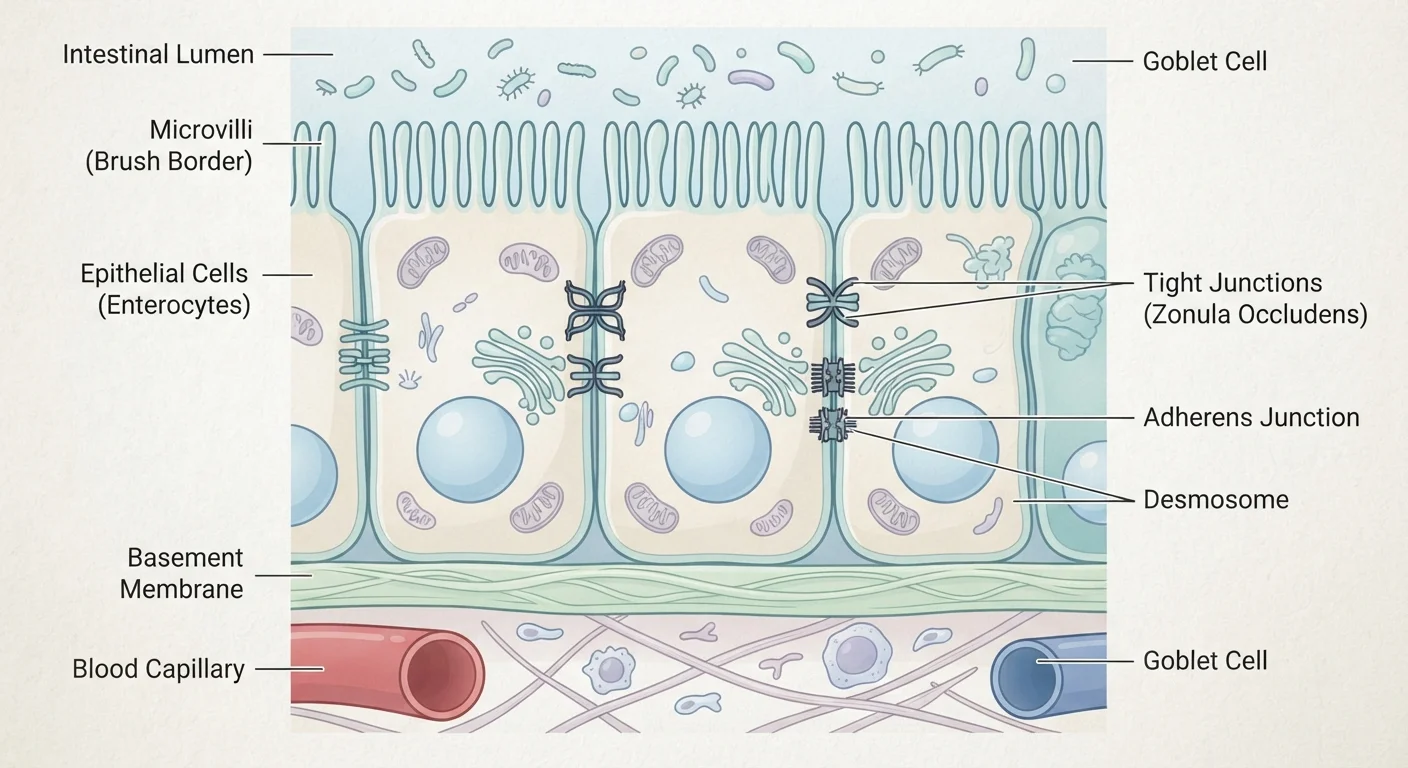
Intestinal permeability is regulated by protein complexes called tight junctions between enterocytes (intestinal lining cells). Disruption of these junctions is the core mechanism researchers study in conditions such as Crohn's disease, celiac disease, and irritable bowel syndrome.
What the Science Actually Says About Gut Permeability
The human intestinal lining is not a solid wall — it is a dynamic, selectively permeable barrier. Specialized cells called enterocytes are linked by protein structures known as tight junctions, which control what passes from the gut into the bloodstream. Nutrients, water, and electrolytes move through routinely; pathogens and large undigested molecules are largely kept out.
Research confirms that this barrier can become more permeable under certain conditions, a state scientists call increased intestinal permeability. Studies have found measurably elevated permeability in people with celiac disease, Crohn's disease, ulcerative colitis, and irritable bowel syndrome (IBS). In some cases, animal studies suggest permeability changes may contribute to inflammation — though whether this is a driver or a downstream effect of disease remains actively debated in the literature.
The important scientific nuance: permeability exists on a spectrum. Some degree of fluctuation is normal and not inherently dangerous. It is when the barrier becomes chronically disrupted — and in specific disease contexts — that clinical significance is established.
~3 million
Americans diagnosed with celiac disease
Celiac disease, which involves immune-driven intestinal damage and measurably elevated permeability, affects an estimated 1% of the U.S. population, according to the National Institute of Diabetes and Digestive and Kidney Diseases.
~10–15%
U.S. adults affected by IBS
The American College of Gastroenterology estimates irritable bowel syndrome affects between 10–15% of U.S. adults — a condition in which altered gut barrier function is among several mechanisms under investigation.
Decades
Intestinal permeability studied in research
Scientific study of intestinal tight junctions and barrier function has been ongoing since at least the 1980s, though popular use of "leaky gut syndrome" as a diagnosis is a much more recent phenomenon.
Where the Wellness Narrative Diverges From Evidence
In popular health media, "leaky gut syndrome" is often presented as the underlying cause of an extraordinarily wide array of conditions — from autoimmune diseases and food sensitivities to anxiety, fatigue, and skin disorders. This is where the gap between scientific observation and speculative claim becomes significant.
Current evidence does not support the position that increased permeability independently causes most of the conditions attributed to it in wellness contexts. Many claims rely on animal model data or very small human studies, which cannot reliably establish cause-and-effect relationships in the broader population. The common misconceptions about digestive health that circulate online frequently blur this line between association and causation.
Researchers do take gut permeability seriously as a variable in disease biology — but the conclusion that it explains a sweeping syndrome with dozens of symptoms is not yet supported by rigorous clinical trials.
“The science of intestinal permeability is real and important. But we have to be careful not to let legitimate research get weaponised to support claims that go well beyond what the evidence supports.”
— Emeran Mayer, Professor of Medicine and Gastroenterology, University of California, Los Angeles; author of works on the gut-brain connection
Factors That Influence Intestinal Barrier Function
Several well-studied factors are associated with changes in intestinal permeability, and understanding them is more useful than chasing an unvalidated diagnosis:
- Diet: High-fiber and diverse plant-based diets are linked to stronger gut barrier integrity in observational research. Ultra-processed foods and high-fat diets show associations with increased permeability in some studies.
- Alcohol: Heavy or chronic alcohol use is one of the most consistently documented contributors to increased gut permeability.
- Medications: Long-term use of non-steroidal anti-inflammatory drugs (NSAIDs) such as ibuprofen is associated with intestinal lining disruption.
- Stress: Chronic psychological stress activates pathways that can alter tight junction proteins — a link explored further in the gut-brain connection.
- Infections: Certain bacterial and viral gut infections can transiently increase permeability.
Addressing these factors through evidence-informed lifestyle approaches makes practical sense regardless of whether a formal "syndrome" is diagnosed. For a broader look at what the research supports, see supporting a healthy gut.
How to Approach Gut Concerns Responsibly
If you're experiencing persistent digestive symptoms, the most important step is consulting a qualified healthcare provider — not self-diagnosing based on wellness content. A gastroenterologist can evaluate whether a recognized condition such as IBS, celiac disease, or inflammatory bowel disease is present and guide appropriate testing and treatment.
Be cautious of practitioners or products that promise to "heal" leaky gut through proprietary supplement protocols. No supplement has been approved by the FDA to treat intestinal permeability, and the evidence base for most commercially promoted leaky gut interventions is weak or absent.
Skepticism is not the same as dismissal. The gut microbiome and intestinal barrier are genuinely fascinating areas of active research. It's entirely reasonable to be interested in gut health — the key is anchoring that interest in evidence rather than marketing.
This article is for general informational purposes only and does not constitute medical advice. Always consult a qualified healthcare professional for personal health concerns, diagnosis, or treatment decisions.