

Key Takeaways
- Autoimmune diseases occur when immune cells mistakenly target the body's own healthy tissue.
- Over 80 recognized autoimmune conditions exist, ranging from rheumatoid arthritis to multiple sclerosis.
- Genetics, hormonal factors, and environmental triggers all appear to contribute to disease development.
- Many autoimmune conditions are chronic and managed rather than cured.
- Early diagnosis and specialist care significantly improve quality of life for most people affected.
- Anyone experiencing persistent, unexplained symptoms should consult a qualified healthcare provider.
Autoimmune Disease
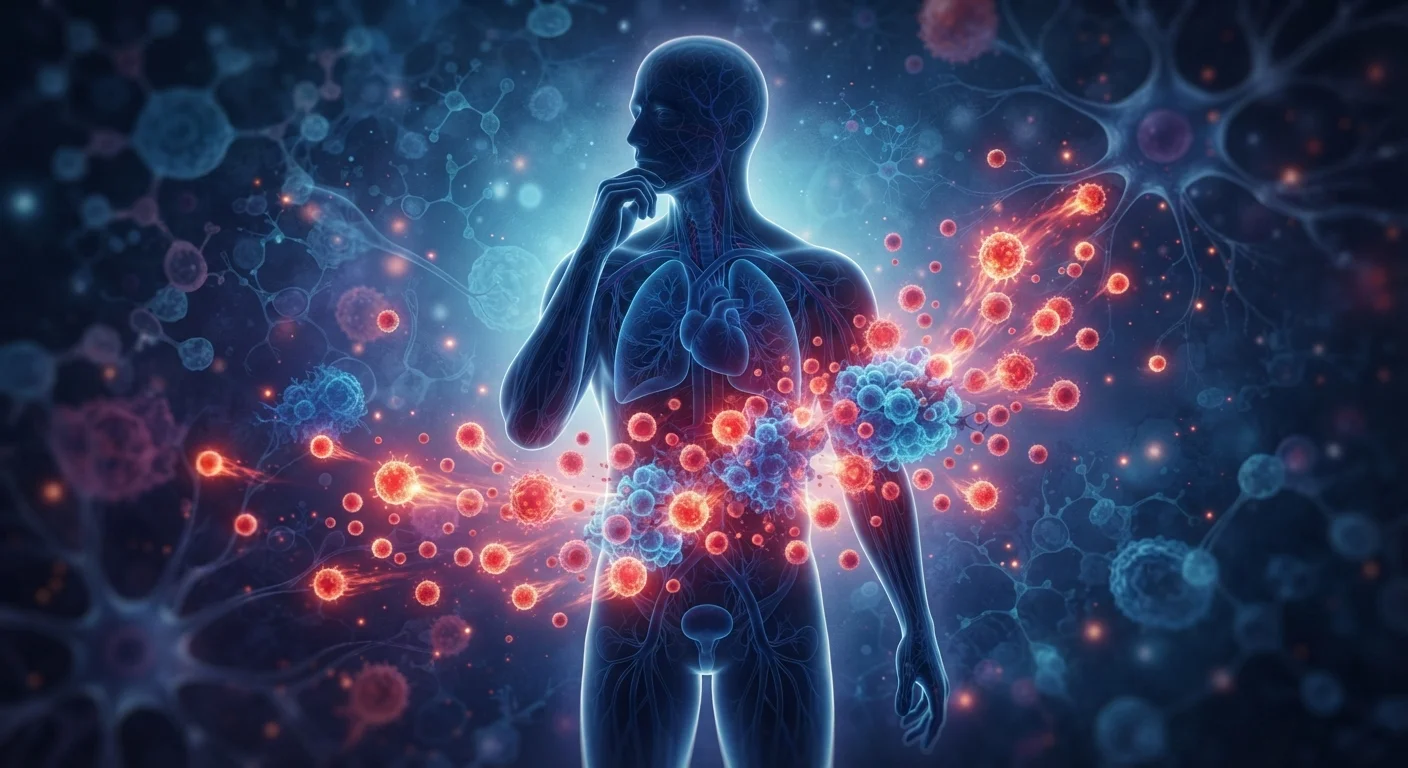
An autoimmune disease is a condition in which the immune system — the body's defence network — mistakenly attacks healthy cells, tissues, or organs as though they were foreign invaders. Normally, immune cells distinguish between what belongs to the body and what doesn't. In autoimmune conditions, that recognition process breaks down. The result is chronic inflammation and tissue damage that varies widely depending on which part of the body is targeted.
Clinically, autoimmune diseases are characterized by the presence of autoreactive T cells or autoantibodies — immune proteins that bind to the body's own molecular structures rather than to pathogens.
How the Immune System Loses Its Way
A healthy immune system operates on a principle of precise targeting: it identifies foreign threats — bacteria, viruses, fungi — and neutralises them while leaving the body's own cells untouched. This ability to tell self from non-self is called immune tolerance. In autoimmune diseases, that tolerance breaks down.
Instead of ignoring the body's own proteins, the immune system generates autoreactive immune cells or autoantibodies that bind to healthy tissue. The consequence is persistent inflammation — the same cellular firefighting response that normally clears infection — but now directed inward, at joints, skin, kidneys, nerves, or other organs depending on the condition. To understand the underlying mechanics in more depth, see our plain-language walkthrough of the immune response.
Researchers have not yet pinpointed a single cause. Current evidence points to a convergence of genetic predisposition, hormonal influences, and environmental exposures that together tip the immune system toward self-attack.
80+
Recognized autoimmune disease types
The American Autoimmune Related Diseases Association (AARDA) estimates more than 80 clinically distinct autoimmune conditions have been identified.
~24M
Americans affected by autoimmune disease
The National Institutes of Health estimates that autoimmune diseases collectively affect approximately 23–24 million people in the United States.
80%
Autoimmune patients who are women
Research consistently shows that women account for roughly 80% of all autoimmune disease cases, though the reasons involve complex hormonal and immune interactions.
Common Autoimmune Conditions and Their Targets
Over 80 recognized autoimmune diseases exist, and each one targets a different part of the body. This specificity is one reason the field can seem overwhelming — conditions that share an underlying mechanism can look entirely different clinically.
- Rheumatoid arthritis (RA): Immune cells attack the lining of the joints, causing pain, swelling, and over time, joint deformity. Unlike osteoarthritis, RA is systemic and can affect other organs.
- Systemic lupus erythematosus (lupus): Autoantibodies form complexes that deposit in tissues throughout the body — skin, kidneys, heart, brain — causing widespread inflammation with unpredictable flares.
- Hashimoto's thyroiditis: The immune system attacks thyroid tissue, gradually reducing hormone production and leading to hypothyroidism.
- Multiple sclerosis (MS): Immune cells damage myelin, the protective sheath around nerve fibres, disrupting signals between the brain and body.
- Type 1 diabetes: Insulin-producing beta cells in the pancreas are destroyed, preventing the body from regulating blood glucose.
- Psoriasis: An accelerated immune-driven skin cell cycle causes plaques to form on the skin's surface.
Despite these differences, shared features — chronic inflammation, periods of remission and flare, and immune system involvement — link them all.
What Triggers Autoimmune Disease — and Who Is at Risk
No single trigger causes autoimmune disease. Research consistently points to a multi-hit model: genetic vulnerabilities exist in certain individuals, and one or more environmental or biological triggers then activate disease.
“Autoimmune diseases arise from a failure of the mechanisms that normally maintain self-tolerance — the ability of the immune system to ignore the body's own antigens. Understanding those mechanisms is central to developing effective therapies.”
— Abul K. Abbas, Professor of Pathology, co-author of widely used immunology reference texts
Genetic factors: Many autoimmune diseases cluster in families, though they are not directly inherited in the way some single-gene conditions are. Specific variants in immune-regulating genes — particularly those in the HLA (human leukocyte antigen) system — increase susceptibility across multiple conditions.
Sex and hormones: Approximately 80% of people with autoimmune diseases are women, suggesting sex hormones influence immune regulation. Disease activity often shifts during pregnancy, postpartum, and menopause.
Environmental exposures: Certain infections, gut microbiome disruption, cigarette smoke, UV radiation, and chemical exposures have been studied as potential triggers that may activate autoimmunity in genetically susceptible individuals. The evidence varies in strength across these factors.
The hygiene hypothesis: Some researchers propose that reduced childhood exposure to a wide range of microorganisms — linked to modern sanitation and antibiotic use — may contribute to immune dysregulation, though this remains an area of active investigation.
Diagnosis, Management, and Living with an Autoimmune Condition
Diagnosing autoimmune diseases can be a lengthy process. Symptoms frequently overlap with other conditions, and standard blood tests may be normal early in disease course. Rheumatologists, neurologists, endocrinologists, and dermatologists all play roles depending on which systems are affected. Blood tests for specific autoantibodies — such as ANA (antinuclear antibody) for lupus or anti-CCP for rheumatoid arthritis — combined with symptom patterns and imaging, typically guide diagnosis.
Treatment goals centre on reducing immune-mediated damage, controlling inflammation, and preserving function. Approaches vary significantly by condition and individual but often include anti-inflammatory medications, immunosuppressants, and newer biologic therapies that target specific immune pathways. No treatment universally applies across all autoimmune diseases.
Living with a chronic autoimmune condition involves managing unpredictable flares, monitoring for organ damage, and often coordinating care across multiple specialists. Fatigue, pain, and cognitive effects are common and under-recognised symptoms that affect daily life. Mental health support is a legitimate and evidence-acknowledged part of comprehensive care.
If you are experiencing persistent, unexplained symptoms — prolonged fatigue, recurring rashes, joint pain, or neurological changes — a qualified healthcare provider can evaluate whether an autoimmune process may be involved. Early engagement with specialist care generally leads to better long-term outcomes.
This article is for general informational and educational purposes only and does not constitute medical advice. Always consult a qualified healthcare professional for evaluation, diagnosis, or treatment of any health condition.