

Key Takeaways
- Flexibility is how far a muscle can be passively stretched; mobility is how well a joint moves under active control.
- You can be flexible without being mobile — and limited mobility often causes movement problems even in people who stretch regularly.
- Improving mobility typically requires strength work within a range of motion, not just stretching.
- Both qualities contribute to pain-free, functional daily movement and long-term musculoskeletal health.
- Targeted training that addresses your specific limitation — flexibility or mobility — will yield better results than generic stretching routines.
Flexibility vs. Mobility
Flexibility refers to a muscle's ability to lengthen passively — how far it can be stretched when an outside force is applied. Mobility refers to a joint's ability to move actively through its full range of motion under its own muscular control. Both are related to how your body moves, but they involve different physical qualities and respond to different types of training.
In exercise science, flexibility is often described as a passive property of soft tissue, while mobility encompasses neuromuscular control, joint mechanics, and dynamic range of motion simultaneously.
The Common Confusion — and Why It Matters
Walk into almost any gym or scroll through fitness content online, and you'll find the words flexibility and mobility used interchangeably. They are not the same thing. Treating them as synonyms leads many people to train the wrong quality — and then wonder why they still feel stiff, restricted, or prone to aches despite stretching regularly.
Understanding the distinction is more than an academic exercise. It directly affects how you choose to train, which limitations you target, and how much progress you can realistically expect. This is especially relevant for adults who want to move better as part of a broader approach to health — a subject covered in depth in our complete overview of strength and flexibility training.
~30%
Adults reporting regular joint stiffness
Survey data from the CDC suggests roughly 30% of U.S. adults report joint pain or stiffness that limits daily activities, highlighting how common movement restriction is.
2x
Injury risk from poor neuromuscular control
Research in sports medicine consistently shows that poor neuromuscular control — a core component of mobility — is associated with significantly elevated lower-extremity injury risk compared to adequate control.
6–8 weeks
Typical timeframe to see flexibility gains
Exercise physiology literature generally identifies 6–8 weeks of consistent stretching as the minimum timeframe for measurable, sustained improvements in passive muscle flexibility.
What Flexibility Actually Means
Flexibility is a property of muscle and connective tissue. Specifically, it describes how much a muscle can lengthen when a force — gravity, a partner's assist, or your body weight — is applied to it. When you hold a seated hamstring stretch, you are testing and training passive flexibility.
Passive flexibility matters because muscles that are chronically shortened can restrict joint range. But here is the key limitation: flexibility testing tells you nothing about whether your body can control movement in that range. A muscle that feels loose when you push on it may still be functionally restricted during active movement.
If you stretch frequently but your range of motion isn't improving, the issue may lie elsewhere. Our article on common reasons flexibility stalls explores this in detail.
What Mobility Actually Means
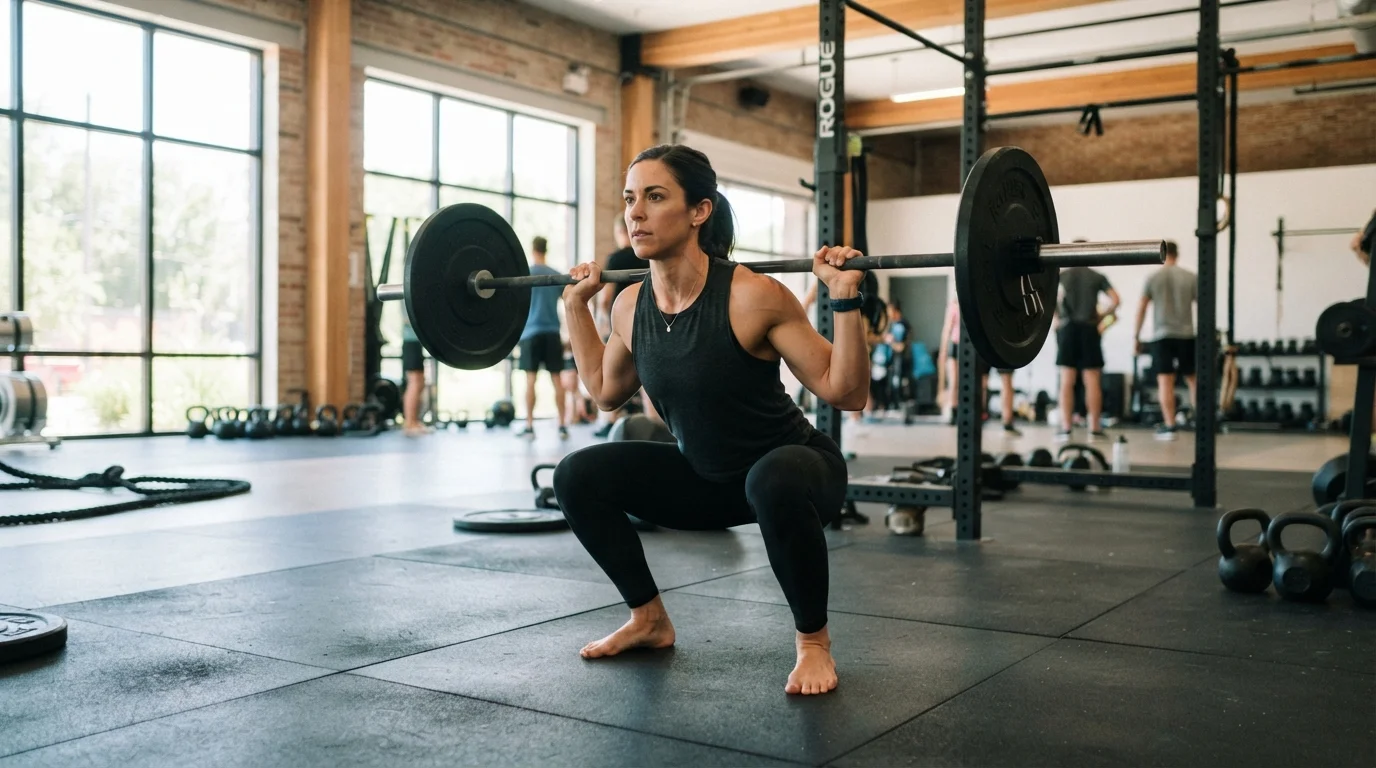
Mobility is about active control. It describes how well a joint can move through its available range of motion using its own muscular effort — without needing an external force to get it there. A mobile hip, for example, can rotate fully both inward and outward under load, during walking, squatting, or changing direction.
Mobility is a product of several interacting factors: the passive range available (flexibility), the strength to control that range, neuromuscular coordination, and joint structure. This is why mobility training goes beyond stretching. Drills such as controlled articular rotations, deep loaded squats, and active range-of-motion work train your nervous system to own — not just reach — your movement range.
Train the Range You Want to Use
Simply stretching into a new range of motion won't make that range usable in daily life. After a stretch, try performing a small, controlled movement — like a slow squat or a gentle hip rotation — within that newly accessed range. This reinforces neuromuscular control and helps convert passive flexibility into active mobility over time.
Building daily movement habits that accumulate mobility work throughout the day is one of the most sustainable approaches for long-term joint health.
How to Train Each Quality Effectively
Once you understand the difference, training becomes more targeted and more effective.
- To improve flexibility: Use sustained static stretches held for 30–60 seconds, dynamic warm-up movements, and consistent practice over time. Passive stretching is appropriate here.
- To improve mobility: Train strength through range — exercises like deep squats, Romanian deadlifts with full hip hinge, and controlled shoulder circles that require your muscles to actively work in lengthened positions.
- To improve both together: Loaded stretching and yoga-style flows that combine active control with sustained holds can address flexibility and muscular endurance in a joint's outer range simultaneously.
Most adults benefit from addressing both, since the two qualities interact. Just as understanding what exercise really means helps you set smarter goals, distinguishing flexibility from mobility helps you train smarter — not just harder.
This article is for general informational purposes only and is not a substitute for personalized medical or physical therapy advice. If you experience pain, persistent stiffness, or have an underlying health condition, please consult a qualified healthcare professional before beginning a new training program.