

Key Takeaways
- Household chores, gardening, and errands count as legitimate physical activity when performed with intention.
- Small adjustments to how you do chores — pace, posture, intensity — significantly increase their health value.
- Consistent incidental movement accumulates into meaningful long-term health benefits.
- You don't need gym equipment or dedicated workout time to reach daily movement goals.
- Tracking chore-based activity helps build awareness and motivation over time.
What you will need
Why Chores Count as Physical Activity
Physical activity is defined by movement that increases energy expenditure above resting levels — and housework, yard work, and active errands fit that definition clearly. Exercise physiologists classify these as non-exercise activity thermogenesis (NEAT), the energy your body burns through all movement that isn't formal exercise or sleep. Research consistently shows NEAT varies enormously between individuals and plays a meaningful role in overall energy balance and cardiovascular health.
Common chores like scrubbing floors, raking leaves, pushing a vacuum, and carrying grocery bags require muscular effort, elevate heart rate, and engage multiple body systems. A sustained session of vigorous yard work or cleaning can reach light-to-moderate aerobic intensity — comparable to a brisk walk.
The catch is intentionality. Most adults perform chores at a shuffling pace that keeps heart rate low and muscles largely disengaged. The goal of this guide is to show you how to close that gap — extracting genuine physical benefit from tasks you're already doing. For a broader look at how unplanned movement adds up over years, see how incidental exercise accumulates over a lifetime.
What You'll Need Before You Start
No special equipment is required, but a few basics will help you move more safely and comfortably as you ramp up chore intensity.
What you will need
If you have a chronic health condition, joint pain, or are returning to movement after an illness or injury, consult a qualified healthcare professional before increasing the physical intensity of your daily activities. This guidance is general health information, not personal medical advice.
Step-by-Step: Making Chores Work Harder for You
Follow these steps in order to systematically build more physical effort into your existing household routine. You don't need to apply every strategy at once — start with one or two and build from there.
Audit which chores offer the most movement potential
Not all chores are equal. Before changing how you work, identify which tasks already involve sustained movement. High-potential chores include vacuuming, mopping, scrubbing, gardening, raking, carrying laundry between floors, washing windows, and grocery carrying. Low-potential tasks include loading a dishwasher while standing still or wiping a countertop for 30 seconds.
Write a rough list of your weekly chores and mark those that last at least five minutes and involve continuous movement. These are your primary opportunities.
Increase your pace deliberately
The single most accessible upgrade is speed. Most people vacuum, sweep, or rake at a pace that barely elevates heart rate. Try increasing your working pace by roughly 20–30% — enough that you're breathing slightly harder than normal but can still hold a conversation.
Set a timer for 10 minutes and maintain this brisker pace throughout. You'll notice the difference in effort almost immediately, particularly in larger muscle groups like your glutes, quads, and shoulders.
Add intentional muscle engagement
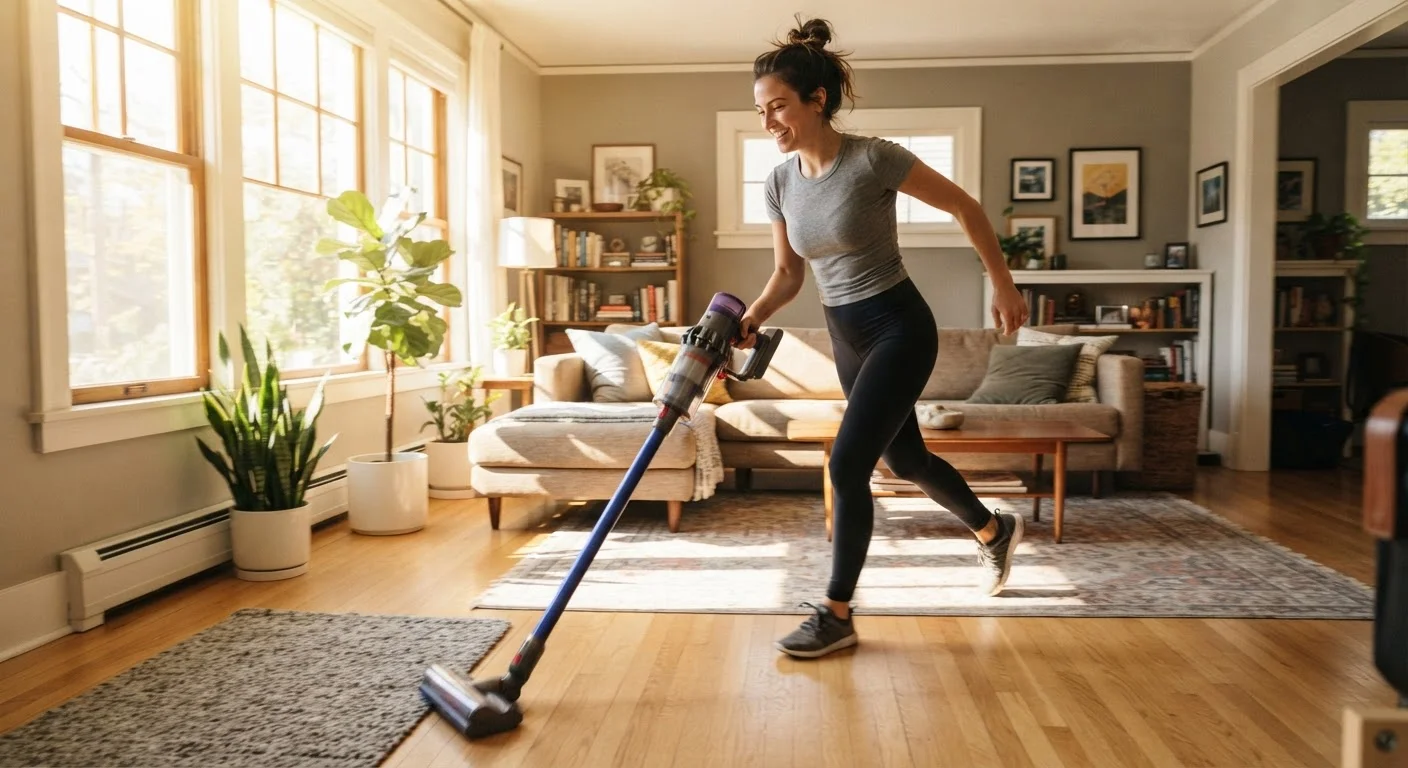
Transform repetitive chore movements into mild resistance work by consciously engaging the muscles involved. When vacuuming, lunge forward instead of shuffling. When scrubbing a surface, use your core and press through your whole arm rather than just your wrist. When carrying laundry, hold the basket away from your body slightly to engage your arms and core.
These micro-adjustments don't slow you down significantly but meaningfully increase the muscular demand of each task.
Extend duration by batching tasks
Short, scattered chore sessions produce less cardiovascular benefit than sustained movement. Batch related tasks together to create longer continuous activity blocks. For example, clean the bathroom immediately after vacuuming the hall and bedroom — keeping your body in motion for 20–30 minutes rather than three separate 7-minute efforts spread across the day.
Ten continuous minutes of moderate-intensity activity is generally considered a useful threshold for cardiovascular benefit, according to established public health guidelines. Batching helps you clear that threshold more reliably. You can also combine chore movement with adding more steps to errands on the same day.
Track your chore activity alongside other movement
Awareness reinforces habit. Use a pedometer, smartphone health app, or simple written log to record the time you spend in active chore sessions. Seeing chore-based movement appear alongside walks and other activity makes its contribution visible — which strengthens the motivation to maintain it.
Over a week, you may find that intentional chore movement adds 30–60 minutes of moderate activity to your totals, a meaningful contribution toward general physical activity recommendations.
Small Habits Compound Over Time
A few extra minutes of effort per chore session might feel negligible day to day. Over weeks and months, however, consistent small increases in daily movement accumulate into measurable improvements in cardiovascular fitness, muscle endurance, and energy levels. Consistency matters more than intensity at this stage.
Pairing intentional chore movement with other daily habits — such as consistent sleep and adequate hydration — compounds the long-term benefit of your efforts.
Common Pitfalls and How to Avoid Them
Even with good intentions, it's easy to fall into patterns that undercut the physical value of chores. Here are the most frequent missteps:
- Stopping too soon. Brief bursts of low-intensity activity don't sustain elevated heart rate long enough to accumulate meaningful cardiovascular benefit. Aim for continuous activity of at least 10 minutes where possible.
- Poor posture under load. Carrying laundry, groceries, or gardening supplies with a rounded spine and locked knees increases injury risk. Keep a neutral spine, bend at the hips and knees when lifting, and distribute loads evenly.
- Treating chores as a substitute for all exercise. Chore-based movement is a valuable supplement to, not necessarily a complete replacement for, structured physical activity — especially for strength, balance, and flexibility work. Consider short movement breaks throughout the day as an additional layer.
- Ignoring recovery signals. Fatigue, joint discomfort, or shortness of breath that feels disproportionate to effort are signals to slow down and, if persistent, discuss with a healthcare provider.
For more ideas on weaving movement into daily life without a formal schedule, explore a room-by-room approach to building a more active day. Building these habits into a consistent routine is covered in depth in building a daily habit around physical activity from zero to sustainable.
This article is for general informational and educational purposes only and does not constitute medical advice. Always consult a qualified healthcare professional before making changes to your physical activity routine, particularly if you have an existing health condition.