

Key Takeaways
- A whole-food, plant-based diet emphasizes minimally processed plant foods and limits animal products and refined ingredients.
- Legumes, whole grains, vegetables, fruits, nuts, and seeds form the nutritional foundation of this eating pattern.
- Vitamin B12, vitamin D, omega-3s, iron, calcium, and zinc require deliberate planning on a fully plant-based diet.
- Gradual transitions tend to be more sustainable than overnight overhauls for most first-timers.
- A registered dietitian can help tailor this eating pattern to your individual health needs and history.
Start here
What Does 'Whole-Food, Plant-Based' Actually Mean?
Build your plate
Core Food Groups and What to Eat
Fill the gaps
Nutrients That Need Your Attention
Make it happen
How to Transition Practically
Plan ahead
Realistic Expectations and When to Seek Guidance
What Does 'Whole-Food, Plant-Based' Actually Mean?
The term whole-food, plant-based (WFPB) describes an eating pattern built around minimally processed foods that come entirely or predominantly from plants. Unlike a strict vegan diet — which is defined by what it excludes for ethical reasons — WFPB eating is primarily defined by what it includes: foods as close to their natural state as possible.
In practice, WFPB emphasizes vegetables, fruits, whole grains, legumes, nuts, and seeds, while minimizing refined oils, added sugars, white flour, and heavily processed packaged foods. Some frameworks within the WFPB umbrella permit small amounts of animal products (such as fish or dairy); others do not. If the terminology feels unfamiliar, our plain-language glossary of special diet terms can help clarify concepts you'll encounter as you explore this approach.
Whole food
A food that has been minimally processed and retains most of its natural structure, fiber, and nutrients — think brown rice versus white rice, or an apple versus apple juice.
Plant-based
A diet centered on foods derived from plants, including vegetables, fruits, grains, legumes, nuts, and seeds, with little or no reliance on animal products.
Legumes
The seed family that includes beans, lentils, peas, and chickpeas — major sources of plant protein and fiber.
Non-heme iron
The form of iron found in plant foods, which the body absorbs less readily than the heme iron in meat — but which can be improved by consuming vitamin C at the same meal.
Bioavailability
How much of a nutrient the body can actually absorb and use from a given food, which varies depending on the food's form and what else is eaten alongside it.
Refined grain
A grain that has had its bran and germ removed during processing, reducing its fiber, vitamin, and mineral content — white bread and white rice are common examples.
Core Food Groups and What to Eat
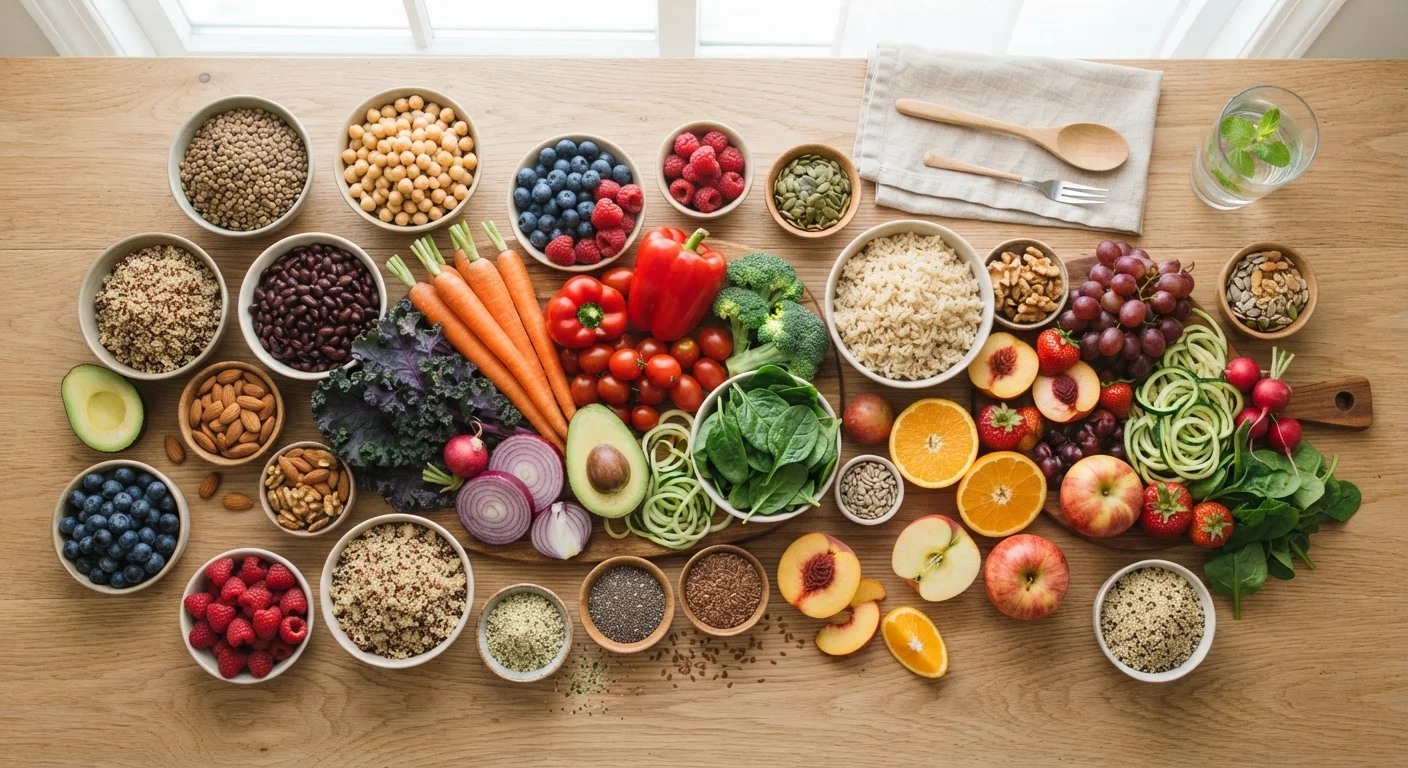
A well-structured WFPB plate draws from five main categories:
- Vegetables: The foundation — leafy greens (spinach, kale, chard), cruciferous varieties (broccoli, cauliflower), root vegetables, and alliums (garlic, onions).
- Whole grains: Brown rice, oats, barley, quinoa, farro, and whole-wheat products — not refined white flour or instant varieties stripped of fiber and nutrients.
- Legumes: Lentils, chickpeas, black beans, soybeans, and edamame provide protein, fiber, iron, and complex carbohydrates in a single package.
- Fruits: All whole fruits count — fresh, frozen, or dried (without added sugar). They supply fiber, antioxidants, and a range of vitamins.
- Nuts and seeds: Walnuts, almonds, chia seeds, flaxseeds, and hemp seeds contribute healthy fats, protein, and minerals.
The core principles of balanced nutrition apply here too: variety across and within food groups is what produces nutritional breadth. No single food provides everything the body needs.
Nutrients That Need Your Attention
A thoughtfully varied WFPB diet can meet most nutrient needs — but several require deliberate planning, especially if animal products are fully excluded. For a deeper look at this topic, our guide to nutrients that deserve attention on a vegan diet covers each in detail.
- Vitamin B12
- Found almost exclusively in animal foods; supplementation is broadly recommended for those following a fully plant-based diet. Discuss appropriate forms and amounts with your healthcare provider.
- Vitamin D
- Synthesized via sun exposure but often insufficient from diet alone; many Americans are deficient regardless of dietary pattern. Fortified plant milks and mushrooms exposed to UV light are modest sources.
- Long-chain omega-3 fatty acids (EPA and DHA)
- Fatty fish are the primary dietary source; algae-based omega-3 supplements offer a plant-derived alternative. ALA, found in flaxseeds and walnuts, converts to EPA/DHA only in limited amounts.
- Iron and zinc
- Plant foods contain non-heme iron and zinc, which are absorbed less efficiently than animal-sourced forms. Consuming vitamin C-rich foods alongside iron sources improves absorption.
- Calcium
- Fortified plant milks, tofu made with calcium sulfate, kale, bok choy, and white beans are good plant sources. See the nutrients and supplements hub for more on meeting your needs.
Pair Iron Sources with Vitamin C
Plant-based iron (non-heme iron) is absorbed more readily when eaten alongside vitamin C-rich foods. Try squeezing lemon over lentil soup, adding bell peppers to bean dishes, or serving tomato salsa with black beans. This simple habit can meaningfully improve iron uptake without any supplementation.
How to Transition Practically
Research on dietary behavior consistently suggests that incremental changes are more likely to stick than dramatic overnight overhauls. A few approaches that work for many first-timers:
- Start with plant-based versions of meals you already enjoy. Bean-based tacos, vegetable stir-fries over brown rice, and oatmeal with fruit require minimal adjustment from familiar favorites.
- Build a legume habit first. Adding lentils or beans to two or three meals per week is a low-friction starting point that meaningfully shifts the nutritional profile of your diet.
- Batch-cook grains and legumes. Cooking a large portion of brown rice, lentils, or chickpeas on the weekend reduces the mid-week friction that derails new habits.
- Read ingredient labels. Many packaged foods marketed as plant-based are heavily refined. Checking for added sugars, refined oils, and long ingredient lists helps you stay true to the whole-food principle.
- Don't aim for perfection. The evidence base for plant-rich diets does not require strict adherence to deliver benefits. Progress, not purity, is the more realistic and sustainable goal for most people.
Realistic Expectations and When to Seek Guidance
A WFPB diet is associated in the research literature with a range of favorable health markers, including cardiovascular risk factors and metabolic health indicators — but it is not a guaranteed cure or treatment for any condition, and individual responses vary. The quality and consistency of your overall eating pattern matters more than any single food or short-term trial.
Certain groups should seek professional guidance before making significant dietary changes: people managing chronic conditions such as diabetes, kidney disease, or cardiovascular disease; those who are pregnant, breastfeeding, or feeding children; and anyone with a history of disordered eating. A registered dietitian can design a plan that accounts for your health history, food preferences, and lifestyle. For help understanding how to access that kind of professional support, this orientation to navigating the healthcare system is a practical starting point.
WFPB Is a Spectrum, Not a Rule
There is no single authoritative definition of 'whole-food, plant-based.' Some clinicians and researchers use it to mean fully plant-exclusive; others use it to describe a plant-predominant pattern that may include modest amounts of fish, eggs, or dairy. What the evidence consistently supports is the direction of travel — more whole plant foods, fewer ultra-processed and animal-heavy foods — rather than strict categorical rules.
This article is for general informational and educational purposes only and is not a substitute for personalized medical or dietary advice. Always consult a qualified healthcare professional before making significant changes to your diet, particularly if you have an existing health condition.