

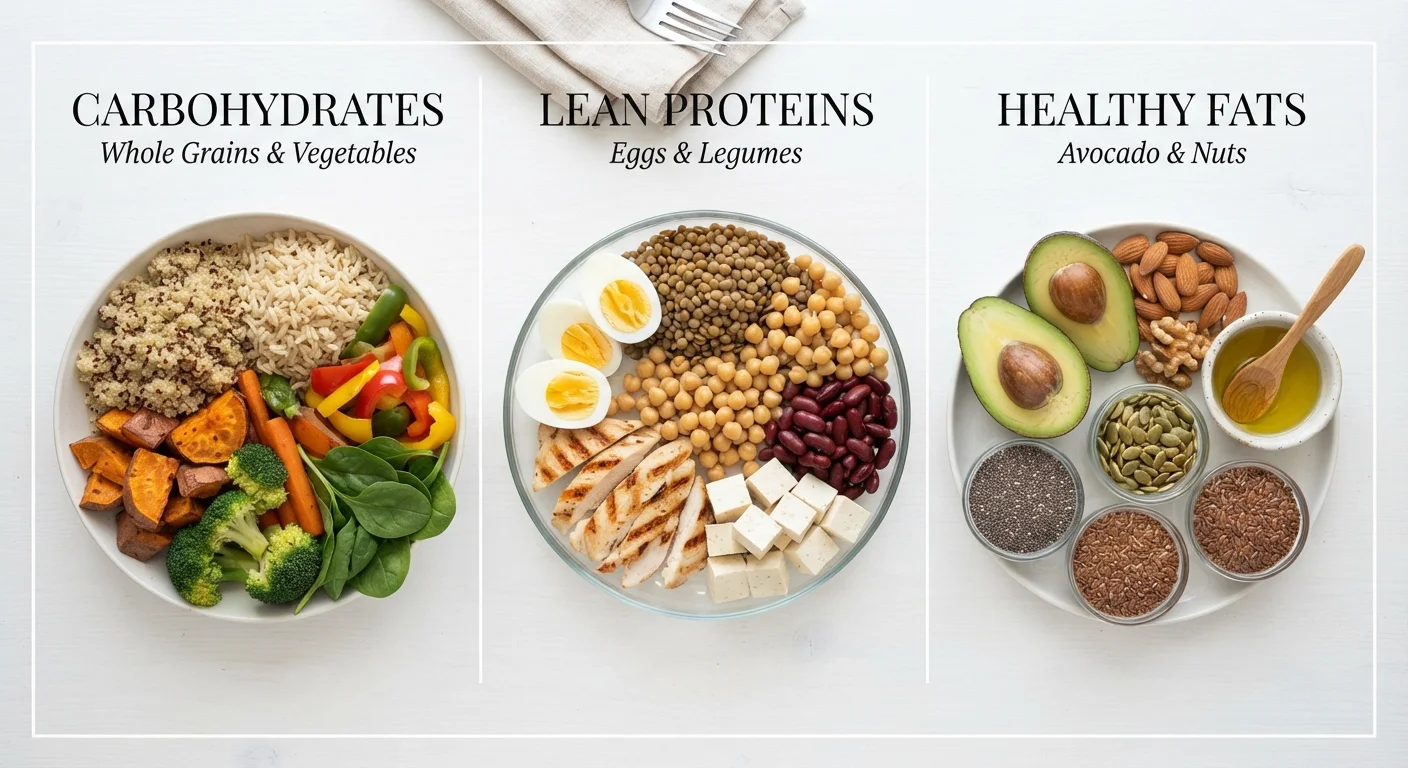
What Are Macronutrients?
Macronutrients are the three main classes of nutrients the body requires in relatively large amounts to produce energy and support physiological functions: carbohydrates, protein, and fat. Unlike micronutrients — the vitamins and minerals covered in our companion reference guide — macronutrients serve as the body's primary fuel and structural raw materials.
Each macronutrient provides a specific amount of energy per gram: carbohydrates and protein each yield roughly 4 kilocalories (kcal) per gram, while fat provides approximately 9 kcal per gram. Understanding these basics is the first step toward reading food labels with confidence — a skill explored further in our guide to nutrition labels.
Carbohydrates: The Body's Preferred Energy Source
Carbohydrates are the body's primary and most rapidly available fuel. After digestion, carbs are broken down into glucose — a simple sugar that circulates in the bloodstream and powers cells, particularly in the brain and during high-intensity physical activity.
Not all carbohydrates behave the same way. Simple carbohydrates (such as sugars found in fruit, dairy, and added sweeteners) are digested quickly. Complex carbohydrates — found in whole grains, legumes, and vegetables — are digested more slowly thanks to their fiber content, which supports stable blood glucose levels and gut health. The USDA's Dietary Guidelines for Americans recommends that the majority of carbohydrate intake come from fiber-rich, minimally processed sources.
Dietary fiber, technically a carbohydrate, is not absorbed as energy but plays a critical role in digestive health, cholesterol regulation, and satiety. Adults are generally encouraged to consume adequate fiber daily, though individual needs vary; consult a registered dietitian for personalized guidance.
Protein: Structure, Repair, and More
Protein is built from smaller units called amino acids. Of the 20 amino acids relevant to human nutrition, nine are classified as essential — meaning the body cannot synthesize them and they must come from food. Protein-rich foods include meat, poultry, fish, eggs, dairy products, legumes, soy, and certain grains.
Beyond muscle-building, protein is integral to enzyme production, immune function, hormone synthesis, and cellular repair. Protein requirements are not one-size-fits-all; factors such as age, activity level, and health status all influence how much an individual needs. Our in-depth protein guide explores this nuance thoroughly.
A practical point worth noting: complete proteins contain all nine essential amino acids in adequate proportions (e.g., animal products, soy, quinoa), while most plant proteins are incomplete but can be complemented across meals to meet amino acid needs.
Macronutrient
One of three major nutrient classes — carbohydrates, protein, and fat — required in relatively large quantities for energy and body function.
Amino acids
The building blocks of protein. Nine of the 20 relevant to human nutrition are 'essential,' meaning the body cannot make them and they must be obtained from food.
Complete protein
A food source providing all nine essential amino acids in adequate amounts. Examples include eggs, meat, dairy, soy, and quinoa.
Dietary fiber
A type of carbohydrate the body cannot fully digest. It supports gut health, helps regulate blood glucose and cholesterol, and contributes to feelings of fullness.
Unsaturated fat
A category of dietary fat — including monounsaturated and polyunsaturated types — found in plant oils, nuts, seeds, and fatty fish. Generally associated with favorable health outcomes in research.
Glucose
A simple sugar that is the primary energy currency of the body, derived mainly from carbohydrate digestion and circulated through the bloodstream.
Dietary Fat: Essential, Not Optional
Fat is the most energy-dense macronutrient and serves functions that no other nutrient can replicate: it enables absorption of fat-soluble vitamins (A, D, E, and K), provides structural material for cell membranes, supports hormone production, and cushions vital organs.
Dietary fats are broadly classified by their chemical structure. Unsaturated fats — found in olive oil, nuts, seeds, avocados, and fatty fish — are generally associated with favorable cardiovascular markers in research literature. Saturated fats, found primarily in animal products and some tropical oils, are an area of ongoing scientific discussion; current major health guidelines recommend consuming them in moderation. Trans fats produced through industrial partial hydrogenation are widely associated with adverse health effects and have been largely phased out of the U.S. food supply.
One family of unsaturated fats — omega-3 fatty acids — warrants special attention for their role in inflammation and heart health. For a deeper look at the evidence, see our omega-3 reference guide. For broader context on nutrition terminology you'll encounter across dietary frameworks, the special diet terminology glossary is a useful companion.
This article is for general informational purposes only and does not constitute medical or dietary advice. Individual nutritional needs vary. Please consult a qualified healthcare professional or registered dietitian before making significant changes to your diet.