
Protein: How Much the Body Needs, Where It Comes From, and What Affects Requirement

Key Takeaways
- Protein is made of amino acids; nine of these are essential and must come from food.
- The baseline dietary reference intake for adults is 0.8 grams per kilogram of body weight per day.
- Age, activity level, pregnancy, and illness can meaningfully raise protein needs above the baseline.
- Both animal and plant foods can meet protein needs when diet is varied and adequate.
- Most healthy adults eating a balanced diet do not require protein supplements.
Start here
What Protein Actually Does in the Body
Next
How Much Protein Do You Need?
Then
Animal vs. Plant Protein Sources
Dig deeper
Factors That Shift Your Protein Requirement
Finally
Protein Supplements: What the Evidence Says
What Protein Actually Does in the Body
Protein is one of the three macronutrients — alongside carbohydrates and fat — that supply the body with energy and raw materials for daily function. Unlike the other two, protein is the primary building material. It forms the structural basis of muscle, skin, hair, nails, and connective tissue, and it underpins virtually every biochemical process through enzymes, hormones, and immune proteins.
Amino acids
The individual building blocks that make up all proteins. There are 20 types used by the human body, and they link together in long chains to form protein molecules.
Essential amino acids
Nine amino acids the body cannot make on its own and must obtain through food: histidine, isoleucine, leucine, lysine, methionine, phenylalanine, threonine, tryptophan, and valine.
Complete protein
A protein source that contains all nine essential amino acids in adequate amounts. Most animal foods qualify; soy and quinoa are notable plant-based complete proteins.
Recommended Dietary Allowance (RDA)
The average daily intake level sufficient to meet the nutritional requirements of nearly all healthy people in a given age and sex group, established by the National Academies.
Sarcopenia
The gradual loss of muscle mass and strength that naturally occurs with aging, particularly after age 65. Adequate protein intake and physical activity are key factors in slowing this process.
Protein digestibility
A measure of how efficiently the body can absorb and use the amino acids in a given protein source after it is eaten and broken down.
Proteins are built from chains of amino acids. Twenty amino acids are involved in human physiology; nine of these are classified as essential because the body cannot synthesize them — they must come from food. The remaining eleven are non-essential, meaning the body can produce them given adequate overall nutrition. When you eat protein, digestion breaks it into individual amino acids, which the body then reassembles into whatever proteins it currently needs.
How Much Protein Do You Need?
The National Academies of Sciences, Engineering, and Medicine set the Recommended Dietary Allowance (RDA) for protein at 0.8 grams per kilogram of body weight per day for adults. This figure represents the minimum needed to meet the nutrient requirements of nearly all healthy, sedentary individuals — not an optimal target for every person.
To estimate a rough daily target, divide your weight in pounds by 2.2 to get kilograms, then multiply by 0.8. A 150-pound (68 kg) person would land around 54 grams per day at this baseline. Protein should generally account for 10–35% of total daily calories, according to the Acceptable Macronutrient Distribution Range established by the same body.
Spreading Protein Across Meals Helps
Research suggests the body can only use a limited amount of protein for muscle synthesis at any one time. Distributing your intake relatively evenly across three or more meals — rather than loading most of it at dinner — may support better overall protein utilization. Aim for a protein-containing food at each meal as a practical starting point.
Animal vs. Plant Protein Sources
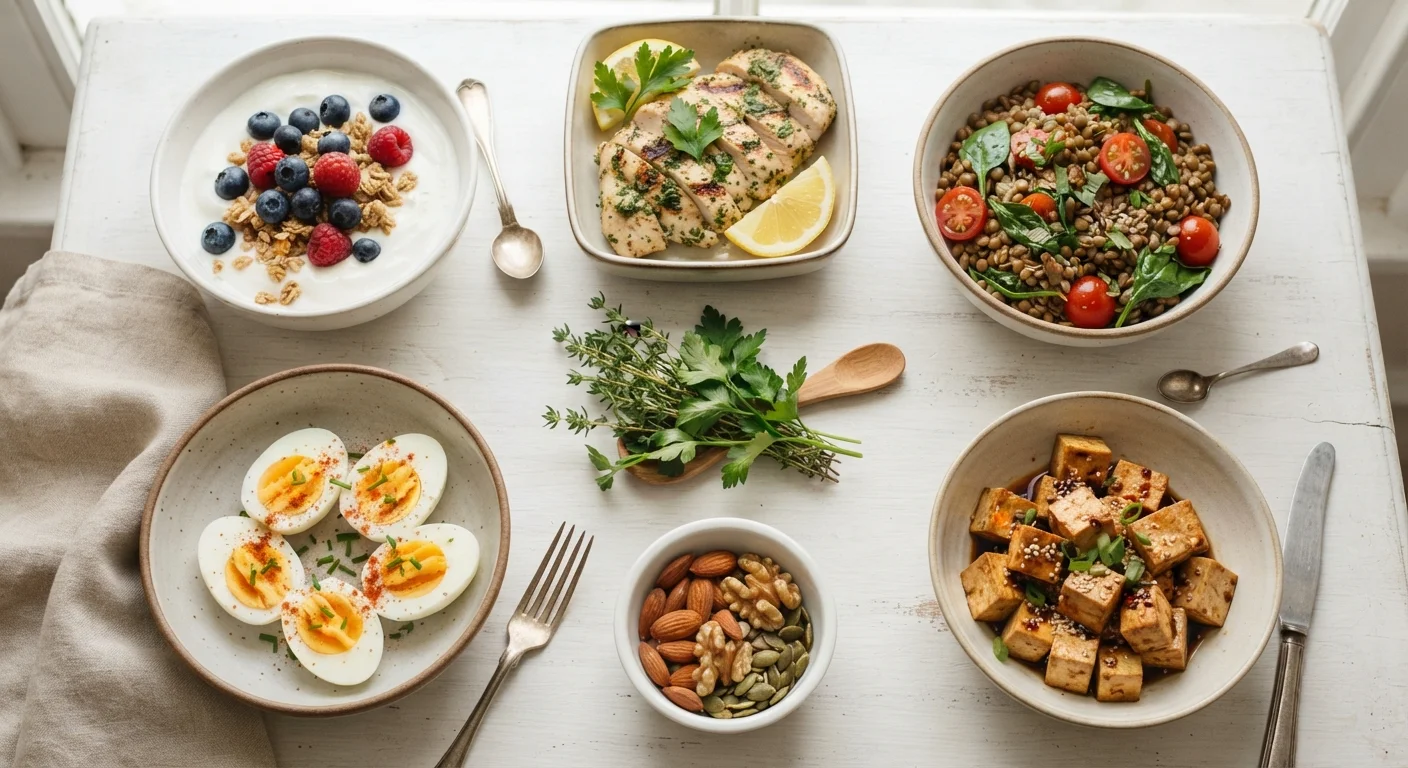
Protein quality is commonly assessed by its amino acid completeness and digestibility. Animal-based sources — eggs, dairy, meat, poultry, and fish — are considered complete proteins because they contain all nine essential amino acids in proportions similar to human needs. They also tend to be highly digestible.
Most plant foods are considered incomplete, meaning they are low in one or more essential amino acids. Notable exceptions include soy, quinoa, buckwheat, and hemp seeds, which provide all essential amino acids. However, the idea that plant-based eaters must carefully combine proteins at every meal has been largely revised. Eating a variety of plant foods across the day — legumes, whole grains, nuts, seeds, and vegetables — reliably covers essential amino acid needs.
For a broader look at how other nutrients in these foods contribute to health, see our guide to vitamins and minerals your body relies on.
Factors That Shift Your Protein Requirement
The 0.8 g/kg/day baseline is a floor, not a universal prescription. Several circumstances push requirements meaningfully higher:
- Physical activity and resistance training: Exercising adults — particularly those doing strength or endurance training — are generally advised to consume between 1.2 and 2.0 grams per kilogram per day, based on published sports nutrition research.
- Older adulthood: Muscle mass naturally declines with age (a process called sarcopenia). Research supports higher protein intakes in adults over 65 to help preserve muscle and functional strength.
- Pregnancy and lactation: Protein needs increase during pregnancy and while breastfeeding. Pregnant individuals should work with a healthcare provider or registered dietitian for personalized targets.
- Illness, surgery, and recovery: Acute illness, burns, surgery, and wound healing all increase protein turnover. Clinical nutrition support in these contexts is managed by healthcare teams.
- Kidney disease: Unlike the above, people with chronic kidney disease may need to limit protein intake rather than increase it, as impaired kidneys process protein byproducts less efficiently. This decision requires medical supervision.
Protein Supplements: What the Evidence Says
The supplement market frames protein powders and bars as near-essential for performance and health. The science tells a more measured story. Research consistently shows that total daily protein intake — regardless of whether it comes from food or supplements — is the primary driver of muscle protein synthesis and recovery.
Supplements can be a practical tool when whole-food sources are genuinely difficult to access or when appetite is reduced (for example, during recovery from illness). Whey, casein, and plant-derived options such as pea or soy protein are all capable of supporting protein needs when used appropriately. However, supplements are not regulated as rigorously as medications by the FDA, and label accuracy varies. Third-party testing certifications (such as NSF Certified for Sport or Informed Sport) offer one way to assess product reliability, though they do not imply medical endorsement.
For most healthy adults eating a varied diet, meeting protein needs through whole foods is both achievable and nutritionally richer — whole foods deliver fiber, micronutrients, and beneficial compounds that isolated supplements do not.
This article is for general informational and educational purposes only and does not constitute medical or dietary advice. Always consult a qualified healthcare professional or registered dietitian before making significant changes to your diet, especially if you have an existing health condition or are pregnant.