

Key Takeaways
- Around 20% of daily fluid intake typically comes from food, not beverages.
- Fruits and vegetables with high water content contribute meaningfully to hydration.
- High-sodium and ultra-processed foods can increase the body's fluid demands.
- Fiber-rich foods support gut health partly by interacting with water in the digestive tract.
- Thirst is not always a reliable early indicator of fluid needs — food choices matter too.
- Individual hydration needs vary based on body size, activity level, climate, and health status.
Dietary Hydration
Dietary hydration refers to the total fluid your body receives from both beverages and the foods you eat. Water is the most abundant nutrient in the human body, and maintaining the right balance of fluid is essential for digestion, circulation, temperature regulation, and cellular function. This balance depends on more than just drinking water — it is shaped significantly by your food choices.
Physiologists track fluid balance using the concept of "water turnover," which accounts for fluid gained from beverages, food, and metabolic processes, minus fluid lost through respiration, sweat, urine, and stool.
Water Is a Nutrient — And Food Delivers It
Most adults think about hydration as a simple matter of drinking enough glasses of water each day. But fluid balance is more nuanced than that. The food you eat plays a measurable role in keeping your body hydrated — and the types of food you choose can either support or undermine that balance.
According to established nutrition science, approximately 20% of total daily fluid intake in a typical American diet comes from food rather than beverages. That proportion can be higher for people who eat plenty of fresh fruits and vegetables, and lower for those whose diets lean heavily on processed, packaged, or dry foods.
Water-rich foods do more than passively hydrate. They deliver fluid alongside fiber, vitamins, and minerals — a combination that supports digestion, nutrient absorption, and gut function simultaneously. For a closer look at how micronutrients travel alongside fluid through your diet, see our guide to vitamins and minerals your body relies on.
~20%
Daily fluid intake from food
Nutrition research consistently estimates that food provides roughly one-fifth of total fluid intake for adults on a typical diet.
90–97%
Water content in cucumbers and lettuce
According to USDA food composition data, many common salad vegetables are composed almost entirely of water by weight.
2.7–3.7 L
Total daily water intake (food + beverages)
The National Academies of Sciences recommends total daily water intake of approximately 2.7 liters for women and 3.7 liters for men from all sources combined.
Which Foods Contribute the Most Fluid?
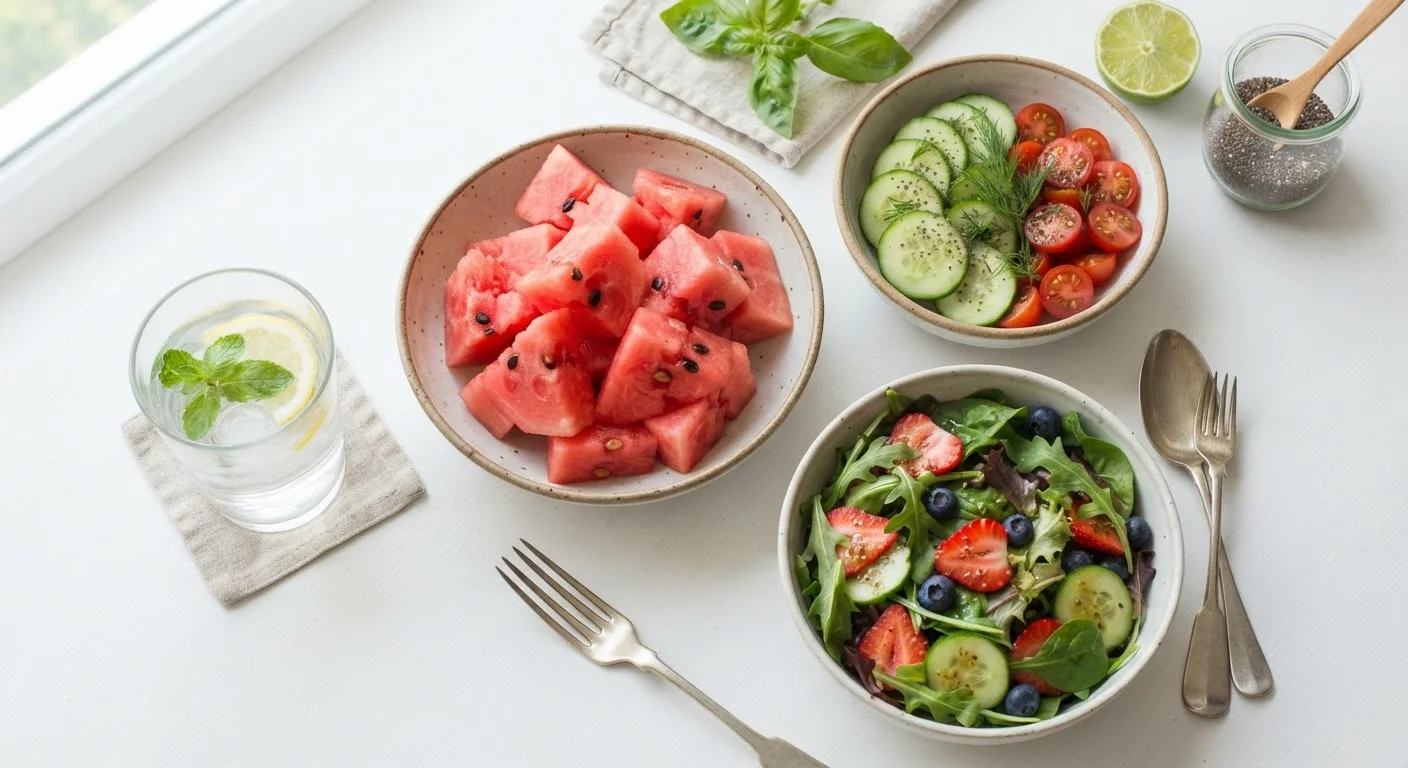
Water content varies widely across food groups. At the top of the spectrum, many fruits and vegetables contain 85–97% water by weight. Cucumbers, celery, lettuce, zucchini, tomatoes, watermelon, strawberries, and grapefruit are standout examples. Cooked grains, legumes, and soups absorb substantial water during preparation, making them meaningful hydration sources as well.
By contrast, dry or low-moisture foods — crackers, pretzels, dried fruit, nuts, and most packaged snacks — deliver almost no fluid. A diet built around these items effectively shifts the entire hydration burden onto beverages.
Fiber deserves specific attention here. Soluble fiber, found in oats, beans, and certain fruits, absorbs water in the gut to form a gel-like substance. This slows digestion, supports blood sugar regulation, and feeds beneficial gut bacteria. Understanding how fiber and hydration intersect is relevant to digestive wellness more broadly — see our article on evidence-informed approaches for gut health for context.
Build Hydration Into Your Plate
Rather than tracking fluid intake in isolation, think of water-rich foods as a built-in hydration strategy. Adding sliced cucumber, a side of berries, or a broth-based soup to meals is an easy way to increase fluid intake without reaching for another glass of water. This approach also delivers fiber, vitamins, and minerals that plain water cannot provide.
How Food Choices Affect Your Fluid Demands
Beyond what food delivers, certain dietary patterns increase how much fluid your body requires. Sodium is the clearest example. When you eat foods high in sodium — such as cured meats, fast food, or heavily salted snacks — your kidneys work to maintain electrolyte balance by retaining water. This drives up thirst and raises daily fluid needs.
Protein metabolism also produces nitrogen waste products that the kidneys must excrete, requiring adequate fluid to do so efficiently. Very high protein intakes, particularly from supplements or restrictive eating patterns, can modestly increase fluid requirements. Similarly, high intake of refined carbohydrates and ultra-processed foods — which are often low in water content and high in sodium — represents a double challenge for fluid balance.
This is one of many points where good nutritional intentions can quietly break down. Our article on where healthy eating habits tend to break down explores how diet patterns drift in ways that affect overall wellness, including hydration.
It is also worth noting that how water-soluble nutrients — including certain B vitamins and vitamin C — are absorbed depends partly on adequate fluid in the digestive tract. Even iron absorption can be influenced by the overall composition of a meal, including its fluid context.
Putting Hydration and Food Together Practically
The practical takeaway from the science is straightforward: building your diet around whole, minimally processed foods — especially fruits, vegetables, legumes, and cooked grains — naturally supports fluid balance alongside all its other benefits. This does not mean beverages become unimportant; plain water remains the most efficient way to meet fluid needs. But viewing hydration as something that happens only in your water glass misses a meaningful piece of the picture.
A few evidence-grounded habits are worth considering:
- Include at least one or two servings of water-rich vegetables or fruits at most meals.
- Choose whole grain porridges and cooked legumes over dry, packaged snacks when possible.
- Be aware that higher sodium intake raises fluid needs — balance is key, not elimination.
- Pay attention to urine color as a practical, low-effort hydration indicator.
For a deeper look at commonly misunderstood hydration rules — including the popular "eight glasses a day" guideline — our companion piece on hydration myths adults get wrong is worth reading alongside this article.
This article is for general informational and educational purposes only and is not a substitute for personalized medical or dietary advice. Consult a qualified healthcare professional for guidance specific to your health needs.