

Key Takeaways
- Formal mindfulness involves scheduled, dedicated practice like seated meditation or body scans.
- Informal mindfulness means bringing present-moment awareness to ordinary daily activities.
- Research suggests both approaches support stress reduction, focus, and emotional regulation.
- Most practitioners benefit from combining formal and informal practices rather than choosing one.
- Even a few minutes of intentional practice each day can produce meaningful wellbeing benefits over time.
Our Verdict
Neither formal nor informal mindfulness is inherently superior — they serve complementary functions. Formal practice builds the attentional muscle; informal practice puts it to work throughout the day. A balanced approach that draws on both tends to be the most sustainable and effective.
| Best for | Recommended |
|---|---|
| Those new to mindfulness seeking a structured starting point | Formal Practice |
| Busy adults with limited time for dedicated sessions | Informal Practice |
| People who want lasting habit formation and deeper skill development | Combined Approach |
| Those managing chronic stress or anxiety with professional support | Combined Approach |
What Sets These Two Approaches Apart
Mindfulness can be practiced in two broad ways — and understanding the distinction is a helpful first step. If you're completely new to the concept, our plain-language introduction to mindfulness is a good place to start.
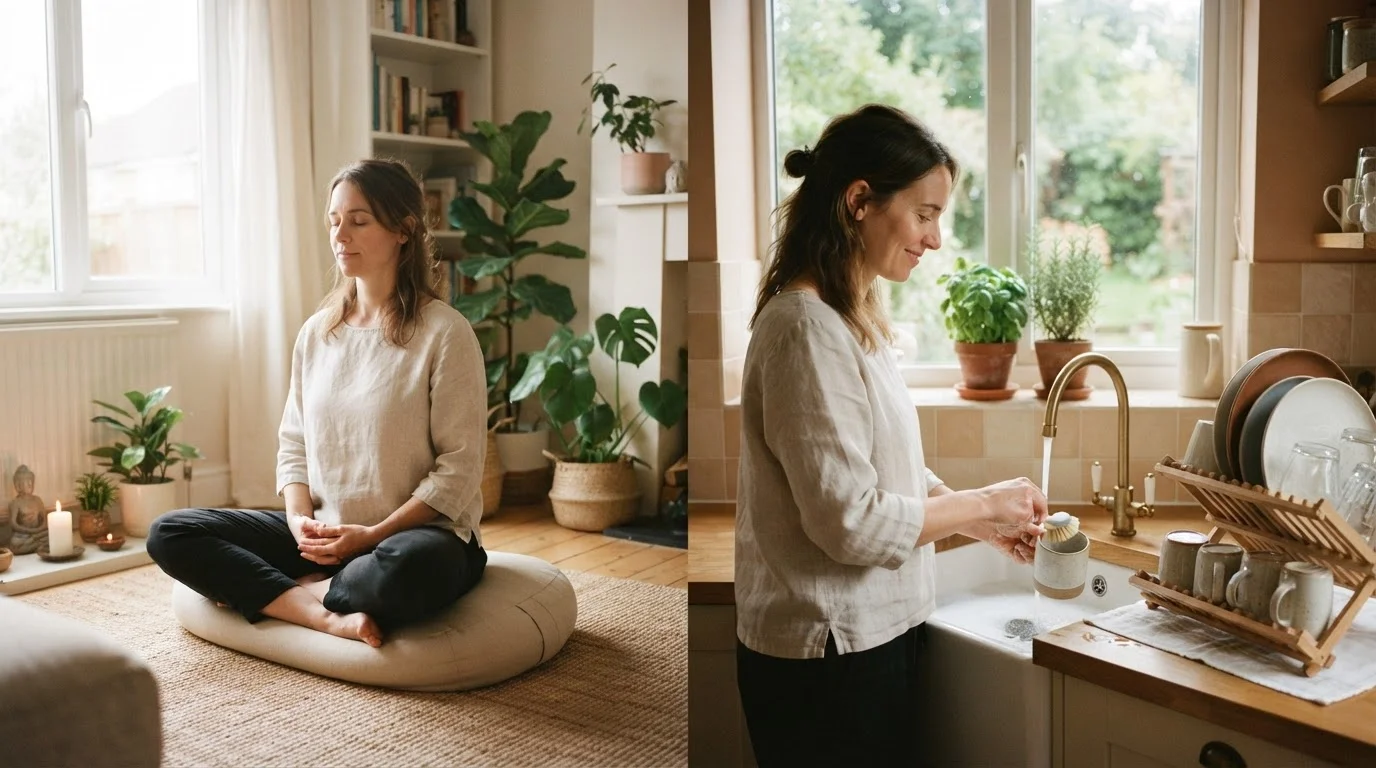
Formal mindfulness practice refers to setting aside dedicated time to deliberately train your attention. Common examples include seated breath meditation, body scan exercises, loving-kindness meditation, and mindful movement such as yoga or slow walking. These sessions typically have a defined start and end, often guided by an app, instructor, or timer.
Informal mindfulness practice means intentionally bringing present-moment, non-judgmental awareness to activities you're already doing — eating, commuting, washing dishes, or having a conversation. There's no special equipment or scheduled block of time. The practice is woven into the fabric of daily life.
It's worth noting that mindfulness and meditation, while related, aren't identical terms. Our article on how meditation and mindfulness differ explores that distinction more fully.
The Case for Formal Practice
Formal practice functions a bit like going to the gym for your attention. Research published in journals such as Psychological Science and Frontiers in Human Neuroscience has found that consistent, structured meditation can improve sustained attention, reduce rumination, and support emotional regulation. The well-studied Mindfulness-Based Stress Reduction (MBSR) program — an 8-week course developed by Jon Kabat-Zinn at the University of Massachusetts — uses formal practice as its backbone.
Start Small With Formal Sessions
Research suggests even brief, consistent formal practice — as little as five minutes daily — can build attentional skills over time. You don't need long sessions to begin experiencing benefits. Consistency matters more than duration, especially in the early weeks of establishing a habit.
One key advantage of formal practice is that it creates a learning environment with fewer competing demands. When you sit quietly and observe your breath, you're essentially running repetitions of a core skill: noticing when the mind wanders and gently returning attention. That skill then becomes available in higher-stakes moments throughout the day.
The main challenge? Finding and protecting the time. Many people start with good intentions but struggle to maintain a daily session. If consistency is your hurdle, see our guide on building a mindfulness habit without overhauling your routine.
The Case for Informal Practice
Informal practice has a compelling selling point: zero scheduling required. You don't need a quiet room or a spare 20 minutes. You need only the activity you're already doing — and the intention to meet it with full attention.
Common informal anchors include:
- Mindful eating: Noticing flavors, textures, and hunger cues without distraction.
- Sensory check-ins: Pausing during a walk to notice sounds, temperature, or physical sensations.
- Mindful listening: Giving a conversation your complete, undivided attention.
- Transition moments: Using the brief pause between tasks as a reset point.
For a broader collection of everyday anchors, explore our article on ordinary daily activities that double as mindfulness practice.
The limitation here is that informal practice, without any formal training foundation, can drift into autopilot. If the attentional muscle hasn't been trained deliberately, the "mindful" intention can fade quickly under stress — precisely when you need it most.
| Formal Practice | Informal Practice | |
|---|---|---|
| Time required | Dedicated block (5–45 min) | No extra time needed |
| Skill-building depth | High — deliberate repetition | Moderate — context-dependent |
| Ease of starting | Moderate — scheduling needed | High — begins immediately |
| Consistency risk | Scheduling barriers common | Attention drift under stress |
| Best evidence base | Strong (MBSR, clinical trials) | Growing, especially combined |
| Ideal for | Building foundational skills | Sustaining awareness all day |
How to Balance Both in Real Life
Most mindfulness teachers and researchers suggest that formal and informal practice reinforce each other. A short formal session in the morning — even five to ten minutes — can prime your nervous system and set an intention for the day. Informal moments throughout the day then extend and apply that attentional training in real contexts.
For those curious about what's happening in the brain during consistent practice, our piece on the neuroscience of mindfulness covers the research honestly, including what remains uncertain.
Ready to assess where your current practice stands? Our structured self-check for your mindfulness routine can help you identify gaps and strengths.
This article is for general informational and educational purposes only and is not a substitute for professional medical or mental health advice. If you are experiencing significant anxiety, depression, or other mental health concerns, please consult a qualified healthcare provider.