

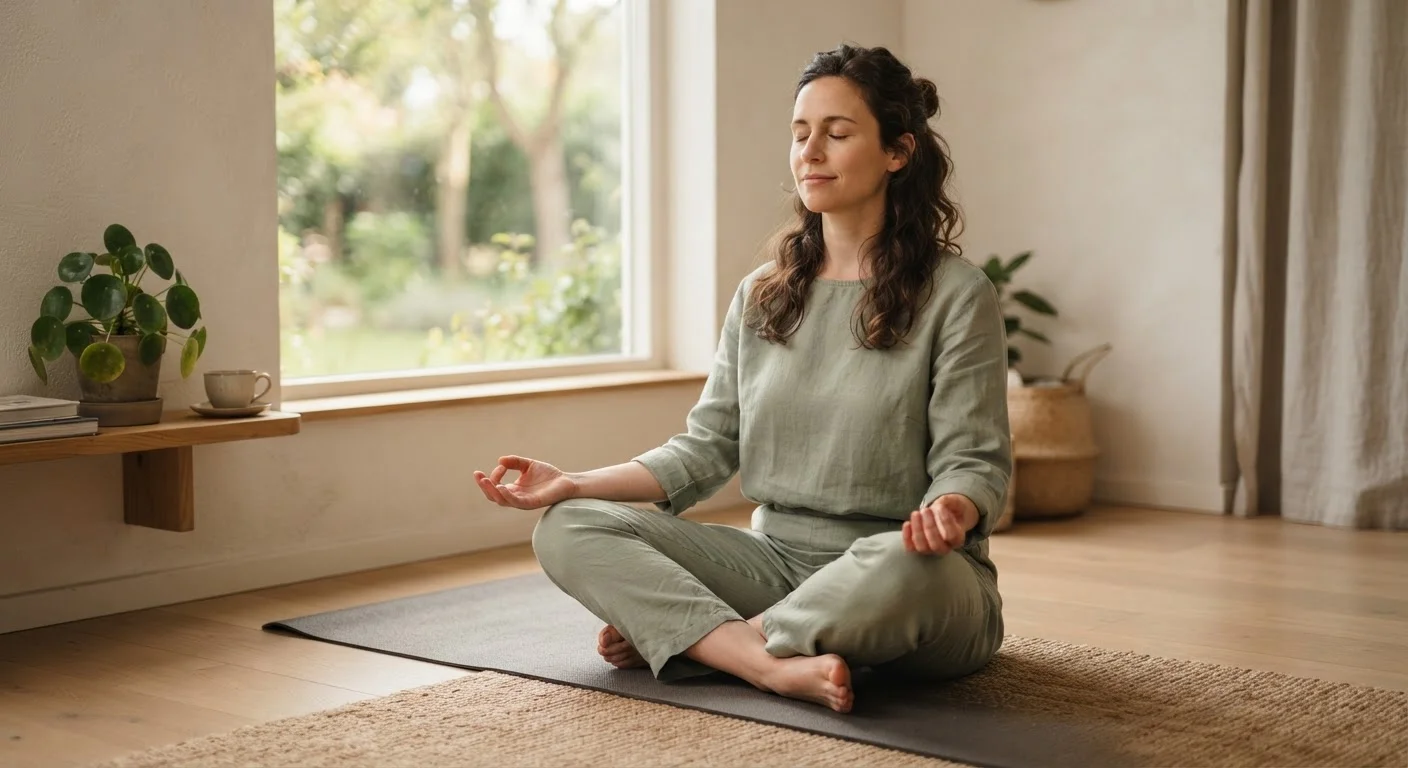
Key Takeaways
- Slow, controlled breathing activates the parasympathetic nervous system, reducing the stress response.
- Three evidence-informed techniques — diaphragmatic, box, and 4-7-8 breathing — each serve slightly different situations.
- Even a few minutes of deliberate breathwork can meaningfully lower heart rate and perceived anxiety.
- Consistency matters: regular practice strengthens the calming effect over time.
- Always consult a healthcare professional if you experience persistent anxiety, dizziness, or breathing difficulties.
What you will need
Why Breathing Changes How You Feel
Breathing is unique among bodily functions: it happens automatically, yet we can also control it consciously. That dual nature gives it direct access to the autonomic nervous system — the network that governs stress (fight-or-flight) and recovery (rest-and-digest) states. When you slow and deepen your breath, sensory signals travel through the vagus nerve to the brainstem, prompting the release of calming neurotransmitters and a reduction in cortisol, the primary stress hormone.
Multiple peer-reviewed studies have documented measurable decreases in heart rate, blood pressure, and self-reported anxiety following short bouts of controlled breathing. This makes breathwork one of the most accessible tools in stress management — no equipment, no cost, and no prescription required. For a broader look at how breathwork fits alongside other evidence-based approaches, see how people manage everyday stress and the research supporting each method.
What you will need
The Three Core Techniques — and When to Use Each
Not all breathing exercises are identical in effect or appropriate moment. The three techniques covered in this guide — diaphragmatic breathing, box breathing, and 4-7-8 breathing — each activate the parasympathetic nervous system but differ in intensity, timing, and ideal use case. Understanding those distinctions helps you reach for the right tool at the right moment.
Timer or Smartphone
Used to count breath intervals precisely, especially for box breathing and 4-7-8 patterns.
Yoga Mat or Cushion
Provides comfortable support if you prefer practicing while lying down or seated on the floor.
Choose a comfortable position
Sit upright in a chair with your feet flat on the floor, or lie on your back with your knees slightly bent. Either position allows your diaphragm — the dome-shaped muscle beneath your lungs — to move freely. Relax your shoulders away from your ears and let your jaw unclench.
Practice diaphragmatic (belly) breathing
Inhale slowly through your nose for about 4 seconds, allowing your belly to rise while your chest stays relatively still. Exhale through pursed lips for 6–8 seconds, feeling your belly fall. Repeat for 5–10 breath cycles. This technique is the foundation of all breathwork — it directly engages the vagus nerve, which signals the brain to downregulate the fight-or-flight stress response.
Best for: General day-to-day stress, first-time breathwork practitioners, pre-sleep relaxation.
Try box breathing for acute stress
Box breathing — also called four-square breathing — uses equal-length phases to create a steady, predictable rhythm. Follow this pattern:
- Inhale through your nose for 4 counts
- Hold your breath for 4 counts
- Exhale slowly through your mouth for 4 counts
- Hold empty for 4 counts
Complete 4–6 cycles. The structured pause phases interrupt the body's stress cascade and direct attention away from anxious thought spirals.
Best for: High-pressure moments — before a presentation, during a conflict, or in the middle of a busy workday.
Use 4-7-8 breathing for winding down
Developed as a clinical relaxation tool, the 4-7-8 pattern combines an extended hold with a long exhale to produce a pronounced calming effect:
- Inhale quietly through your nose for 4 counts
- Hold your breath for 7 counts
- Exhale completely through your mouth, making a soft whooshing sound, for 8 counts
Start with 2–3 cycles if you are new to this technique; work toward 4 cycles over time.
Best for: Evening wind-down, difficulty falling asleep, or moments of heightened anxiety. It pairs naturally with the routines described in an evening wind-down routine that prepares your body for sleep.
Close the session and notice the shift
After completing your chosen technique, breathe normally for a minute. Observe any changes in your heart rate, muscle tension, or mental clarity. Naming these shifts — even silently — reinforces the mind-body connection and motivates continued practice. Over time, this awareness makes it easier to recognize rising stress early and intervene before it escalates.
Build the Habit With a Trigger
Pair your chosen breathing exercise with an existing daily cue — such as your morning coffee, a lunch break, or getting into bed. Habit-stacking like this makes it far easier to practice consistently without relying on willpower alone. Even two to three minutes daily can build measurable resilience over weeks.
Stop If You Feel Unwell
Some people experience lightheadedness or tingling when first practicing breathwork, usually due to changes in carbon dioxide levels. If you feel faint, short of breath, or distressed at any point, stop immediately and breathe normally. Anyone with a respiratory condition, cardiovascular disease, or anxiety disorder should consult their healthcare provider before beginning a new breathwork practice.
Troubleshooting and Long-Term Practice
Breathwork is a learnable skill, and early sessions can feel awkward. Common challenges include:
- Chest tightness or yawning: Normal during the first few sessions as your body adjusts. It usually resolves within a week of regular practice.
- Inability to slow the exhale: Begin with a 4-second inhale and 5-second exhale rather than jumping to longer ratios.
- Racing thoughts during practice: Gently redirect attention to the physical sensations of breath — the air entering your nostrils, your belly rising and falling — rather than fighting the thoughts.
Breathwork is most effective as part of a broader stress management strategy. If you are new to the field, the Stress Management Starter Guide offers a comprehensive foundation, while the Complete Picture of Stress Management covers the science and long-term resilience strategies in depth.
If anxiety or stress remains persistent, interferes with daily functioning, or is accompanied by physical symptoms, please consult a licensed mental health professional or your primary care provider. Breathwork is a supportive tool — not a substitute for professional care.
This article is for general informational and educational purposes only and does not constitute medical advice. Always seek the guidance of a qualified healthcare professional with any questions you may have regarding a medical condition or mental health concern.