

Key Takeaways
- Your nervous system needs a deliberate transition period before it can enter sleep mode.
- Light exposure, screen use, and mental stimulation are the three biggest obstacles to winding down.
- A consistent 45–60 minute routine performed nightly is more effective than occasional heroic sleep efforts.
- Small, repeatable habits compound over time into significantly better sleep quality.
- Daytime habits — not just bedtime behaviors — shape how easy it is to wind down.
What you will need
Why Your Body Needs a Deliberate Transition Into Sleep
Sleep doesn't work like an on/off switch. Your nervous system — specifically the shift from sympathetic (alert) to parasympathetic (rest) dominance — requires time and the right environmental cues to make that transition. Most adults who struggle to fall asleep aren't fighting a sleep disorder; they're fighting an abrupt handoff from a stimulating evening to an expected immediate unconsciousness.
The brain's sleep-wake cycle is regulated by two main forces: circadian rhythm (your internal 24-hour clock, governed largely by light exposure) and sleep pressure (the buildup of adenosine, a sleep-promoting chemical, throughout the day). A wind-down routine works with both of these systems — reducing stimulation that fights the circadian signal and allowing sleep pressure to do its job undisturbed.
For a broader look at the daily habits that shape your sleep quality beyond the bedtime window, see our article on sleep hygiene and daily rest habits.
What you will need
What You'll Need Before You Begin
Before working through the steps below, gather the basic tools that make consistency easier. A cluttered or brightly lit environment creates friction that undermines even the best intentions.
Warm-toned lamp or bulb
Provides dim, amber-spectrum lighting that avoids melatonin suppression during the wind-down period.
Paper notebook and pen
Used for the nightly brain-dump or to-do list that reduces bedtime rumination.
Blackout curtains or sleep mask
Blocks external light sources that can delay or disrupt sleep onset and quality.
White noise machine or earplugs
Masks unpredictable environmental noise that can interrupt light sleep stages.
Bedroom thermometer
Helps you monitor and adjust room temperature to the range that supports sleep onset.
None of these items need to be expensive or specialized. The goal is simply to reduce the environmental barriers that compete with your wind-down effort.
The Step-by-Step Wind-Down Routine
The following sequence is designed to be completed over roughly 45–60 minutes. It isn't rigid — adapt the order and timing to fit your life — but try to include each element consistently.
Set a consistent wind-down start time
Choose a time 45 to 60 minutes before your target bedtime and treat it as a non-negotiable daily anchor. Label it mentally as your "transition hour" rather than your bedtime. This framing reduces the pressure of falling asleep immediately while still giving your body the runway it needs. Set a recurring phone reminder if it helps — but silence the phone immediately after.
Dim your lights and reduce screen brightness
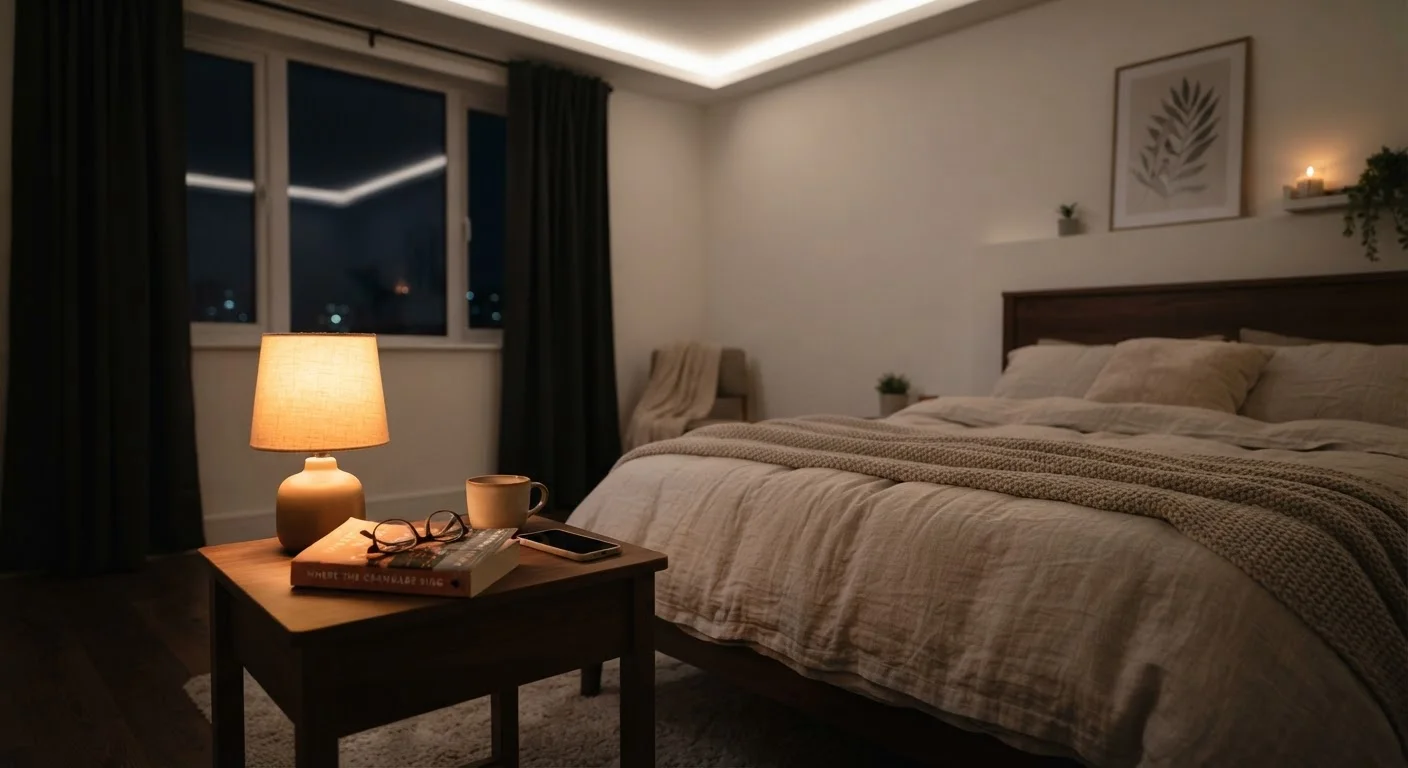
Light is the primary signal your brain uses to regulate melatonin — the hormone that promotes drowsiness. In the 45–60 minutes before bed, switch from overhead lighting to lower-placed lamps with warm (amber or red-toned) bulbs. If you use screens, activate night mode or reduce brightness significantly. Ideally, put screens away entirely for the final 30 minutes.
Close out open mental loops
One of the most overlooked sleep disruptors is unresolved cognitive load — the mental equivalent of open browser tabs. Spend five to ten minutes writing a short list of tomorrow's tasks or any unresolved worries. Research published in the Journal of Experimental Psychology found that writing a concrete to-do list before bed — rather than a general worry journal — helped participants fall asleep faster. The act of offloading thoughts onto paper reduces the brain's need to rehearse them.
Lower your body temperature
Your core body temperature naturally drops as part of sleep initiation. You can support this process by taking a warm shower or bath approximately 60–90 minutes before bed. Counterintuitively, the warm water causes blood vessels near the skin to dilate, which accelerates heat loss from the body's core as you cool down afterward. Keep your bedroom cool — somewhere in the range of 65–68°F (18–20°C) is generally considered conducive to sleep onset, though individual preference varies.
Choose a calming, low-stimulation activity
Fill the remaining wind-down window with an activity that is engaging enough to hold your attention but not stimulating enough to activate your stress response. Reading physical books, light stretching, gentle breathing exercises, or listening to calm music or a low-key podcast are all well-suited options. Avoid emotionally intense content — thrillers, work emails, social media debates, or stressful news — all of which activate alerting systems in the brain.
Enter your sleep environment with intention
Use the final five minutes to prepare your space: make the room dark (blackout curtains or a sleep mask if needed), confirm the temperature is comfortable, and silence your phone or place it outside the room. Lying down in a prepared, dark, quiet environment — rather than drifting off on a couch mid-show — reinforces the association between your bed and sleep. This psychological link, called stimulus control, is a cornerstone of behavioral sleep medicine.
Consistency Matters More Than Perfection
You don't need to execute every step flawlessly every night. Research consistently shows that regularity — doing a recognizable pre-sleep sequence at a similar time — builds a conditioned response in the brain. Even a shortened version of your routine on busy nights is far more beneficial than skipping it entirely.
If stress regularly spills into your evenings and makes winding down difficult, a structured weekly stress-check can help you catch and manage that load earlier in the week. See our weekly stress-check routine for a practical framework.
Common Pitfalls and How to Avoid Them
Even well-intentioned routines can stall. The most frequent obstacle is inconsistency on weekends — staying up two or more hours later disrupts circadian timing in a way that mirrors mild jet lag, making Monday nights notoriously difficult. Aim to keep your wind-down start time within 30–60 minutes of your weekday schedule, even on days off.
A second common pitfall is treating the wind-down window as wasted time. Reframe it: the 45 minutes you invest before bed directly determines how rested you are during every waking hour that follows. The return on investment is significant.
Avoid Stimulants in the Hours Before Bed
Caffeine has a half-life of roughly five to six hours, meaning half of the caffeine from a 3 p.m. coffee is still active at 8 p.m. Alcohol may feel sedating but disrupts the deeper, restorative stages of sleep. Try to avoid both in the final four to six hours before your target bedtime.
If daytime napping is part of your routine, timing matters. Our article on when napping helps versus when it backfires explains how to nap in ways that don't erode nighttime sleep pressure.
This Is General Information, Not Medical Advice
The guidance in this article is intended for general educational purposes. If you experience persistent insomnia, frequent nighttime waking, or daytime impairment that affects your functioning, please consult a qualified healthcare provider. Sleep disorders such as sleep apnea require professional evaluation and should not be managed through routine changes alone.
This article is for general informational and educational purposes only and does not constitute medical advice. Always consult a qualified healthcare professional for concerns about your sleep or health.