

| Organs in the GI tract | 7 (mouth, esophagus, stomach, small intestine, large intestine, rectum, anus) |
| Adults affected by IBS in the US | Estimated 10–15% of the population (American College of Gastroenterology) |
| Most common IBD types | Crohn's disease and ulcerative colitis |
| Primary cause of peptic ulcers | H. pylori infection or NSAID use (National Institute of Diabetes and Digestive and Kidney Diseases (NIDDK)) |
| Celiac disease prevalence | Approximately 1 in 133 Americans (Celiac Disease Foundation) |
| Diagnostic gold standard for IBD | Colonoscopy with biopsy |
What Are Digestive Disorders?
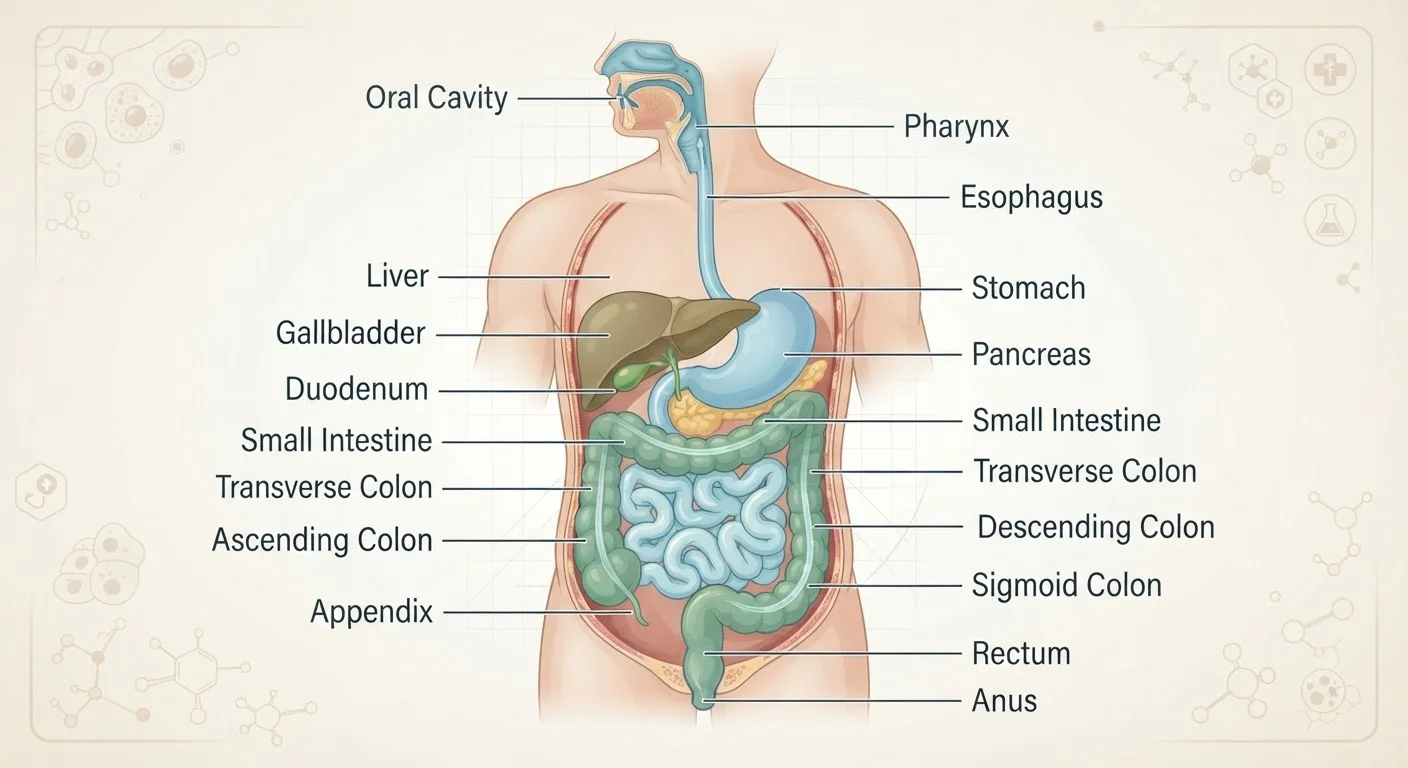
Digestive disorders are conditions that affect the gastrointestinal (GI) tract — the series of organs responsible for breaking down food, absorbing nutrients, and eliminating waste. This tract runs from the mouth through the esophagus, stomach, small intestine, large intestine (colon), rectum, and anus. The liver, gallbladder, and pancreas are also considered part of the digestive system.
Digestive disorders range from occasional and mild — such as acid reflux — to chronic and complex, such as Crohn's disease or cirrhosis. Some are structural (involving physical changes to organs), while others are functional (where the GI tract looks normal but doesn't work as expected). Understanding the difference between these categories helps set realistic expectations for diagnosis and management. For broader context on life with chronic gut conditions, see our guide to flare-ups and remission.
| Organs in the GI tract | 7 (mouth, esophagus, stomach, small intestine, large intestine, rectum, anus) |
| Adults affected by IBS in the US | Estimated 10–15% of the population (American College of Gastroenterology) |
| Most common IBD types | Crohn's disease and ulcerative colitis |
| Primary cause of peptic ulcers | H. pylori infection or NSAID use (National Institute of Diabetes and Digestive and Kidney Diseases (NIDDK)) |
| Celiac disease prevalence | Approximately 1 in 133 Americans (Celiac Disease Foundation) |
| Diagnostic gold standard for IBD | Colonoscopy with biopsy |
A–Z of Common Digestive Conditions
The following overview covers the most frequently diagnosed digestive disorders. This is general health information — not a substitute for professional evaluation.
Celiac Disease
An autoimmune condition in which consuming gluten (a protein in wheat, rye, and barley) triggers an immune response that damages the lining of the small intestine. Symptoms include diarrhea, bloating, fatigue, and nutrient deficiencies. Diagnosis requires blood tests and often a biopsy. Management centers on a strict, lifelong gluten-free diet.
Crohn's Disease
A form of inflammatory bowel disease (IBD) that can affect any part of the GI tract, most commonly the end of the small intestine. Symptoms include abdominal pain, diarrhea, fatigue, and unintended weight loss. It is characterized by periods of active symptoms (flares) and periods of remission.
Diverticular Disease
Diverticula are small pouches that can form in weakened areas of the colon wall. When these pouches become inflamed or infected, the condition is called diverticulitis, which may cause severe abdominal pain, fever, and changes in bowel habits.
Gastroesophageal Reflux Disease (GERD)
GERD occurs when stomach acid frequently flows back into the esophagus, causing irritation. Common symptoms include heartburn, regurgitation, and difficulty swallowing. Chronic, unmanaged GERD can lead to esophageal damage over time.
Irritable Bowel Syndrome (IBS)
IBS is a functional GI disorder — meaning the gut appears structurally normal but doesn't function properly. It is characterized by recurring abdominal pain, bloating, and altered bowel habits (diarrhea, constipation, or both). The cause is not fully understood, but gut-brain interaction, diet, and stress are all recognized contributors.
Peptic Ulcer Disease
Peptic ulcers are open sores that develop on the lining of the stomach or upper small intestine. The most common causes are infection with the bacterium Helicobacter pylori and long-term use of nonsteroidal anti-inflammatory drugs (NSAIDs). Symptoms include burning stomach pain, nausea, and bloating.
Ulcerative Colitis
Another form of IBD, ulcerative colitis causes chronic inflammation and ulcers in the inner lining of the large intestine. Symptoms typically include rectal bleeding, urgent and frequent bowel movements, and abdominal cramping. Like Crohn's disease, it follows a relapsing-remitting pattern for many people.
GI Tract
Short for gastrointestinal tract — the continuous passage from the mouth to the anus through which food is digested and waste is expelled. It includes the esophagus, stomach, small intestine, and large intestine.
Inflammatory Bowel Disease (IBD)
A group of chronic conditions — primarily Crohn's disease and ulcerative colitis — characterized by persistent inflammation of the GI tract. IBD is distinct from irritable bowel syndrome (IBS), which is functional, not inflammatory.
Functional Disorder
A condition in which the digestive organs appear structurally normal but do not function correctly. IBS is the most recognized example. Symptoms are real and can be significant despite the absence of visible tissue damage.
Remission
A period during which symptoms of a chronic condition are absent or significantly reduced. In digestive diseases like Crohn's or ulcerative colitis, remission can last months or years but does not necessarily mean the condition is cured.
Endoscopy
A diagnostic procedure in which a flexible tube with a camera is inserted into the GI tract to directly visualize the lining of the esophagus, stomach, or intestines. It is commonly used to diagnose conditions like GERD, ulcers, and IBD.
Malabsorption
A condition in which the small intestine fails to absorb nutrients adequately from food. It can result from damage to the intestinal lining (as in celiac disease) or from other underlying disorders.
Peristalsis
The wave-like muscular contractions that move food and waste through the digestive tract. Disruptions to peristalsis can contribute to conditions such as constipation, gastroparesis, or IBS.
Biopsy
The removal of a small tissue sample for laboratory examination. In digestive medicine, biopsies are often taken during endoscopy to confirm diagnoses such as celiac disease, IBD, or cancer.
When to Seek Medical Advice
Many digestive symptoms are temporary and resolve on their own. However, certain signs warrant prompt evaluation by a qualified healthcare professional. These include:
- Blood in stool or vomit
- Unexplained, significant weight loss
- Persistent abdominal pain that does not improve
- Difficulty swallowing that is new or worsening
- Jaundice (yellowing of the skin or eyes)
- Symptoms that significantly interfere with daily life
Digestive health can also shift meaningfully across different life stages. Our article on digestive health through different life stages explores how gut function evolves with age and what to watch for at different points in adulthood.
If you encounter unfamiliar clinical terms during a diagnosis, the Medical Jargon Decoded glossary is a useful companion resource. Diet also plays a central role in managing many digestive conditions — our reference guide to special diet terminology can help decode dietary recommendations your provider may suggest.
Digestive Symptoms and Mental Health
Research increasingly supports a strong gut-brain connection — the idea that the digestive system and brain communicate bidirectionally through the nervous system. Stress, anxiety, and depression can worsen GI symptoms, and chronic digestive conditions can in turn affect mental wellbeing. If you are managing a digestive condition and noticing emotional or psychological effects, raising both with your healthcare provider is worthwhile.
This article is for general informational purposes only and does not constitute medical advice. Always consult a qualified healthcare professional for personal health concerns, diagnosis, or treatment decisions.