

Key Takeaways
- Chronic pain is biologically distinct from acute pain — it involves lasting changes in the nervous system.
- Acute pain serves a protective warning function; chronic pain often persists independently of ongoing tissue damage.
- Central sensitization is a key mechanism explaining why chronic pain amplifies over time.
- Treating chronic pain requires different strategies than those used for short-term injury pain.
- Psychological, social, and biological factors all play roles in how chronic pain develops and is maintained.
Chronic Pain
Chronic pain is pain that persists beyond the normal healing period — generally defined as lasting three months or longer. Unlike acute pain, which signals tissue damage and fades as healing occurs, chronic pain often continues even after an injury has resolved. It is recognized by medical professionals as a distinct condition involving changes in the nervous system itself, not merely a prolonged version of short-term pain.
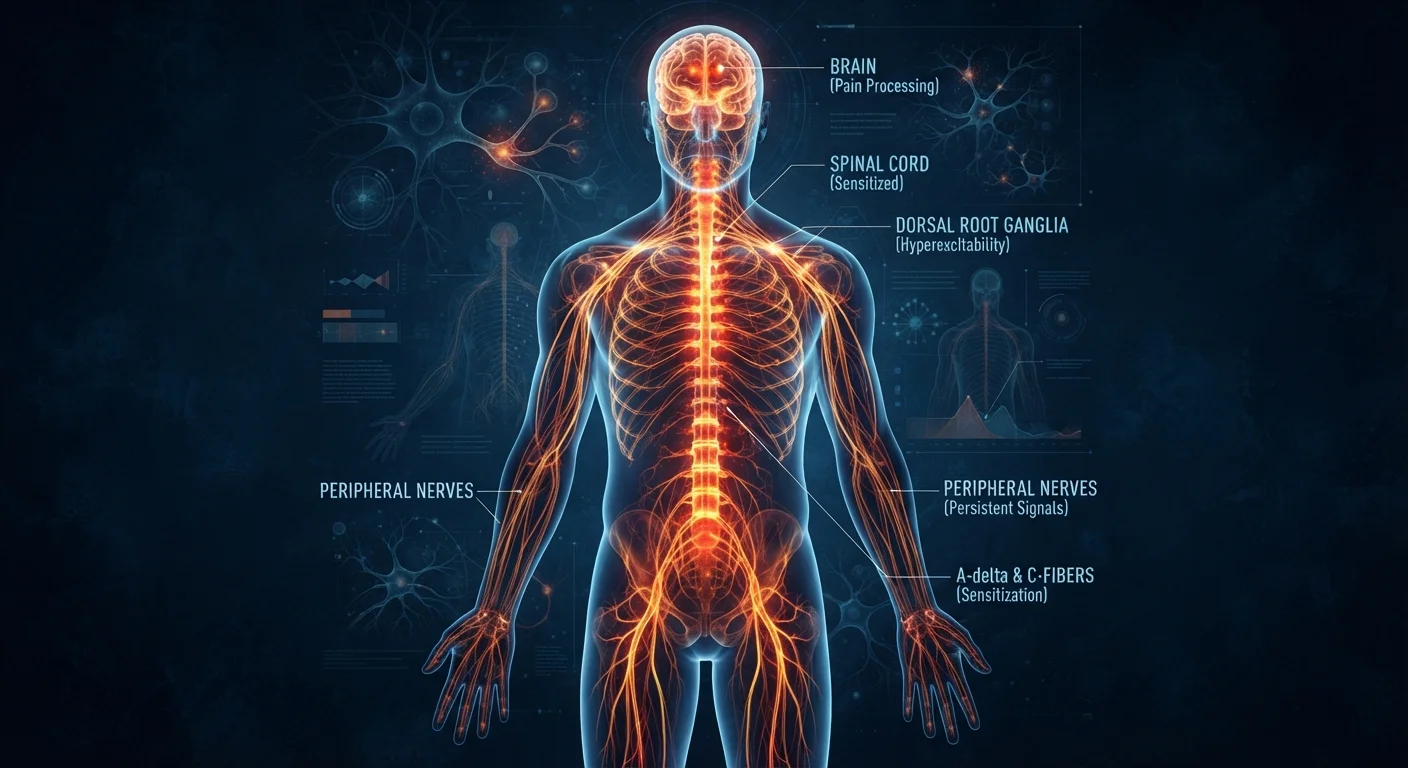
Clinically, chronic pain is increasingly understood through the lens of central sensitization — a process in which the central nervous system becomes amplified in its pain responses, lowering the threshold at which signals are perceived as painful.
Two Types of Pain, Two Different Biological Stories
When you touch a hot surface and pull your hand back, you are experiencing acute pain doing exactly what it is designed to do — signal danger, prompt protective behavior, and then fade as tissue heals. This kind of pain is a biological alarm system, tightly linked to actual or threatened injury.
Chronic pain operates under an entirely different set of rules. As explained in what "chronic" actually means in medicine, the word "chronic" signals more than duration — it reflects a shift in underlying mechanisms. In chronic pain, the nervous system itself has changed. Pain signals may continue firing long after tissue has healed, or in response to stimuli that would not normally cause pain at all.
This distinction is clinically important. Treating chronic pain as though it were simply unresolved acute pain — focusing exclusively on the original injury site — often fails, because the driving mechanism has moved upstream into the central nervous system.
~20%
U.S. adults estimated to live with chronic pain
According to CDC data from the National Health Interview Survey, approximately one in five U.S. adults reports experiencing chronic pain.
3+ months
Standard clinical threshold for chronic pain diagnosis
Most clinical guidelines, including those from the International Association for the Study of Pain, use a three-month or longer duration as the benchmark for classifying pain as chronic.
50%+
Chronic pain patients with concurrent depression or anxiety
Research published in pain medicine literature consistently finds that more than half of people with chronic pain also experience co-occurring mood or anxiety disorders.
Central Sensitization: When the Nervous System Turns Up the Volume
One of the most significant concepts in understanding chronic pain is central sensitization. This refers to a process in which the central nervous system — the brain and spinal cord — becomes hyperresponsive to pain signals. The threshold for perceiving pain lowers, meaning ordinary sensations can register as painful, and existing pain can feel more intense than the underlying stimulus would predict.
Central sensitization helps explain several features of chronic pain conditions that can otherwise seem puzzling: widespread pain that extends beyond the original injury site, sensitivity to touch (allodynia), and pain that persists even when imaging or physical examination reveals no active damage.
Conditions including fibromyalgia, chronic low back pain, and chronic widespread pain syndromes are now understood to involve central sensitization as a core feature — not simply as psychological overlay, but as measurable changes in nervous system function.
“Pain is always a construction of the brain. In chronic pain, the brain has essentially learned to produce pain even when there is no ongoing threat to the body — and that learning process is what treatment must address.”
— Lorimer Moseley, Professor of Clinical Neurosciences, University of South Australia, and pain researcher
The Biopsychosocial Framework: Why Pain Is Never Just Physical
Contemporary pain medicine uses a biopsychosocial model to understand chronic pain. This framework recognizes that biological factors (nerve sensitization, inflammation, genetic predisposition), psychological factors (anxiety, catastrophizing, depression), and social factors (isolation, occupational demands, access to care) all interact to shape how pain is experienced and maintained.
This is not a claim that chronic pain is "all in the mind." It is an acknowledgment that the nervous system is embedded in a broader human context, and that emotional and environmental factors have measurable effects on pain processing. Research consistently shows that addressing psychological contributors alongside physical ones leads to better outcomes for many people living with chronic pain.
For a parallel perspective on how the same biological-social interplay affects another common condition, see how chronic stress differs from acute stress in its effects on the body over time.
Why Management Approaches Must Differ
Because chronic pain involves altered nervous system processing rather than simply unresolved injury, effective management often extends well beyond analgesic medication or rest. Multimodal approaches — combining physical rehabilitation, psychological support such as cognitive behavioral therapy, pain education, and in some cases targeted medications — are supported by clinical evidence for many chronic pain conditions.
Pain education itself is an established intervention. When people understand that their nervous system has become sensitized rather than that their body is continuously being damaged, this knowledge can reduce fear-avoidance behaviors that inadvertently worsen outcomes.
This also challenges widely believed myths about chronic conditions, including the idea that pain always means harm, or that avoiding activity is the safest response to persistent pain. In chronic pain, the evidence often points in the opposite direction.
This article is for general informational purposes only and does not constitute medical advice. If you are experiencing persistent or worsening pain, please consult a qualified healthcare professional for assessment and guidance.