
Keeping Track: What People With Chronic Conditions Typically Monitor at Home

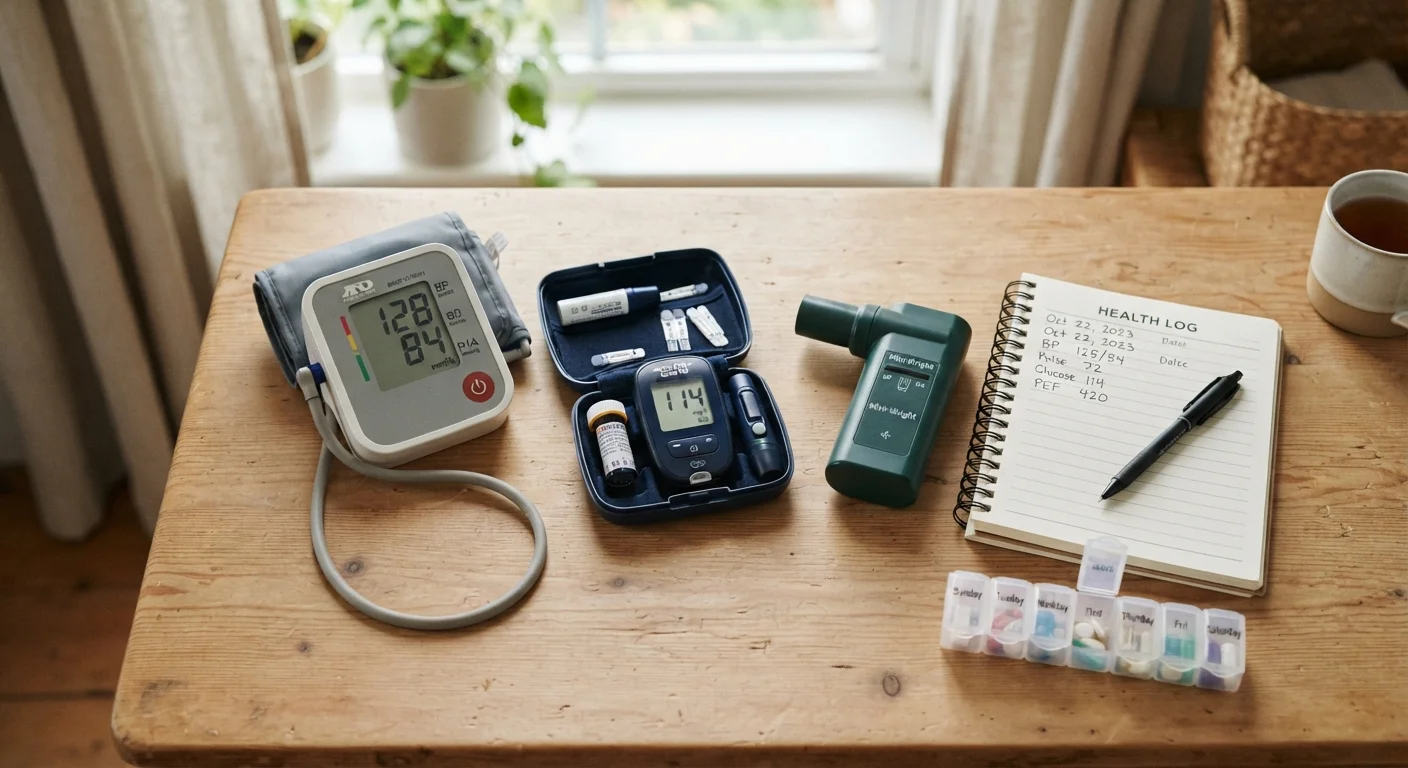
Key Takeaways
- Regular home monitoring gives clinicians richer data than infrequent office visits alone can provide.
- Different chronic conditions require different metrics — knowing what to track and why matters.
- Symptom diaries complement device readings by capturing context machines cannot measure.
- Consistent records can help you and your doctor detect early warning signs before they escalate.
- Always discuss monitoring frequency and thresholds with your healthcare provider for personalized guidance.
Why Home Monitoring Matters
Chronic conditions do not pause between clinic visits. Blood sugar rises and falls throughout the day. Blood pressure fluctuates with stress, sleep, and activity. Lungs respond differently to cold air, allergens, and effort. Capturing this ongoing variation is something a 15-minute appointment — however skilled the clinician — simply cannot do alone.
Home monitoring bridges that gap. When patients arrive with weeks of readings, symptom patterns, or weight logs, clinicians gain a far more complete picture of how a condition is actually behaving in daily life. That data supports more precise decisions about medication, lifestyle adjustments, and when closer follow-up is warranted. It also shifts the patient into an active role in their own care — which research consistently links to better long-term outcomes.
The specifics of what to monitor depend entirely on the condition involved. Below is a breakdown of the most common forms of home monitoring and why each one matters.
Monitoring Is Not a Substitute for Professional Care
Home monitoring tools support — they do not replace — regular clinical appointments and professional medical judgment. The goal is to arrive at appointments with richer, more useful information. If a reading falls outside your agreed range or a symptom concerns you, contact your healthcare provider rather than adjusting medications or treatment independently.
Common Metrics People Track at Home
Blood Glucose Levels (Diabetes)
For people living with type 1 or type 2 diabetes, tracking blood glucose is a cornerstone of daily management. Finger-prick meters and continuous glucose monitors (CGM) allow readings to be captured before and after meals, during exercise, and at bedtime. These data points help identify how specific foods, activity, stress, and sleep affect glucose control.
Over time, patterns in home readings complement the HbA1c result ordered by a clinician, providing a far more granular picture than a lab test taken once every few months. If readings fall outside your agreed target range consistently, that is information worth bringing to your next appointment.
CGMs and finger-prick meters capture glucose patterns no single lab visit can replicate.
Blood Pressure (Hypertension and Heart Conditions)
Home blood pressure monitoring is widely recommended for people with hypertension because readings taken in a clinical setting can be temporarily elevated by anxiety — a phenomenon clinicians call white coat hypertension. A validated home cuff used consistently, at the same time of day and after a few minutes of rest, produces readings that better reflect day-to-day cardiovascular load.
Logging both the systolic (top) and diastolic (bottom) numbers over days or weeks helps a clinician assess whether a medication adjustment is working or whether values are trending in a concerning direction. For a plain-language breakdown of what blood pressure figures actually mean, see Hypertension by the Numbers.
Home readings taken consistently reveal cardiovascular patterns that clinic visits can miss.
Peak Expiratory Flow (Asthma)
A peak flow meter is a small, inexpensive handheld device that measures how quickly air can be expelled from the lungs. For people managing asthma, daily peak flow readings — typically recorded in the morning and evening — can detect airway narrowing before symptoms become severe enough to cause distress.
Most clinicians help patients establish a personal best reading and set an action plan around zones (often color-coded as green, yellow, and red) based on percentage drops from that baseline. Tracking these numbers means a worsening episode can often be addressed proactively rather than reactively.
Peak flow readings can detect airway narrowing before symptoms become noticeably severe.
Weight and Fluid Changes (Heart Failure and Kidney Disease)
Rapid weight gain over a short period — particularly one to two kilograms within 24 to 48 hours — can signal fluid retention in people with heart failure or certain kidney conditions. For this reason, daily weigh-ins taken at the same time each morning, after using the bathroom and before eating, are a standard monitoring practice in these populations.
Clinicians often set a specific threshold (for example, a gain of two pounds or more in a day) as a trigger to make contact or adjust care. Swelling in the ankles and legs, reduced urine output, or increased breathlessness are symptoms worth noting alongside the scale reading. Self-monitoring here is not passive — it is an active safety measure.
Sudden weight gain from fluid retention is a warning sign that consistent daily weighing can catch early.
Symptom Diaries (Multiple Conditions)
Not everything meaningful can be captured by a device. A written or digital symptom diary records subjective experiences — pain levels, fatigue, mood, sleep quality, bowel habits, headache frequency — and the contextual factors that surround them. For conditions such as IBD, migraine, fibromyalgia, and autoimmune disorders, this kind of longitudinal record can reveal triggers and patterns that neither patient nor clinician would otherwise recognize.
Diaries are also valuable in digestive health management. Keeping a Symptom Diary for Digestive Issues offers a practical framework for structuring those records usefully. Even a few weeks of consistent entries can give a clinician meaningful data to work with.
A symptom diary captures the human context that no monitoring device can record on its own.
Activity and Rest Levels (Cardiac Rehabilitation, COPD, and More)
Step counts, heart rate during exertion, sleep duration, and recovery data collected by wearable devices can give clinicians a window into activity tolerance over time. For people in cardiac rehabilitation, or those managing COPD or post-viral fatigue syndromes, trends in these metrics can indicate whether exercise capacity is improving, plateauing, or declining.
It is worth understanding both what these tools can and cannot tell you — wearable accuracy varies by device and activity type. Activity Trackers and Step Counts: What They Can and Cannot Tell You explores those limitations in more detail. Used with appropriate expectations, wearable data is a useful addition to a broader monitoring picture.
Wearable data is most valuable when interpreted alongside clinical context, not as a standalone verdict.
Bring Your Records to Every Appointment
A log of home readings is most useful when your clinician can review it. Whether it is a printed sheet, a shared app, or a written diary, having data on hand transforms what a routine appointment can accomplish. For a checklist of what to bring and ask, see our guide on questions worth asking at every chronic condition appointment.
Making Your Monitoring Work for You
Tracking data is only useful if it is consistent, accurate, and shared. Inconsistent technique — taking a blood pressure reading immediately after exercise, or logging glucose without noting meal times — can produce data that is misleading rather than helpful. Ask your care team to walk you through proper technique for any device they recommend.
It also helps to understand the patterns that undermine good chronic condition management. Where Chronic Condition Management Often Goes Wrong — and Why outlines common pitfalls worth being aware of. Monitoring without follow-through — recording data but never discussing it with a clinician — is one of those pitfalls.
Finally, not every person with a chronic condition needs every type of monitoring. Your clinician is the right person to help you decide what is clinically meaningful for your specific situation, how often to measure, and what readings should prompt you to make contact outside a scheduled visit.
This article is for general informational purposes only and does not constitute medical advice. Always consult a qualified healthcare professional for guidance specific to your health circumstances.