

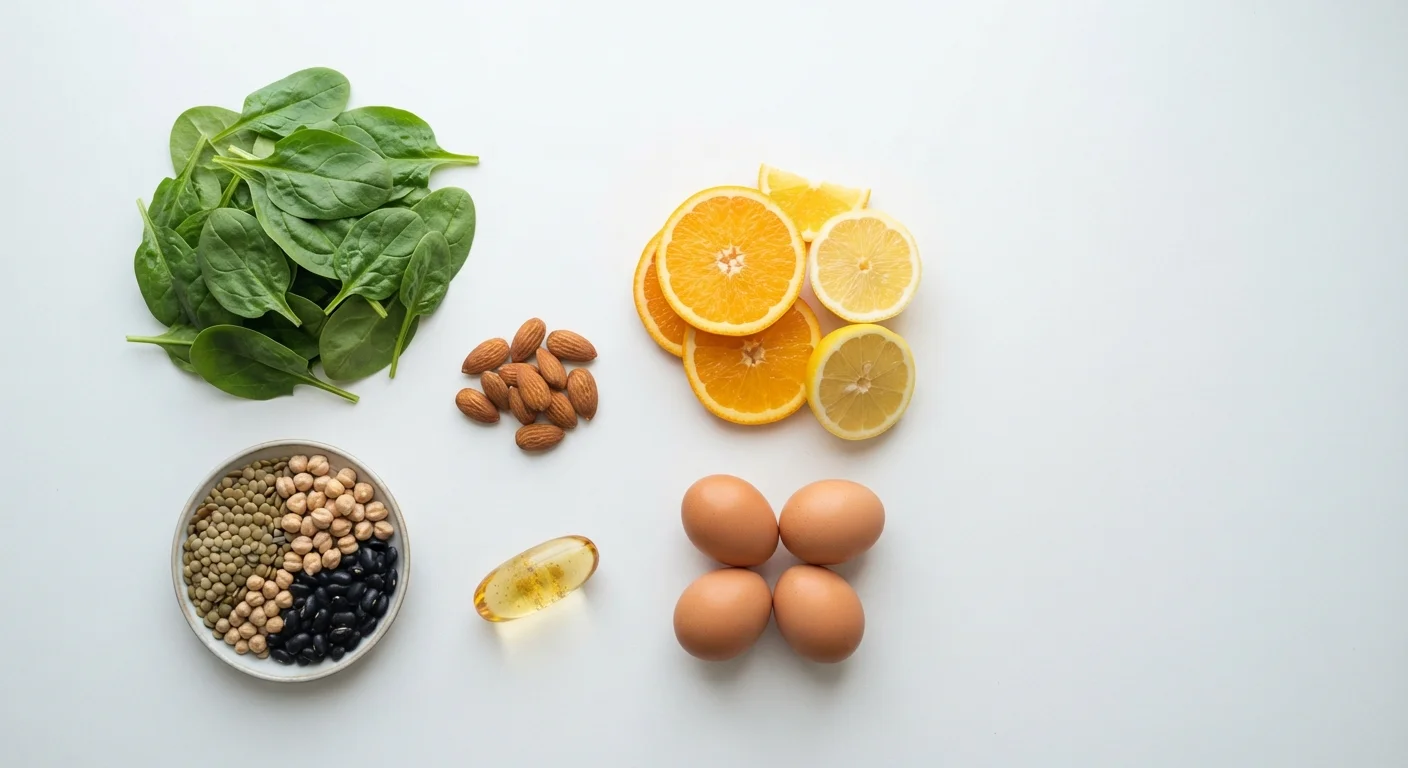
Key Takeaways
- The nutrient amount listed on a label reflects total content, not what your body will actually absorb.
- Food form, cooking, and gut health all significantly influence how much of a nutrient reaches your bloodstream.
- Some nutrients depend on companion foods or other nutrients to be absorbed efficiently.
- Supplements vary widely in their bioavailability depending on the chemical form used.
- Eating a varied, whole-foods diet generally supports broader nutrient absorption than any single supplement.
Bioavailability
Bioavailability is the proportion of a nutrient that your body actually absorbs from food or a supplement and can use for biological functions. A food can contain a significant amount of a vitamin or mineral on paper, but only a fraction of that amount may reach your bloodstream and tissues. Factors like food form, cooking method, gut health, and what you eat alongside a nutrient all influence this figure.
In pharmacology and nutrition science, bioavailability is formally expressed as a percentage of the ingested dose that reaches systemic circulation in an active form. For nutrients, this is sometimes described as 'fractional absorption' and is measured using isotope-labeling studies or controlled clinical trials.
What the Label Doesn't Tell You
Scan a nutrition facts panel and you'll find tidy numbers — milligrams of calcium, micrograms of vitamin D, percentages of daily value. What those numbers don't capture is how much of each nutrient your body will actually use. That gap is explained by bioavailability.
A classic illustration is spinach. It's rich in calcium — about 115 mg per cooked cup — but also contains oxalates, naturally occurring compounds that bind calcium and limit how much the intestine can absorb. The estimated absorption rate of calcium from spinach is roughly 5%, compared to around 32% from dairy sources. The label looks comparable; the delivery is not.
This matters beyond a single food comparison. It shapes how you read supplement claims, plan meals, and assess whether your diet is actually meeting your needs. Our guide to reading nutrition labels covers the basics of what panels show — bioavailability is the next layer of understanding.
Key Factors That Influence Absorption
Several variables determine how much of a nutrient clears the gut wall and enters circulation:
- Chemical form: Nutrients exist in multiple chemical structures. Magnesium oxide, commonly used in supplements, has relatively poor absorption compared to magnesium citrate or glycinate. Folate from food and folic acid in supplements are metabolized differently — particularly relevant for those with certain genetic variants affecting folate processing.
- Food matrix: Nutrients don't travel alone. The other compounds in a food — fats, fibers, proteins, phytochemicals — can either facilitate or inhibit absorption. Vitamin D and fat-soluble vitamins broadly require dietary fat in the meal to move efficiently through the gut lining. See our deeper explainer on fat-soluble vs water-soluble vitamins for more on this distinction.
- Cooking and processing: Heat breaks down cell walls in vegetables, releasing bound carotenoids like beta-carotene, increasing their bioavailability. Conversely, boiling can leach water-soluble vitamins like B vitamins and vitamin C into cooking water.
- Gut health and physiology: Stomach acid is essential for releasing minerals like iron and zinc from food. Reduced acid production — common with age or certain medications — can impair this step. Intestinal conditions affecting the mucosal lining directly reduce surface area available for absorption.
~5%
Calcium absorbed from spinach
Research published in the American Journal of Clinical Nutrition estimates calcium absorption from high-oxalate vegetables like spinach is approximately 5%, compared to roughly 32% from milk.
15–35%
Heme iron absorption rate
According to the NIH Office of Dietary Supplements, heme iron from meat, poultry, and seafood is absorbed at roughly 15–35%, significantly higher than non-heme iron from plant sources.
2–20%
Non-heme iron absorption range
The NIH notes that non-heme iron absorption is highly variable, ranging from 2% to 20% depending on dietary enhancers and inhibitors present in the same meal.
Nutrient Interactions: Helpers and Blockers
Nutrients interact with each other in ways that amplify or suppress absorption. Vitamin C consumed in the same meal as non-heme iron (the form found in plant foods) can meaningfully improve iron uptake — a practical strategy for those following plant-based diets. Calcium and iron, on the other hand, compete for the same intestinal transporters, so high-dose calcium supplements taken alongside iron-rich meals may reduce iron absorption.
Zinc and copper have a similar competitive relationship; long-term high-dose zinc supplementation without attention to copper levels has been associated with copper deficiency in research literature. These interactions underscore why the full picture matters, not just individual nutrient amounts. Our article on nutrient interactions before supplementing explores this in greater depth.
“The form in which a nutrient is consumed — and everything else consumed with it — can matter as much as the dose itself. Nutrition is not simply additive; it is deeply contextual.”
— NIH Office of Dietary Supplements, U.S. National Institutes of Health research office focused on dietary supplement science
For those considering supplements, the chemical form on the label is one of the most important factors to evaluate. Our comparison of whole foods versus supplements addresses when supplementation genuinely adds value versus when food-first approaches serve better.
Practical Implications for Your Diet
Understanding bioavailability shifts the focus from quantity to quality and context. A few evidence-informed principles apply broadly:
- Pair strategically: Combine iron-rich plant foods with vitamin C sources. Add a small amount of healthy fat when eating fat-soluble nutrients like vitamin A or vitamin K.
- Consider the source: Heme iron from animal foods absorbs at roughly 15–35%; non-heme iron from plants at 2–20%, depending on dietary context. Neither is inherently superior — the gap can often be narrowed with thoughtful food combinations.
- Don't over-rely on labels alone: Daily value percentages assume average absorption under average conditions. Individual factors — gut health, age, medication use, and genetic variation — all shift the actual equation.
- Evaluate supplement forms: When supplements are appropriate, the specific compound matters. A healthcare provider or registered dietitian can help identify forms with stronger evidence for absorption in your situation.
For a comprehensive look at individual vitamins and minerals and where to find them, our micronutrients reference guide is a useful companion resource.
This article is for general informational and educational purposes only and is not a substitute for professional medical or nutritional advice. Consult a qualified healthcare provider before making significant changes to your diet or starting any supplement regimen.