

Key Takeaways
- Whole foods like legumes, oats, and frozen vegetables deliver strong nutrition at low cost.
- Planning meals before shopping reduces waste and prevents impulse purchases that strain budgets.
- Protein from plant sources — beans, lentils, eggs — is typically far cheaper than most animal proteins.
- Cooking in larger batches stretches both time and money without sacrificing dietary quality.
- Generic and store-brand staples are nutritionally equivalent to name-brand counterparts in most cases.
Why Budget and Nutrition Are Not at Odds
A persistent belief holds that eating healthfully requires premium ingredients and specialty store budgets. The evidence does not support this. Research consistently shows that diets built around whole grains, legumes, eggs, canned or frozen vegetables, and in-season produce can meet most nutritional needs at a fraction of the cost of heavily processed convenience foods.
Understanding where this misconception comes from is useful. Marketing tends to frame health through the lens of novelty — superfoods, functional beverages, fortified snack bars. These products carry real cost premiums without clear evidence of benefit over simpler alternatives. Several popular nutrition beliefs, including that more expensive foods are inherently more nutritious, do not hold up under scrutiny.
The foundation of sound eating — adequate protein, fiber, vitamins, and minerals — is achievable with affordable, widely available ingredients when you know how to select and combine them. If you are newer to thinking about food this way, a structured introduction to nutrition basics can provide useful grounding before building a budget strategy.
Core Practices for Eating Well Without Overspending
The following evidence-informed habits form the backbone of a cost-effective, nutritionally sound approach to everyday eating.
Build meals around legumes and whole grains as primary protein and carbohydrate sources.
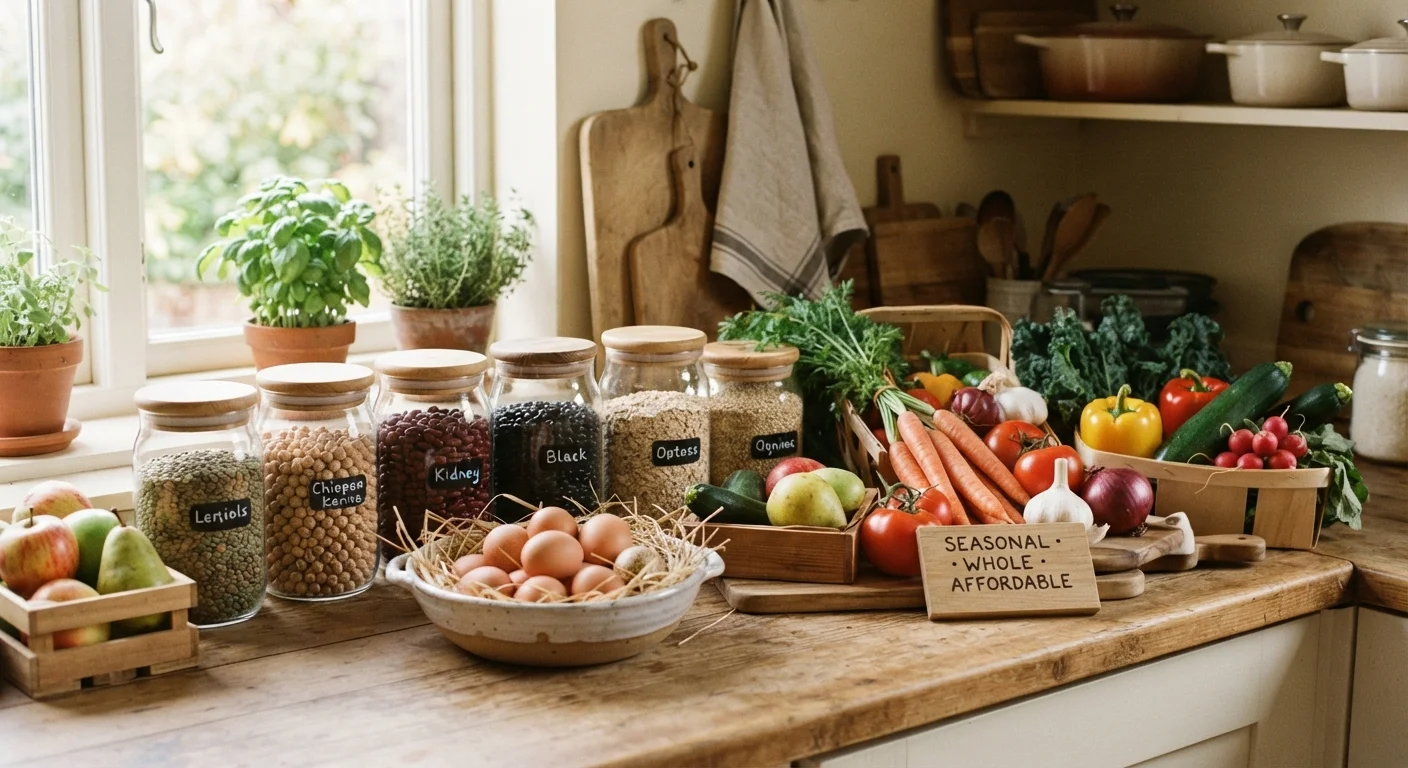
Dried lentils, chickpeas, black beans, and whole grains like oats and brown rice are among the most cost-efficient nutrient-dense foods available. They supply protein, fiber, B vitamins, and minerals at pennies per serving. Centering meals on these foods rather than treating them as sides restructures grocery spending without reducing nutritional quality.
Choose frozen and canned vegetables over passing up produce entirely.
Frozen vegetables are harvested and processed at peak ripeness, preserving most of their nutrient content. Research published in nutritional science literature consistently finds frozen produce comparable to fresh in key micronutrients. Canned options — particularly low-sodium varieties — extend this value further with longer shelf life, reducing spoilage waste.
Plan a weekly meal outline before shopping and build a strict list from it.
Unplanned shopping is one of the primary drivers of food waste and budget overruns. A simple weekly meal sketch — even rough outlines rather than detailed recipes — anchors purchasing decisions to actual need. Studies in consumer behavior consistently link list-based shopping to lower spend and less discarded food.
Cook larger batches and repurpose components across multiple meals.
Batch cooking reduces the per-meal time cost of home cooking and maximizes the value of ingredients already purchased. A single batch of cooked grains or legumes can anchor multiple meals across the week in different forms — bowls, wraps, soups — without monotony. This habit also reduces reliance on expensive convenience foods on busy evenings.
Select store-brand or generic staples for pantry items where ingredient lists are identical.
For commodity pantry items — canned beans, rolled oats, flour, dried pasta, olive oil — store-brand and name-brand products are regulated by the same food safety and labeling standards and frequently share manufacturing sources. Nutritional profiles are effectively equivalent, while price differences can be substantial.
Use eggs as an accessible, versatile, and nutrient-dense protein anchor.
Eggs are one of the most complete protein sources available and among the most affordable per gram of protein. They provide choline, B12, selenium, and fat-soluble vitamins — nutrients that can be harder to source cheaply from other foods. Their culinary flexibility makes them effective across breakfast, lunch, and dinner contexts.
Applying even a few of these practices consistently tends to produce meaningful savings over time. For a practical look at how these principles translate into actual meals, see our guide to building a nutritious meal without a recipe.
Putting It Into Practice Starting This Week
Shifting eating habits does not require a complete overhaul. Small, targeted changes made consistently tend to be more durable than ambitious resets. The quick actions below are designed to produce noticeable results with minimal friction.
Seasonal Produce Stretches Value Further
In-season fruits and vegetables are typically less expensive and at peak flavor because supply is high. Checking what is in season in your region before planning meals can guide ingredient choices toward better value. Many seasonal items also freeze well, so buying in larger quantities when prices are low and freezing the surplus is a practical extension of this strategy.
Budget-conscious eating also supports broader wellness goals. Many of the whole-food staples that save money — legumes, fermented foods, fibrous vegetables — are also linked to better digestive health. For more on dietary factors that support gut function, see evidence-informed approaches for a healthy gut.
This article is for general informational purposes only and does not constitute medical or dietary advice. Consult a qualified healthcare professional or registered dietitian for personalized guidance.